Tag Archive for: mental health

Crafting: A Powerful Tool for Mental Wellbeing and Better Health

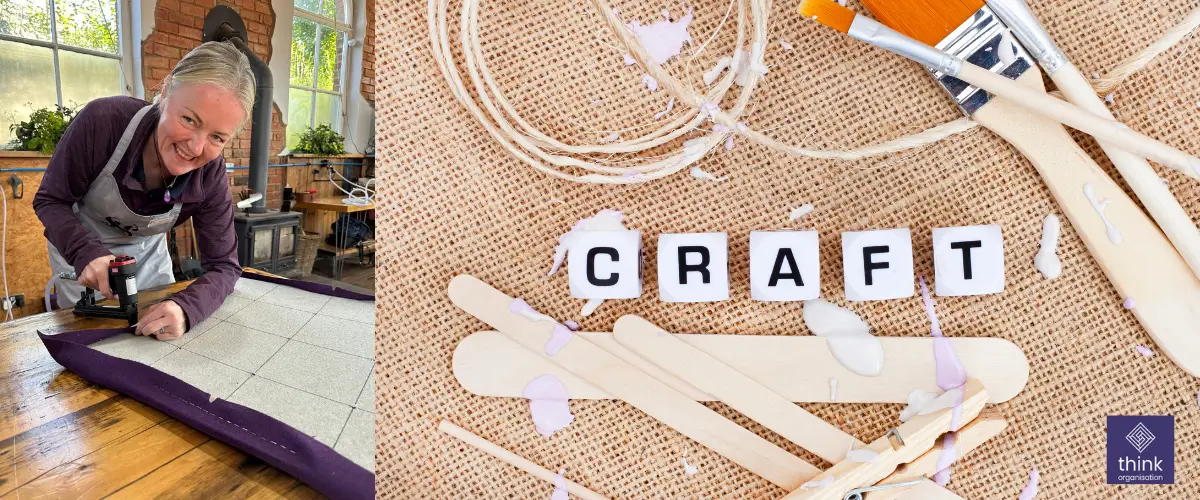
The other week, our Co-Founder Sarah joined the amazing Emma Semper on one of her upholstery crafting workshops, where she learnt how to upholster her very own noticeboard. For those of you who haven’t met Sarah, she is not someone who would naturally call herself creative, especially compared to Steph’s awesome upholstery and craft talents – as shown below, her newest hobby of geometric art using only a compass, a ruler, and a pencil – something she created and built one afternoon.
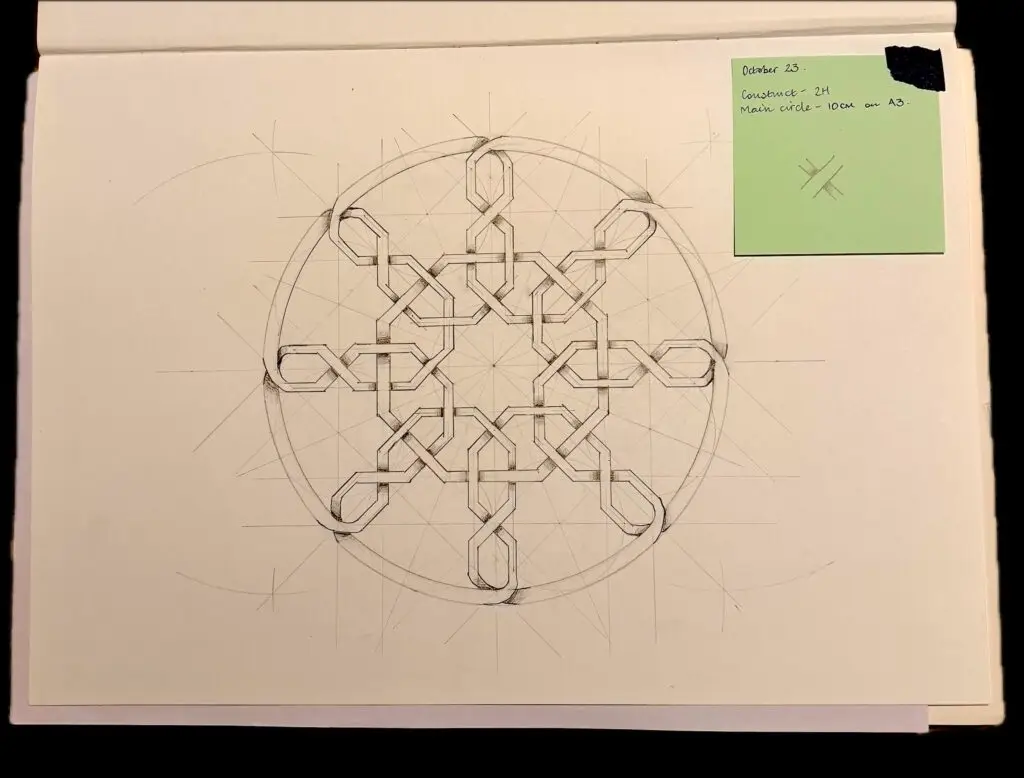
Crafting Geometric Art


Anyway, back to the point. Here at Think we are often extremely busy, and this can make it difficult to find time to slow down, especially when you throw in all the outside work commitments as well.


In fact, many of us are seeking ways to slow down, reconnect with ourselves, and protect our mental health. Whilst many of us turn to doom scrolling our phone, reading or watching short videos to turn off our mind, in reality, these could be having negative impacts.


Which is why one surprisingly powerful yet often overlooked tool is crafting.


Whether that is knitting, painting, woodworking, sewing, pottery, upholstery, leatherwork or any creative activity done with your hands.


Crafting isn’t just a hobby; it’s a form of therapy.

Research has consistently shown that engaging in creative activities can lead to reduced stress, improved mood, increased cognitive function, and even physical health benefits. Over ten years ago, a study by the American Journal of Public Health concluded that arts engagement is linked to better emotional resilience, reduced anxiety, and an enhanced sense of purpose.


During lockdown, Sarah organised an online event for over 100 employees to undertake some painting led by an artist. The feedback was amazing, and due to the success of the painting experience, a couple of people continue this craft to this day.


So here is some insight into why crafting can be so powerful for your health and wellbeing:


1. Crafting is Mindfulness in Action

Crafting draws you into the present moment.


Whether you’re looking for a number on paint by numbers, choosing a colour, threading a needle or shaping clay, you naturally focus on the task at hand. This gives your mind a break from the constant buzz of worries and future plans.


As Psychologists, we can call this a “flow” state. You will have heard people say, ‘I don’t know where the time went’, or ‘I just got into the flow and then suddenly it was done’. Csikszentmihalyi (1990) explains this in more detail in his book, as when you are fully immersed in an activity, or a state of flow, it is linked to greater happiness and lower rates of depression.


The key with crafting is to find a craft which gets you into that state of flow, not one that completely frustrates you. Enjoyment is vital.


2. Building Confidence and Achievement

Completing a project, no matter how small, gives a tangible sense of achievement. These little wins accumulate, boosting self-esteem and reminding us that we are capable of creating something meaningful. This can be especially powerful for individuals managing long-term stress, anxiety, or burnout.


Crafting provides this achievement, and the majority of crafts are in your control. Sarah tried painting following the event she organised, but it became frustrating, especially when the painting looked worse than what a child could do. However, the actual painting was great fun.


Enter into Sarah’s life, painting by numbers. It provides the right amount of guidance, and a sense of achievement as there is a framework to follow for success. This is key to building confidence and ensuring there’s a sense of achievement.


3. Crafting, Connection and Community

Many crafting activities, from knitting groups to art classes, create opportunities for social connection.


Having a shared purpose can reduce feelings of isolation, a key factor in maintaining good mental health. For some people, crafting is a solitary pursuit, however, for others, being part of a community is key – whether online or face-to-face.


Getting advice, watching tips on You-tube or attending events, all of these can help build a sense of connection.


4. Stress Reduction and Physical Health

There have been years of studies measuring the impact of crafting on health. Crafting has been found to lower blood pressure, improve immune response and even ease symptoms of chronic illnesses.


When you’re being creative, your body moves into a calmer para-sympathetic state, counteracting the harmful effects of prolonged stress. At the start, crafting can often push us out of our comfort zone, but with support and practice, we soon enter a state of flow.


Growing, stretching ourselves and doing crafts we enjoy is crucial. If you feel incompetent, bad or don’t enjoy a craft then try a different one.


5. A Healthy Escape

In moderation, crafting provides a healthy form of escapism. The reason we say “in moderation” is because we don’t want it to become a chore. Recent requests for paint-by-numbers by friends and family was something which soon became a chore for Sarah. Especially when there were three needed to be completed before Christmas!


After a break, and with no intention of ever agreeing to requests again, paint-by-numbers had become a healthy escape again. It is a chance to reset and recharge.


It is not about avoiding life’s challenges, but about giving your mind the rest it needs to tackle them with renewed energy.


In a world that often prizes productivity over presence, crafting reminds us of the simple joy of making something with our own hands.


You don’t need to be “good” at it. You just need to start.


So this week, whether it is 15 minutes of doodling at your desk, joining a painting class or learning a new craft from YouTube, try incorporating creativity into your life.


Think about what you enjoyed as a child, as this will help you narrow down some crafts you might enjoy. Because one small, enjoyable change today will lead to a positive impact on your health tomorrow.


Your mental wellbeing is worth the time.

If you would like to know more about crafting at work and how crafting can be built into your organisational culture or development programmes, please reach out – sam@cortex.clyq.co.uk.


#MentalHealth #Wellbeing #Creativity #Mindfulness #PersonalDevelopment #CraftingForHealth #CraftingCulture


More about Wellbeing

There’s more about Wellbeing in this Think Organisation Post: How To Manage a Healthy Brain at Work


Alternatively, copy and paste this link into your browser: https://cortex.clyq.co.uk/how-to-manage-a-healthy-brain-at-work/

Critical insight for people who don’t have mental health issues.

2024 Mental Health Awareness week is approaching, and undoubtedly, numerous companies will soon be sharing positive messages about mental health and well-being.


Many will follow the same well-trodden commercial marketing plans laid out by charities, all in an effort to be ‘part of the group’.


Raising awareness is crucial, but it must lead to tangible behaviour change to truly make a difference.


Recently, the team at Think Organisation worked with a CEO who made a troubling statement: “I don’t have mental health issues. And, I know I shouldn’t say this, but I’m fed up with people using it as an excuse to be lazy at work.” With their permission, we felt it was important to delve into this statement.


Mental health encompasses a person’s psychological (including emotional) well-being, existing along a complex continuum. It enables individuals to cope with life’s stresses. Various biological and psychological factors can make people more or less vulnerable to mental health problems. Moreover, exposure to unfavourable social, economic, and environmental circumstances increases the risk of developing mental health problems (WHO, 2022).


Let’s unpack the CEO’s statement.


“I don’t have mental health issues.”


There are two issues with this statement.


I don’t have mental health

In reality, if you have a brain you have mental health. Just like if you have a body you have physical health. If the CEO was able to think, feel, and react in ways conducive to leading a positive life then he could reword this statement to something like I currently have good mental health.


I don’t have mental health issues

The word ‘issues’ immediately implies a problem that people are discussing or thinking about, suggesting the need for action. For example, ‘don’t make an issue about it’.


In reality, 1 in 4 people experience mental health problems, which can develop into mental illness if left untreated.


Sadly, many organisations fail to take mental health seriously until it results in a breakdown. At this stage, individuals experience intense mental distress or illness, often with psychological and physical symptoms, alongside changes in behaviour and emotions.


Which leads us on the next sentence.


“And I know I shouldn’t say this but . . .”

Using this statement as a preamble infers what is going to be said next is negative. It is like providing a blanket around something which isn’t going to be very nice. It is also a way for people to give themselves permission to say something which they know is wrong or untrue. However, in this context it is interesting because the chances are it is their own belief that the CEO is having to question.


“I am fed up with people using it as an excuse to be lazy at work.”

This sentence speaks the truth in many ways, and is something people probably say more often than they care to admit.


Yet, in reality, people need time out. They need time to think. Just as our body needs rest and recuperation after exercise. Our brain needs rest and recuperation from activity.


Through a number of coaching questions and exploration, it became apparent to the CEO that this statement was something of a legacy.


The CEO’s father used to assert that a bad back provided an excuse for laziness at work, a belief that had been passed down.


We delved into how the CEO would relish a day off without questions, to be ‘lazy’ in a positive sense. They desired a day where they didn’t have to work or exert much effort, physically or mentally.


This illustrates the importance of language.

Negative words can erect barriers, isolate individuals, and deter them from seeking help. Language is the tool through which we unconsciously transmit and exchange information.


During the session with a Think Organisation Psychologist and CBT coach, it was the CEO’s manner of expression that sparked the subsequent discussion — tone, facial expressions, previous situations, and conversations all provided clues that this statement was not as it seemed.


In reality, the CEO used this statement to dismiss their thoughts and feelings, fearing judgment and seeking approval. However, they embarked on a journey of self-realisation and even requested this post be written, hoping it might help others. While they aren’t completely open, that’s okay — because they made the necessary changes.


They prioritised their health and well-being, took time off when needed, and are now more productive than ever. Moreover, in the six months since they began role-modelling this behaviour with their team, burnout levels have decreased and productivity has increased.


Ultimately, mental well-being enables people to handle life’s stresses and realise their potential.


Charities such as Mind focus on supporting individuals so they don’t have to face mental illness alone. So this mental health awareness week take some time to ask these three questions across your organisation.


  1. How can organisations foster a culture that promotes open dialogue and support for mental health at all levels?
  2. What strategies can leaders employ to encourage employees to take breaks without fear of stigma or judgment?
  3. How can individuals recognise and challenge negative self-talk or inherited beliefs that may impede their well-being, and what resources are available to aid in this process?


To foster a culture which supports mental health

Organisations can cultivate a culture of open dialogue and support for mental health by implementing comprehensive mental health policies and initiatives.


This involves providing resources such as mental health training for all managers, focused on reducing the stigma surrounding mental health.


Leaders and managers need to reduce the stigma

Leaders can encourage employees to take breaks without fear of stigma or judgement by leading by example and prioritising their own mental well-being. This involves promoting a culture where taking breaks is accepted and actively encouraged.


Managers can communicate the importance of self-care and set clear expectations regarding workload and deadlines. Employees need to feel empowered to manage their workload effectively.


Providing mental health support for individuals

Providing support for individuals, such as coaching, to help them recognise and challenge negative self-talk or inherited beliefs that may impede their well-being can be really helpful.


As we all have our own mental and physical health and only we know what we need – if we are prepared to listen.


Paying attention to internal dialogue and identifying patterns of negative thinking or self-criticism can help create new habits. However, support must be given by qualified and experienced mental health professionals.


And access to health resources

Being able to access resources, such as online forums, self-help books, or support groups can offer peer support and validation, helping individuals to feel less isolated in their struggles with mental health.


Below are some links for further support.

Mental Health Foundation here.

Mind here.

Mental Health Matters here.

NHS Mental Health Support here.

NHS Physical Health Support here. Because mental health is only one side of the coin.


Think Performance. Think Excellence. Think Impact.

Check our Insights page for more valuable information.

More about Workplace Psychology

There’s more about Workplace Psychology in this Think Organisation Post: Building Artificial Human Relationships In The Workplace


Alternatively, copy and paste this link into your browser: https://cortex.clyq.co.uk/building-artificial-human-relationships-in-the-workplace/

Are you ready to

start your joruney?

Take the first step to transform your workplace.

Call us on 07123 456 789
Email us at sarah@cortexworx.com

© Copyright Cortex Worx LTD. All rights reserved. | Website by Clyq