How To Make Your Work Culture Fair

Life is unfair. Life is fair. What do you think? And more importantly, since we spend all our time at work do you think your organisation treats you fairly.


Fairness is more than a buzzword, it is the bedrock of trust in any organisation.


People need trust in order to work effectively together and yet, trust is often eroded when employees don’t feel listened to or are treated (in their perception) unfairly.


Many employees end their week feeling disheartened, telling friends and family, “It’s just not fair because X at work got to do Y”. So whether the example if about recognition, workload or event future opportunities, fairness or the lack of it shapes how people feel about their work.


What Does Being Fair Really Mean?

In an organisation there are numerous policies, processes and procedures put in place, to ensure people are treated fairly.


Fairness is about impartial and just treatment. Being fair is often not about treating everyone the same. Being fair is about treating everyone with the same level of respect, dignity and opportunity as their colleagues.


Fairness is also about a perception, which means whether people percieve something as fair might not be as simple as leaders would like.


The Reality Of Being Fair

Laura, a call manager at a local call centre, had been in an organisation for five years. She consistently exceeded her targets and mentored new staff when they started due to her expert knowledge and quality of service.


When a team leader role opened up, she applied, excited about the opportunity. However, the role went to someone newer, with much less experience. Jade wasn’t upset about not getting the job, but she felt is was unfair because she couldn’t understand why.


On paper she had all the requirements and wanted to ensure she would be successful next time, by working on whatever had let her down this time.


Over time, this perceived unfairness and lack of conversation led her to leave the organisation for new role. It was the lack of transparency that made her feel invisible, unvalued, and that there was an unfairness about the decision.


This story isn’t unique. It’s a reminder that fairness isn’t just about outcomes, it is about process.


It is also about the parameters, brief and expectations which are set ahead of work being completed.


Nicola was asked to present in a competition where she had the chance to win a £1000. As part of the brief she has been asked to present for 10 minutes, on the subject of leadership and to ensure people took something away at the end. By the end of the competition Nicola thought she had done well, but wasn’t sure she had won.


However, when the winner was announced – someone who went well over the allocated 10 minutes she felt the whole thing was very unfair. Especially as, if she was honest, another entrant, who in her mind should have won, stuck to the time limit and didn’t win either.


Nicola told her friends about this and within a couple of years the competition folded as people got to know it as being ‘unfair’.


Why Does Fairness Matter To People?

People who work in an organisation, which is perceived to treat people fairly have:


🧠 Higher morale, because being treated fairly makes people feel valued

🧠 Less inclination to leave, because they are happier

🧠 Higher levels of performance, because fair environments foster collaboration and innovation


What Can Leaders Do To Promote Fairness?

Ultimately is an organisations systems and processes are unfair it is the leaders role to change these to create a fair, inclusive and diverse workplace. All leaders, no matter what level need to promote fairness through:


🧠 Be transparent, share how decisions are made and the rationale behind decisions


🧠 Ensure rules and policies makes sense, and are applied consistently across team and departments, whilst ensuring flexibility to adapt to suit the values driving the culture


🧠 Be empathetic and compassionate to people, understanding individual needs and circumstances to ensure adaptations are made (in a consistent manner which supports everyone)


Fairness is about how things are done in your workplace culture. It is about treating people fairly, especially when no one is watching.


It is about everyday actions, not just policies and rules which in themselve can become unfair depending on the circumstance.


So what?

Fairness is about perception, experience and understanding the rational for decisions which are made. Especially when resources are scarce.

More about Culture

There’s more about Culture in this Think Organisation Post: How to Create and Embed a Culture of Fairness

Alternatively, copy and paste this link into your browser: https://cortex.clyq.co.uk/how-to-create-embed-a-culture-of-fairness/

How To Improve Employee Engagement on a Limited Budget

Employee engagement has fallen into and out of favour over the years. At times it is seen as an illusive concept which is difficult to quantify, measure or obtain. And at others, it is quoted around the board table alongside the figures from the P&L as a sign of how successful an organisation may, or maynot, be. But does it really matter? And if it does matter then how can we improve employee engagement without spending a fortune?

Employee Engagement describes the level of enthusiasm and dedication an employee feels toward their job and organisation.

In reality, employee engagement is not about huge budgets and flashy perks, it is about connection, recognition, purpose and trust. So how can you improve employee engagement without blowing the budget?

1. Get Engagement Basics Right First

Many organisations overlook the fundamentals which include how people are treated on a daily basis. At a recent event, our Founder, Sarah Clarke presented with Ian MacArthur on the importance of the having the fundamentals in place. The Greater Manchester Charter is a vital tool to which helps businesses understand what they need to do to get the basics right, and whilst some do cost money (e.g. paying living wage), this is proven to deliver ROI for businesses in the long-run (GEC Evaluation, 2022). In the meantime, for businesses who want to get the basics right focus on reducing confusion or frustration by creating clarity and care across teams. This includes reviewing and clarifying all roles, responsibilities and handovers and setting clear service expectations between teams and individuals. Help coach people to focus on how their work contributes to the team and business goals as by empowering people to work together this creates engagement.

Actions could include: open roles & responsibilities, team huddles, shared ‘ways of working’, visual collective goal and progress boards, innovation huddles, etc.

2. Listen (& Mean It!)

Leaders who do not listen to their teams, peers or even own leaders create frustration and disenchantment. Employees who are asked for feedback, but nothing changes as a result can in reality become more disillusioned so it is vital to listen – and we mean really listen, and then act on the feedback. A client recently had undertaken an employee engagement survey for the fourth year and the results has fallen off a cliff, because of the perceived lack of improvements. Whilst the leaders could list all the changes they had made some fundamental suggestions had been overlooked, and whilst they were not possible, no leader had explained why this wouldn’t happen to the employees. Once this conversation was had, and the employees understood why their suggestion was not possible (and in reality it was for legal and discrimination reasons) they were more than happy with other improvements which had been proposed. The following year engagement soared – because people has been listened to, and the feedback loop has happened.

Actions could include: free online surveys to gain feedback, hosted ‘ask me anything’ sessions or feedback circles, holding stay interviews with people who have been in the business for different tenures, practical improvement workshops, etc.

3. Recognise & Appreciate Others More

All people need to feel valued, and whilst some might dread (understandably) being asked to stand up in front of a crowd for applause and awards that does not mean they should not be recognised for their effort, dedication and commitment. Recognition does not need to be public, although it can be for some, and it needs to suit the individual being recognised. Small gestures of thank you from senior leaders, even if off the cuff, can be hugely rewarding for individuals. Peers who recognised and appreciate each other forge closer bonds and deliver higher quality work so design a framework which is not onorous to recognise and appreciate each other, both individually and collectively.

Actions could include: introducing peer-to-peer shout outs, encouraging managers to give timely thank you specific to the task or action, personal thank you cards written with meaning, etc.

4. Promote Belonging & Relationships

People stay for people. In many situations it is the people, not the job, which forces people to leave – or ideally, stay. Ensuring people have productive relationships across teams, with their peers and with their teams is vital to promote employee engagement. Ensuring that people understand each other, and really feel like they belong is a huge driver of engagement. Encouraging people to talk to each other, have lunches together and chat either face to face or remotely is crucial to help promote positive relationships and foster a sense of belonging.

Actions could include: Buddy systems for new starters or across teams, set lunch times promoting people eating together, inclusive spaces for people to have time out together, guided team walks outside the office or sharing of recreational ideas or external volunteering events as a team.

5. Empower People To Develop & Learn

Many organisations cut their training budgets in times of crisis, which despite being proven to be detrimental, is often something non-negotiable around the leadership table. Learning and progression does not need to cost as creating peer-to-peer learning networks, ensuring people work across teams or regions and role modelling a sharing of knowledge can really help empower people to learn – without the large price tag. Many younger workers, and older workers, like learning new things so cross-mentoring can be really helpful. Employees who feel like they are progressing, improving and learning new skills are more engagement because of this.

Actions could include: set-up a training and development sharepoint site to share knowledge, create a library of business books in the canteen, create skill swaps where people teach each other, give time for self-directed learning online and ask people to share what they have learnt with each other.

What next?

If you think employee engagement may be low in your team or organisation, especially in time so financial strain then listen to what people are saying. Often people have their own solutions which when implemented will improve engagement. Flexible working is often seen as a huge perk, much more than a salary increase which impacts tax and other benefits so it is not all about money when it comes to engagement. Have a read of our engagement checklist below to gain some more ideas.


Powered By EmbedPress


Reach out for a free 30-minute consultation with one of our team to find out more.


More about Motivation

There’s more about motivation in this Think Organisation Post: Motivation: Understanding What Drives People at Work


Crafting: A Powerful Tool for Mental Wellbeing and Better Health

The other week, our Co-Founder Sarah joined the amazing Emma Semper on one of her upholstery crafting workshops, where she learnt how to upholster her very own noticeboard. For those of you who haven’t met Sarah, she is not someone who would naturally call herself creative, especially compared to Steph’s awesome upholstery and craft talents – as shown below, her newest hobby of geometric art using only a compass, a ruler, and a pencil – something she created and built one afternoon.

Crafting Geometric Art


Anyway, back to the point. Here at Think we are often extremely busy, and this can make it difficult to find time to slow down, especially when you throw in all the outside work commitments as well.


In fact, many of us are seeking ways to slow down, reconnect with ourselves, and protect our mental health. Whilst many of us turn to doom scrolling our phone, reading or watching short videos to turn off our mind, in reality, these could be having negative impacts.


Which is why one surprisingly powerful yet often overlooked tool is crafting.


Whether that is knitting, painting, woodworking, sewing, pottery, upholstery, leatherwork or any creative activity done with your hands.


Crafting isn’t just a hobby; it’s a form of therapy.

Research has consistently shown that engaging in creative activities can lead to reduced stress, improved mood, increased cognitive function, and even physical health benefits. Over ten years ago, a study by the American Journal of Public Health concluded that arts engagement is linked to better emotional resilience, reduced anxiety, and an enhanced sense of purpose.


During lockdown, Sarah organised an online event for over 100 employees to undertake some painting led by an artist. The feedback was amazing, and due to the success of the painting experience, a couple of people continue this craft to this day.


So here is some insight into why crafting can be so powerful for your health and wellbeing:


1. Crafting is Mindfulness in Action

Crafting draws you into the present moment.


Whether you’re looking for a number on paint by numbers, choosing a colour, threading a needle or shaping clay, you naturally focus on the task at hand. This gives your mind a break from the constant buzz of worries and future plans.


As Psychologists, we can call this a “flow” state. You will have heard people say, ‘I don’t know where the time went’, or ‘I just got into the flow and then suddenly it was done’. Csikszentmihalyi (1990) explains this in more detail in his book, as when you are fully immersed in an activity, or a state of flow, it is linked to greater happiness and lower rates of depression.


The key with crafting is to find a craft which gets you into that state of flow, not one that completely frustrates you. Enjoyment is vital.


2. Building Confidence and Achievement

Completing a project, no matter how small, gives a tangible sense of achievement. These little wins accumulate, boosting self-esteem and reminding us that we are capable of creating something meaningful. This can be especially powerful for individuals managing long-term stress, anxiety, or burnout.


Crafting provides this achievement, and the majority of crafts are in your control. Sarah tried painting following the event she organised, but it became frustrating, especially when the painting looked worse than what a child could do. However, the actual painting was great fun.


Enter into Sarah’s life, painting by numbers. It provides the right amount of guidance, and a sense of achievement as there is a framework to follow for success. This is key to building confidence and ensuring there’s a sense of achievement.


3. Crafting, Connection and Community

Many crafting activities, from knitting groups to art classes, create opportunities for social connection.


Having a shared purpose can reduce feelings of isolation, a key factor in maintaining good mental health. For some people, crafting is a solitary pursuit, however, for others, being part of a community is key – whether online or face-to-face.


Getting advice, watching tips on You-tube or attending events, all of these can help build a sense of connection.


4. Stress Reduction and Physical Health

There have been years of studies measuring the impact of crafting on health. Crafting has been found to lower blood pressure, improve immune response and even ease symptoms of chronic illnesses.


When you’re being creative, your body moves into a calmer para-sympathetic state, counteracting the harmful effects of prolonged stress. At the start, crafting can often push us out of our comfort zone, but with support and practice, we soon enter a state of flow.


Growing, stretching ourselves and doing crafts we enjoy is crucial. If you feel incompetent, bad or don’t enjoy a craft then try a different one.


5. A Healthy Escape

In moderation, crafting provides a healthy form of escapism. The reason we say “in moderation” is because we don’t want it to become a chore. Recent requests for paint-by-numbers by friends and family was something which soon became a chore for Sarah. Especially when there were three needed to be completed before Christmas!


After a break, and with no intention of ever agreeing to requests again, paint-by-numbers had become a healthy escape again. It is a chance to reset and recharge.


It is not about avoiding life’s challenges, but about giving your mind the rest it needs to tackle them with renewed energy.


In a world that often prizes productivity over presence, crafting reminds us of the simple joy of making something with our own hands.


You don’t need to be “good” at it. You just need to start.


So this week, whether it is 15 minutes of doodling at your desk, joining a painting class or learning a new craft from YouTube, try incorporating creativity into your life.


Think about what you enjoyed as a child, as this will help you narrow down some crafts you might enjoy. Because one small, enjoyable change today will lead to a positive impact on your health tomorrow.


Your mental wellbeing is worth the time.

If you would like to know more about crafting at work and how crafting can be built into your organisational culture or development programmes, please reach out – sam@cortex.clyq.co.uk.


#MentalHealth #Wellbeing #Creativity #Mindfulness #PersonalDevelopment #CraftingForHealth #CraftingCulture


More about Wellbeing

There’s more about Wellbeing in this Think Organisation Post: How To Manage a Healthy Brain at Work


Alternatively, copy and paste this link into your browser: https://cortex.clyq.co.uk/how-to-manage-a-healthy-brain-at-work/

How To Manage A Healthy Brain At Work

Often the clients we work with focus on processes, policies, handbooks, and ways of working as if they are leading machines rather than people. Yet the human brain is very different from machines, or is it?


During the Industrial Revolution, this approach made sense; people managed machines. But today, 47% of work tasks are handled by humans, 22% by machines, and 30% require a combination of both (Statista, 2025).


So why isn’t there more focus on the power of the human brain?


The future of work is changing. More service-focused, the power of the human brain needs to be harnessed. Yet organisations often fail to embrace the opportunities of humans, AI, or anything related to the next technological revolution.


While humans add immense value to machines through creativity, critical thinking, emotional intelligence and adaptability, machines bring speed, efficiency, accuracy and precision, as well as the ability to perform dangerous or physically demanding tasks. The capacity of AI and computing systems to process vast amounts of data far surpasses the human brain in terms of scale, speed, and accuracy. Yet, why do we not take the same level of care of our people as we do with our machines?


Think about it.


We service machines, replace worn-out parts, and provide regular updates (often automatically like software updates). Yet, we struggle to adopt the same approach for humans.


Entire teams in organisations focus on preventive maintenance for machines, ensuring routine servicing to change filters, lubricate, and calibrate to prevent wear and tear.


So why don’t we do the same for humans?


After all, humans currently handle 47% of work tasks. Yet, in large organisations, there are on average just 0.79 HR personnel per 100 employees (Sesame HR, 2025). The ratio of managers to employees does not provide much more reassurance, with 43% of UK managers overseeing teams of 10 or more (People Management, 2022). So, how should we be looking after humans in the workplace?


1. Recognise The Human Brain


The human brain consumes most of a person’s energy, making hydration essential. Dehydration leads to brain fog, fatigue, and reduced concentration. Providing free tea and herbal infusions, cold water stations, and easy access to drinking water is a low-cost, high-benefit solution for businesses.


2. Encourage Regular Breaks


The Pomodoro Technique shows that focused work for 25–50 minutes, followed by a 5–10 minute break, improves productivity and quality. Encouraging people to step away from their desks, stretch, walk around, or get fresh air enhances focus and performance.


3. Promote High-Quality Social Interactions


With remote working, spontaneous conversations and team discussions often diminish. Encouraging regular interactions fosters collaboration, strengthens understanding, and supports mental well-being. Humans are social beings and need interactions with others.


4. Optimise the Work Environment


Natural light is vital for cognitive function, and reducing noise distractions helps people perform at their best. Providing flexible workspaces where employees can move to suit their needs enhances their ability to deliver quality work.


5. Empower People to Switch Off


While there is growing debate around enforcing ‘switch-off’ periods, this approach may increase stress rather than alleviate it. Simply blocking access to work doesn’t stop the human brain from thinking about it. Instead of rigid policies, organisations should empower employees to manage their workload in a way that suits both them and the business.


The brain is the most complex system we have discovered in the universe. Like a muscle, our brains need a workout. It needs to be used. But it also needs time to recharge, relax, and refresh as overuse can lead to muscle damage and injury. The same is true for the human brain.


So take control of your own brain health.


We must all avoid overworking, where long hours prevent proper rest and recovery. It benefits no-one in the long term. People who enjoy their jobs and have control over how they work experience better mental recovery than those who don’t. Yet, as businesses focus on processes and procedures, they often strip employees of the ability to trust their instincts and manage their work schedules and outputs.


Understanding what productivity looks like, and how the human brain can remain healthy at work is crucial. Ensuring proactivity, as opposed to reactivity, is key. By prioritising the well-being of the human brain, organisations can ensure that people (and not just machines) are supported to perform at their best.


To understand more please reach out.


More about Wellbeing

There’s more about Wellbeing in this Think Organisation Post: Improving Employee Engagement


Alternatively, copy and paste this link into your browser: https://cortex.clyq.co.uk/how-to-improve-employee-engagement-on-a-limited-budget/

How To Create & Embed A Culture of Fairness

All organisations need to ensure consistency, transparency and fairness in all that they do. This is a fundamental principle which underpins years of research and practical application.


Many organisations come unstuck when things are inconsistent, hidden or secret, not transparent, and unfair. So how can leaders embed a culture of fairness in their organisations?


Fairness is the principle of treating people equitably, consistently and with respect. In business, fairness ensures that decisions, opportunities, and resources are allocated without bias or favouritism. Everyone knows what they need to do to succeed and progress, and people feel valued, heard and supported because of this.


In the workplace, fairness means:


  • Equal Opportunities: ensuring all employees, and potential employees, have access to the same chances for growth, development and progression


  • Transparency: making decisions openly, and based on clear, objective criteria creating trust, and confidential decisions are made in a fair and consistent way


  • Consistency: applying rules, policies and procedures uniformly across all levels of the organisation in a way which helps ensure work is completed effectively and efficiently


  • Impartiality: bias is reduced as far as reasonably practicable, with personal preferences (or favouritism) not influencing decision-making


  • Respect: acknowledging that respect looks different for different people and cultures, accepting their diverse perspectives, and treating everyone with dignity and as they need to be treated, regardless of background or position


It is important to remember that fairness is not about treating everyone the same, but about ensuring every individual is given the support, resources and opportunities they need to survive and aligned with the organisational culture.


One of the main challenges with fairness is that it involves people’s perceptions. How people experience and interpret fairness in organisations is based on their own personal viewpoints, expectations and past experiences. Employees may objectively be treated fairly, but that does not necessarily mean they will feel they are being treated fairly. This is why transparency and consistency are fundamental in creating a culture of fairness across organisations.


To create and sustain a culture of fairness in your organisation it must form part of your organisation’s strategic approach to leadership and direction. Ensuring continuous improvement is vital as there is always room to learn and improve when it comes to ensuring perceived, and objective, fairness in organisations.


Below are 5 key steps to help embed fairness into your team or workplace culture effectively.


1. Define Fairness for Your Organisation

Fairness can mean different things to different people, in different countries and in different workplaces. It is essential to define what fairness looks like in your organisation, which includes involving employees in the discussions to be able to:


  • Clearly articulate organisational values, which prioritise fairness, transparency, consistency and inclusion
  • Ensure fairness is embedded across policies, procedures, and decision-making processes, as well as daily interactions
  • Regular communication, and role-model what expectations look like at all levels, so everyone understands what fairness looks like in practice


2. Role-Model Fairness & Lead By Example

Saying fairness is important, and asking others to behave fairly, but not doing it yourself as a leader, is the quickest way to destroy fairness in your workplace culture. Leadership and management play a pivotal role in setting the tone for workplace culture so it is crucial that:


  • All leaders and managers, including the board of directors, demonstrate fairness in their decision-making and interactions
  • Leaders and managers are held accountable through performance metrics that are fair, transparent, consistent and promote inclusion
  • Managers and leaders, as well as employees, are trained in inclusive practices, unconscious bias awareness and how to make fair and effective decisions in the workplace aligned with values and behaviours


3. Implement Fair & Transparent Policies

Policies, procedures, rules and regulations help govern how people behave, operate and get work done in organisations. It is vital that these are built in a fair, transparent and consistent way. Things to consider include:


  • Recruitment and promotion should be based on merit, and competencies, rather than personal biases or favouritism
  • Remuneration, pay and benefits need to be equitable and regularly aligned to ensure no disparities
  • Grievances and disciplinary procedures need to be clear, and applied consistently and there needs to be safe channels by which employees can raise concerns


4. Foster Open Communication & Empower Employee Voice

Employees need to feel confident their voices are heard, and their concerns are addressed fairly and without recourse. This can include things like:


  • Encourage regular employee feedback mechanisms such as surveys, town-halls, and some anonymous reporting systems including whistle-blowing processes
  • Foster an open-door policy where employees can raise concerns or issues without any fear of retaliation
  • Welcome constructive challenge, where employees are encouraged to contribute ideas for improvement


5. Monitor, Measure & Continuously Improve Fairness Perceptions

Fairness is an ongoing commitment, and not a one-off initiative. It is important to regularly assess and refine practices across your organisation, this can be done by:


  • Tracking key metrics such as employee engagement, promotion rates, payroll equity data, etc.
  • Reviewing case studies and real-life examples of fairness in action
  • Seeking external benchmarking and best practices to stay aligned with latest industry standards
  • Acting on feedback and evolving policies and ways of working to reflect changes in employee expectations


By creating, maintaining and embedding a culture of fairness leaders foster trust and engagement across their organisation. This is proven to improve productivity, and taking a proactive approach ensures accountability with fairness embedded into everyday practices.


Creating a culture which is fair, where everyone feels respected and empowered to succeed is fundamental to creating successful organisations.


For a review of how fair your workplace culture is currently, please reach out for a free 30-minute consultation.


More about Culture

There’s more about Culture in this Think Organisation Post: How to Select the Right Culture Consultant for Your Business

Alternatively, copy and paste this link into your browser: https://cortex.clyq.co.uk/how-to-select-the-right-culture-consultant-for-your-business/

How to Successfully Lead & Reduce Stress

Leaders are vital to reduce stress

Leaders play a vital role in reducing employee stress by fostering open communication, empathy, and support. Setting clear expectations, creating work-life balance initiatives, and recognising efforts – they all help create a positive environment where employees feel valued and heard.


Providing resources for stress management, promoting self-care practices, and addressing organisational stressors contribute to a healthier workplace culture.


Leaders can cultivate an environment where employees can thrive and flourish by leading by example and continuously seeking feedback for improvement.


Organisational Stressors

Stress caused by an organisation, often called organisational stress, encompasses the psychological and physical strain experienced by employees due to various factors within the workplace environment.


This type of stress can arise from excessive workload, unrealistic deadlines, unclear job roles, poor communication, lack of support from supervisors or colleagues, perceived unfair treatment, inadequate resources, or toxic work culture.


Organisational stress can lead to decreased job satisfaction, impaired performance, burnout, and negative health outcomes if not effectively managed.


A Healthy Culture Reduces Stress

Culture in an organisation plays a more significant role than well-being yoga in promoting health and well-being due to its pervasive influence on employees’ daily experiences and behaviours. While yoga sessions can offer physical and mental health benefits, a positive organisational culture provides a supportive framework which extends beyond individual activities.


A healthy culture prioritises employee well-being at its core, fostering an environment where individuals feel valued, supported, and respected.


This includes promoting work-life balance, encouraging open communication, recognising achievements, and providing opportunities for growth and development. In contrast, well-being yoga, while beneficial, addresses only one aspect of employee well-being and may not address broader cultural issues.


Identify Systemic Issues Which Cause Stress

Moreover, a positive organisational culture contributes to stress reduction by addressing systemic issues such as excessive workload, poor management practices, or a lack of work-life balance policies.


By promoting a culture of collaboration, trust, and empathy, employees are more likely to feel psychologically safe and supported in managing their stress levels effectively.


Ultimately, whilst well-being initiatives such as lunchtime yoga can complement efforts to promote health and well-being, a positive organisational culture serves as the foundation for creating sustainable, long-term improvements in employee health, engagement, and overall performance.


Top Ten Things a Manager can do to Support Employees

  1. Set Clear Expectations

    • Provide clarity on job roles, responsibilities, and performance standards to minimise ambiguity and prevent unnecessary stress.
    • Support people to understand their roles.
  2. Foster Open Communication

    • Encourage regular dialogue with employees to understand their concerns, challenges, and ideas for improvement.
    • Be open to feedback.
  3. Promote Work-Life Balance

    • Offer flexible work arrangements, encourage the use of vacation time, and discourage overworking to support employees’ well-being outside of work.
    • Be flexible to the needs of employees.
  4. Recognise and Appreciate Efforts

    • Acknowledge and celebrate employees’ achievements and contributions to foster a positive work environment and boost morale.
    • Be authentic in your praise.
  5. Provide Resources and Support

    • Equip employees with the tools, training, and support they need to perform their jobs effectively and manage stressors.
    • Ensure everyone is set up for success with the resources required.
  6. Encourage Self-Care

    • Promote healthy habits such as taking regular breaks, staying physically active, and practising mindfulness to help employees recharge and stay resilient.
    • Be mindful that people relax in different ways and don’t use a one-size-fits-all approach.
  7. Lead by Example

    • Demonstrate healthy work habits, manage stress constructively, and prioritise self-care to set a positive example for employees to follow.
    • You need to role model behaviours.
  8. Address Organisational Stressors

    • Identify and address systemic issues within the organisation, such as excessive workload or poor communication, to alleviate stress at its root cause.
    • Provide clear measurements of progress and be aware that stressors can also have a positive impact in the short term e.g. productivity.
  9. Empower Employees

    • Delegate tasks and responsibilities appropriately, involve employees in decision-making processes, and provide opportunities for growth and autonomy.
    • Empower employees to be responsible for themselves.
  10. Foster a Supportive Culture

    • Cultivate a culture of trust, collaboration, and empathy where employees feel valued, supported, and respected.
    • This tip often happens as a result of the previous nine actions.


By implementing these recommendations, managers can create a supportive work environment that promotes employee well-being, reduces stress, and enhances overall performance and satisfaction.


The most important is to ensure high psychological safety in your organisation (Free Measure) so that people are able to express themselves authentically.


Now is the time for action. For a complimentary 30-minute consultation, reach out to Think Organisation.


Think Performance. Think Excellence. Think Impact.


Check our Insights page for more valuable thought leadership.


More about Wellbeing

There’s more about Wellbeing in this Think Organisation Post: Navigate Life Stress

Alternatively, copy and paste this link into your browser: https://cortex.clyq.co.uk/how-to-successfully-navigate-stress-in-your-life/

Critical insight for people who don’t have mental health issues.

2024 Mental Health Awareness week is approaching, and undoubtedly, numerous companies will soon be sharing positive messages about mental health and well-being.


Many will follow the same well-trodden commercial marketing plans laid out by charities, all in an effort to be ‘part of the group’.


Raising awareness is crucial, but it must lead to tangible behaviour change to truly make a difference.


Recently, the team at Think Organisation worked with a CEO who made a troubling statement: “I don’t have mental health issues. And, I know I shouldn’t say this, but I’m fed up with people using it as an excuse to be lazy at work.” With their permission, we felt it was important to delve into this statement.


Mental health encompasses a person’s psychological (including emotional) well-being, existing along a complex continuum. It enables individuals to cope with life’s stresses. Various biological and psychological factors can make people more or less vulnerable to mental health problems. Moreover, exposure to unfavourable social, economic, and environmental circumstances increases the risk of developing mental health problems (WHO, 2022).


Let’s unpack the CEO’s statement.


“I don’t have mental health issues.”


There are two issues with this statement.


I don’t have mental health

In reality, if you have a brain you have mental health. Just like if you have a body you have physical health. If the CEO was able to think, feel, and react in ways conducive to leading a positive life then he could reword this statement to something like I currently have good mental health.


I don’t have mental health issues

The word ‘issues’ immediately implies a problem that people are discussing or thinking about, suggesting the need for action. For example, ‘don’t make an issue about it’.


In reality, 1 in 4 people experience mental health problems, which can develop into mental illness if left untreated.


Sadly, many organisations fail to take mental health seriously until it results in a breakdown. At this stage, individuals experience intense mental distress or illness, often with psychological and physical symptoms, alongside changes in behaviour and emotions.


Which leads us on the next sentence.


“And I know I shouldn’t say this but . . .”

Using this statement as a preamble infers what is going to be said next is negative. It is like providing a blanket around something which isn’t going to be very nice. It is also a way for people to give themselves permission to say something which they know is wrong or untrue. However, in this context it is interesting because the chances are it is their own belief that the CEO is having to question.


“I am fed up with people using it as an excuse to be lazy at work.”

This sentence speaks the truth in many ways, and is something people probably say more often than they care to admit.


Yet, in reality, people need time out. They need time to think. Just as our body needs rest and recuperation after exercise. Our brain needs rest and recuperation from activity.


Through a number of coaching questions and exploration, it became apparent to the CEO that this statement was something of a legacy.


The CEO’s father used to assert that a bad back provided an excuse for laziness at work, a belief that had been passed down.


We delved into how the CEO would relish a day off without questions, to be ‘lazy’ in a positive sense. They desired a day where they didn’t have to work or exert much effort, physically or mentally.


This illustrates the importance of language.

Negative words can erect barriers, isolate individuals, and deter them from seeking help. Language is the tool through which we unconsciously transmit and exchange information.


During the session with a Think Organisation Psychologist and CBT coach, it was the CEO’s manner of expression that sparked the subsequent discussion — tone, facial expressions, previous situations, and conversations all provided clues that this statement was not as it seemed.


In reality, the CEO used this statement to dismiss their thoughts and feelings, fearing judgment and seeking approval. However, they embarked on a journey of self-realisation and even requested this post be written, hoping it might help others. While they aren’t completely open, that’s okay — because they made the necessary changes.


They prioritised their health and well-being, took time off when needed, and are now more productive than ever. Moreover, in the six months since they began role-modelling this behaviour with their team, burnout levels have decreased and productivity has increased.


Ultimately, mental well-being enables people to handle life’s stresses and realise their potential.


Charities such as Mind focus on supporting individuals so they don’t have to face mental illness alone. So this mental health awareness week take some time to ask these three questions across your organisation.


  1. How can organisations foster a culture that promotes open dialogue and support for mental health at all levels?
  2. What strategies can leaders employ to encourage employees to take breaks without fear of stigma or judgment?
  3. How can individuals recognise and challenge negative self-talk or inherited beliefs that may impede their well-being, and what resources are available to aid in this process?


To foster a culture which supports mental health

Organisations can cultivate a culture of open dialogue and support for mental health by implementing comprehensive mental health policies and initiatives.


This involves providing resources such as mental health training for all managers, focused on reducing the stigma surrounding mental health.


Leaders and managers need to reduce the stigma

Leaders can encourage employees to take breaks without fear of stigma or judgement by leading by example and prioritising their own mental well-being. This involves promoting a culture where taking breaks is accepted and actively encouraged.


Managers can communicate the importance of self-care and set clear expectations regarding workload and deadlines. Employees need to feel empowered to manage their workload effectively.


Providing mental health support for individuals

Providing support for individuals, such as coaching, to help them recognise and challenge negative self-talk or inherited beliefs that may impede their well-being can be really helpful.


As we all have our own mental and physical health and only we know what we need – if we are prepared to listen.


Paying attention to internal dialogue and identifying patterns of negative thinking or self-criticism can help create new habits. However, support must be given by qualified and experienced mental health professionals.


And access to health resources

Being able to access resources, such as online forums, self-help books, or support groups can offer peer support and validation, helping individuals to feel less isolated in their struggles with mental health.


Below are some links for further support.

Mental Health Foundation here.

Mind here.

Mental Health Matters here.

NHS Mental Health Support here.

NHS Physical Health Support here. Because mental health is only one side of the coin.


Think Performance. Think Excellence. Think Impact.

Check our Insights page for more valuable information.

More about Workplace Psychology

There’s more about Workplace Psychology in this Think Organisation Post: Building Artificial Human Relationships In The Workplace


Alternatively, copy and paste this link into your browser: https://cortex.clyq.co.uk/building-artificial-human-relationships-in-the-workplace/

How to Successfully Navigate Stress in Your Life

Stress is an external pressure that can positively or negatively impact individuals, teams, organisations or societies. This time four years ago there was an unprecedented level of societal stress – the pandemic. In 2024, the UK was ranked as the second most miserable country to live in (Business Insider, 2024) due to stressors such as high cost of living and political turmoil. Societal stress impacts people’s health and well-being and is classified as an external stressor.


A stressor is something which causes a state of strain or tension.


External stressors such as a situation, person or task can vary significantly depending on the individual. A stressor for one person may not be for another person e.g. presenting in front of an audience. Stressors are personal and organisations must understand the personal nature of stressors.


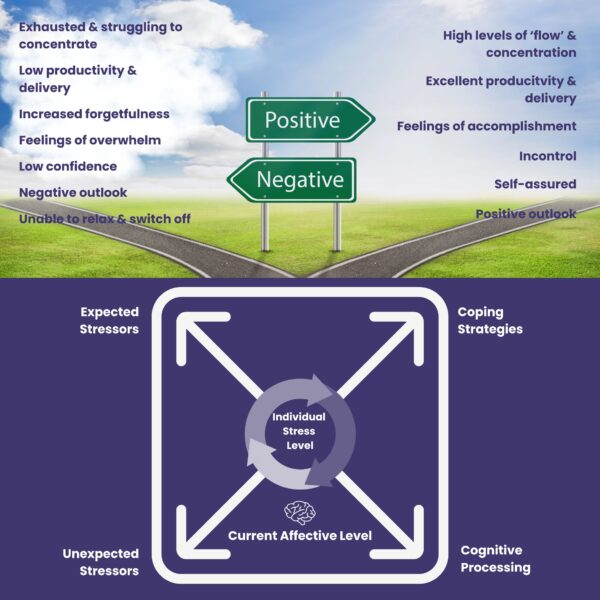
Stressors can also be internal. Memories, past experiences or thoughts about situations can cause stress. Like the image above, internal stressors such as a negative outlook can contribute to individuals succumbing to stressors. Individuals only have limited personal resources to overcome stressors. Time, quantity and whether the stressor is expected or unexpected all impact an individual’s ability to overcome or deal with stressors.


Stress is the pressure exerted on an object or person.


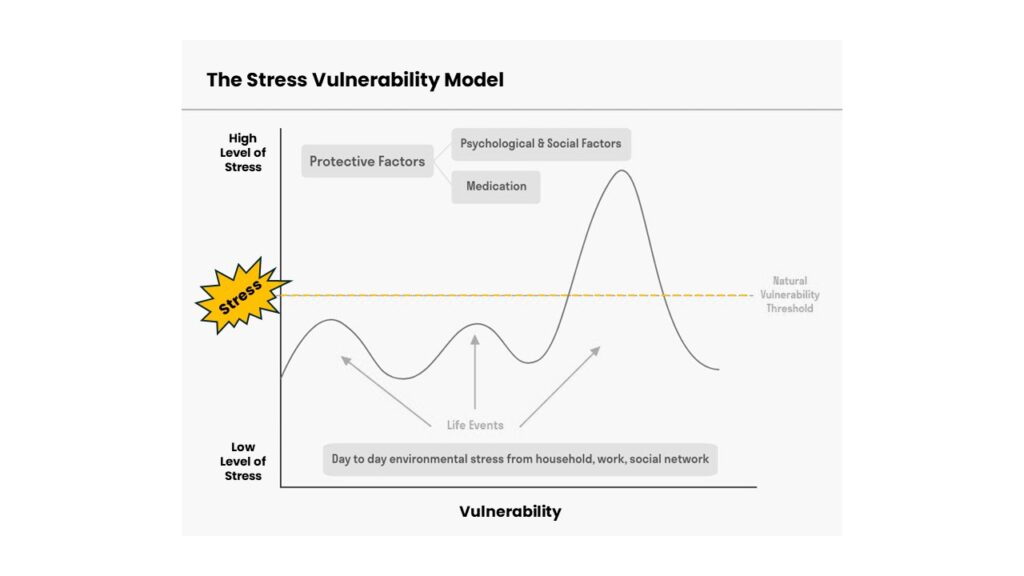
The diagram below shows how vulnerable people can be to the stressors impacting them and causing stress. Stressors can be significant (e.g. bereavement) or more mundane (e.g. getting to meetings on time when busy). As shown below the volume of stressors can also impact individuals.

Individuals need to own their stressors and there are many tools which can help with this. Below are some key activities which can be used to help reduce the impact of stress, or increase personal resources to overcome or deal with stressors.


Reduce the Impact of Stressors – 10 Recommendations

  1. Identify Stressors
    • being able to recognise positive and negative sources of stress in your life, including work, relationships, financial concerns, and other factors is crucial as every individual is more or less susceptible to different stressors.
  2. Develop Coping Strategies
    • because individuals have unique mechanisms to manage stress which work for them. This might include relaxation techniques such as deep breathing exercises, meditation, yoga, or progressive muscle relaxation, for others it might include a long run or gym workout. The coping strategies must be positive, and not negative (e.g. drinking to relax).
  3. Prioritise Tasks
    • ensuring you can organise your tasks, and complete them in manageable steps is essential to ensure you get a sense of accomplishment, and that your task list is not overwhelming. Lots of online tools can help if you pick one which suits your work style.
  4. Use your strengths
    • as this is vital to ensure you gain energy from the activities you are undertaking, they also help ensure you enjoy what you are doing, as opposed to having to use additional energy to overcome barriers
  5. Be Healthy for you
    • ensure you engage in regular, enjoyable physical exercise and eat a balanced diet. Sleep is fundamental to this equation as ensuring enough sleep enhances your internal ability to cope with stressors.
  6. Seek Social Support
    • because humans need connections, we are social animals. Connect with friends, family, or support groups if these help as it is important to have an opportunity to talk about your feelings and concerns with trusted individuals, who can provide emotional support and help you gain perspective.
  7. Time Management with Stress Limits
    • because spending excessive time with stressors will impact anyone. This might involve setting boundaries, delegating tasks, or making lifestyle changes.
  8. Engage in Relaxing Activities
    • which suit you. Don’t penalise yourself if mindfulness is not for you, many people prefer reading, listening to music, gardening, walking or pursuing other mindful hobbies. Engaging in enjoyable activities can provide a welcome distraction from stressors and allow your mind time to recharge.
  9. Get yourself a coach
    • because having someone who can help you increase your self-awareness, acknowledge current challenges, work through tactics to help resolve stressors and be a confidential confidante can be invaluable. Ensure your coach is ICF-accredited and qualified.
  10. Seek Professional Help if Needed
    • because it is always important to know there are lots of support options out there. If stress becomes overwhelming or persists despite self-help efforts, don’t hesitate to seek support from a mental health professional. This could be a Psychologist, Counsellor, Doctor or other qualified and accredited expert as therapy and medication may be beneficial in managing chronic stress.


Why everyone should measure their level of stress over time.

Humans were designed to overcome stress. Stress can be defined as a state of mental or emotional strain or tension resulting from adverse or demanding circumstances. It is the body’s natural response to challenges or threats, whether they are real or perceived. Stress triggers a cascade of physiological reactions, including the release of hormones like cortisol and adrenaline, which prepare the body to either fight the stressor or flee from it (the “fight or flight” response).


While acute stress can be beneficial in certain situations, chronic stress, which occurs over an extended period, can have detrimental effects on physical and mental health, leading to conditions like anxiety, depression, cardiovascular problems, and weakened immune function.


Reduce stress to improve your health.

Measuring individual stress levels is crucial for several reasons. It enables the identification of specific stressors, aiding in their targeted management and prevention of chronic stress. Monitoring stress contributes to overall health awareness, facilitating personalised stress management strategies.


Additionally, it enhances self-awareness and mindfulness, leading to improved performance and productivity. Regular assessment also assists in evaluating the effectiveness of interventions and enables early intervention and support when needed, promoting overall well-being and resilience.


Often when we are feeling overwhelmed or stressed we get pushed down the more negative road as it becomes difficult to collect our thoughts due to the way our body responds. This is why it is crucial to understand your current levels of stress, and seek professional help when required.


Refuse to stress


In the UK, organisations have a role to support the psychological well-being of their employees, both morally and legally (HSE, 2024). If you would like to know more about how to measure current levels of stress across your organisation, within teams or on individual levels please reach out to Think Organisation.


Think Performance. Think Excellence. Think Impact.

Check our Insights page for more valuable information.

More about Wellbeing

There’s more about Wellbeing in this Think Organisation Post: A Powerful Tool For Mental Wellbeing & Better Health

Alternatively, copy and paste this link into your browser: https://cortex.clyq.co.uk/crafting-a-powerful-tool-for-mental-wellbeing-and-better-health/

THINK: How Can You Help People and Organisations Think?

Words convey how we think by serving as vessels for our thoughts, ideas, and perceptions, reflecting our cognitive processes and the depth of our understanding.


Words create reality.

The co-founders of Think Organisation took many months to agree what the Think Organisation should be called because of the power of words. Words possess immense power, shaping beliefs, emotions, and actions. They inspire, console, educate, and influence. With words, we connect, heal, and build. They reflect culture, shape identities, and preserve legacies.


Words empower, transform, and define the human experience, resonating deeply within hearts and minds.


Why is the word ‘think’ so important to organisations?

The word ‘think’ is vital to organisations as it prompts critical analysis, innovation, and strategic decision-making. It fosters a culture of creativity, problem-solving, and continuous improvement. Through thoughtful consideration, teams devise effective solutions, anticipate challenges, and adapt to dynamic environments, driving success and sustainability. Everyone in an organisation needs to think.


Successful organisations provide structure, employment, and invaluable societal contributions. They offer goods, services, and innovation, shaping communities and driving economies. Through collaboration and purpose, organisations fulfill needs, foster growth, and drive progress, enhancing quality of life for individuals and society. Every organisation needs people to exist.


Everyone has a brain.

People’s brains power organisations, driving innovation, collaboration, and productivity. Individuals bring diverse skills, perspectives, and creativity, while collective intelligence shapes strategies and solutions.


Successful organisations harness human potential, fostering growth and adaptability to thrive in dynamic environments, creating value and benefiting society as a whole. Because every person has a brain, which processes information, everyone needs to think.


Everyone needs to think.

This act of processing information is called thinking. If someone has a particular belief, opinion or idea about someone or something this is a thought.


Thinking is the cognitive process of analyzing, evaluating, and synthesizing information to make decisions, solve problems, and generate ideas. It is the foundation of innovation, problem-solving, and strategic planning. The power of thinking lies in its ability to drive creativity, adaptability, and progress, shaping individual and organizational success.


Every organisation has people.

This is the only truth about any organisation. In fact, no organisation can exist without at least one person. Even the word organisation is important – it means a group of people with a particular purpose. This could be business, a charity or a government. The key is that people work together in an organised way towards a shared purpose. A school is an organisation. A social enterprise is an organisation.


Many businesses function but don’t have a truly shared purpose. How can you be successful if you don’t know the purpose of your organisation? Profit is not purpose. It is an output. People and planet will not survive if profit is the purpose, neither will the organisation.


Organisations need sustainable thought.

Organisations need a clear purpose to flourish sustainably. A shared purpose aligns teams, energises efforts, and fosters resilience amid challenges. It guides decision-making, inspires innovation, and attracts talent and stakeholders who resonate with the mission.


Purpose-driven organisations cultivate loyalty, trust, and societal impact, essential for long-term success and survival.


Think Organisation

These two words bring together the essence of helping people. Helping people to understand themselves, and others.


By doing this Think Organisation empowers organisations to prosper and thrive. Everyone can be more effective using the power of psychology. Harnessing the science behind behaviours, emotions, and motivations allows companies to create environments and cultures where every individual prospers and grows – enabling the collective to benefit.


Organisations need to think. Humans need organisation.


Envision a thriving work environment where individuals collaborate, support one another, and freely express themselves. Here, using their intellect to innovate and tackle organisational challenges is encouraged. It’s more than following orders or completing tasks; it’s about critical thinking and problem-solving, not mere automation.


Take Time to Think

Firstly you need time. Being able to take time to think has been proven to improve effectiveness of individuals, as well as teams and organisations1. Nancy Kline discussed how to create Time to Think in her book which we highly recommend. As a summary, Think Organisation recommend organisations to focus on:


  1. Setting Clear Goals & Priorities
  2. Breaking down complex problems
  3. Gathering information & opinions
  4. Considering multiple perspectives
  5. Reflecting & Learning (continuously!)


Communication is key

Secondly you need other humans. Being able to share ideas, talk through issues and solutions is fundamental to a thinking organisation. To do this everyone needs to be able to communicate their thoughts effectively. As a summary, Think Organisation recommend organisations to focus on:


  1. What is being communicated:
    • the content, message, or information being conveyed, including key points, details, and objectives.
  2. When it is being communicated:
    • the timing or schedule for sharing the information, considering factors such as relevance, urgency, and audience availability.
  3. Why it needs to be communicated:
    • the purpose or rationale behind sharing the information, whether it’s to inform, persuade, motivate, or address specific needs or challenges.
  4. Who needs to do the communication:
    • the appropriate individuals or stakeholders responsible for delivering the message, considering factors such as authority, expertise, and relationship with the audience.
  5. How is best to communicate it:
    • the most effective methods, channels, or platforms for conveying the message, taking into account factors such as audience preferences, accessibility, and the nature of the content.


The THINK Model

To do all of this, we always recommend the T.H.I.N.K. model, which has been revised many times by many practitioners over the years.


  1. Is it true? Ensure information is based on fact, evidence or personal opinion (not hearsay)
  2. Is it helpful? Ensure sharing the information benefits others (not just yourself)
  3. Is it inspirational? Ensure the information will help things to move forward, ideally positively.
  4. Is it necessary? Ensure it will help things, that by sharing information things could change.
  5. Is it kind? Vital to ensure information share is sensitive, appropriate and done in a safe manner.


Conclusion

By leveraging the T.H.I.N.K model as a way of communicating, individuals can support others and help foster a culture where people can think and communicate effectively.


The Think Organisation empowers organisations to foster a culture of creativity, collaboration, and critical thinking, supporting leadership teams and boards to drive forward-looking strategies and solutions.


To learn more about how this T.H.I.N.K can benefit your organisation reach out to us at Think Organisation.


Think Performance. Think Excellence. Think Impact.


  1. Kline (1999) – Time to Think ↩︎

More about Motivation

There’s more about Motivation in this Think Organisation Post: Why Organisations Need to Stop Making Inclusion Exclusive

Alternatively, copy and paste this link into your browser: https://cortex.clyq.co.uk/inclusion-why-organisations-need-to-stop-making-inclusion-exclusive/

Is Poor Leadership Fuelling the Mental Health Crisis?

Leaders Impact Mental Health.

Leaders can impact the mental health of their team, significantly more than doctors and therapists.


In fact, according to 69% of people surveyed across 10 countries leaders have the biggest impact on their mental health1.


What is your Leadership Standard?

Have you ever reflected on your leadership skills? Whether you perceive yourself as a good or bad leader, or if leadership was even a deliberate pursuit? How can you measure the standard of your leadership?


Leadership is the ability to understand others and their motivations, and working with them to leverage their strengths to achieve a shared goal.


It can be formal (e.g. hierarchical a manager role) or informal (e.g. someone people look to, but has no title).


Many leaders fall into a leadership style through trial and error. Unfortunately, the majority don’t get chance to reflect and hone their leadership style.


Despite leadership being a multifaceted endeavour, the average age at which individuals receive formal leadership training is 42, a decade after assuming supervisory roles2.


Leaders Influence Mental Health.

As humans, we have the opportunity to influence 2.8 people per day, in either a positive or a negative way.


This is much higher for leaders, who are responsible for making the greatest impact on organisations.


50-70% of an employee’s perception is linked to the attitudes and behaviour of their leaders (Business Leadership Today, 2022).


Leadership encompasses guiding and influencing individuals or groups within an organization, yet stories of poor leadership abound. How often do people make you cringe at how they have been treated at work?


Currently, the top reason employees leave organisations is poor management3, with 1 in 3 citing this as the direct cause, whilst many others contemplate departure. This contemplation leads to poor performance, lacklustre engagement and a focus on the negative.


The ramifications of poor management extend beyond turnover; it breeds stress, diminishes performance, and reduces productivity.


Research by the CIPD underscores the link between leadership quality and mental health issues, with inadequate management perpetuating stress and exacerbating mental health challenges4.


Despite these alarming statistics, only 53% of organisations had standalone wellbeing strategies in 20235.

Concurrently, with 1 in 3 employees currently quitting their jobs due to leadership there is a critical need for organisations to prioritise wellbeing initiatives alongside leadership development.


So, What Can Organisations Do?


1. Assess the quality of leadership

Firstly, assess the quality of leadership and management. This evaluation isn’t punitive but catalyses tailored development and training programs, fostering psychologically safe teams.


High-quality leaders don’t manage everyone in the same way, they tailor their approach to the needs of their followers.


Managers who understand the motivations and strengths of themselves and their team members are much more successful (Clifton & Harter, 2019).


2. Help leaders

Secondly, foster self-awareness and interpersonal understanding among team members. Recognising diverse responses to stress and providing space for reflection cultivates supportive environments, essential for mental well-being. Leaders need help and support to achieve this. Strengthscope® empowers people to bring their best selves to work and is a fantastic first step to helping leaders understand themselves, and their impact on others. Often, when organisations focus on improving weaknesses, they miss the power of focusing on strengths.


3. Focus on Strengths

Thirdly, design roles that empower employees, leveraging their strengths and fostering autonomy.


Organisations with high role clarity are 25% more productive than those without6.


A lack of role clarity, where employees are unsure what needs to be achieved, has a proven link to an increased stress response, which when prolonged can lead to burnout.


4. Focus on leading others

A culture which helps everyone be successful creates more successful organisations.


Much research shows helping others leads to higher success for leaders (Anderson, 2019). In fact, Managers should view their team’s success as an extension of their own, not as a threat.


Often when a team member is performing highly and getting positive feedback, managers can feel threatened and step back from supporting the individual. Ironically, this is normal as humans have innate attentional cognitive biases, just knowing this is ‘normal’ has helped many leaders to adapt their behaviour (Very Well Mind, 2019).


5. Gain Feedback

Prioritise feedback mechanisms and support systems. Ensure employees know where to seek assistance and evaluate the efficacy of existing programs regularly. Feedback can come in many different forms, including surveys, focus groups and observations.


6. Update Leadership Training

Despite advancements, the delay in leadership training persists. Leaders may operate for ten years before receiving formal development opportunities. This trend perpetuates outdated notions of ‘learning on the job,’ hindering progress in leadership effectiveness.


Every leaders’ learning experience may come with unintended consequences for employees who bear the brunt of suboptimal leadership practices.


7. Align Leadership and Wellness

Let’s not overlook the profound impact of leaders on mental health. By integrating this understanding into leadership discourse, we can pave the way for holistic organisational growth and individual well-being.


Now is the time for action. For a complimentary 30-minute consultation, reach out to Think Organisation.


Think Performance. Think Excellence. Think Impact.

  1. Work Institute (2023) ↩︎
  2. HBR (2012) ↩︎
  3. Guardian (2023)  ↩︎
  4. CIPD (2023) ↩︎
  5. Personnel Today (2023) ↩︎
  6. Effectory (2019) ↩︎

More about Wellbeing

There’s more about Wellbeing in this Think Organisation Post: The Hidden Cost of Stress

Alternatively, copy and paste this link into your browser: https://cortex.clyq.co.uk/the-hidden-cost-of-stress-in-your-organisation/

Is your toxic culture affecting your well-being?

We have all been there when we start a new job. The organisation described the culture as ‘welcoming, ethical and focused on equality for all’ to recruits. However, the traditions, behaviours and attitudes of the leadership quickly showed this was the ‘wallpaper’ covering an old, unfair and highly sexist business culture.


The data would show new recruits leaving within 6-18 months, as the long-serving employees lived in their echo-chamber which reinforced their view of the world.

In this example, this culture was not 100% toxic. It was unfair, masculine, and sexist. High performance was measured by hours at your desk, your ability to keep your head below the parapet, and where long service was the definition of success. If you were there for over five years you may even get rewarded with a car parking space!  

Toxic: very harmful, poisonous or unpleasant in a pervasive or insidious way.  

The BBC wrote an article recently saying many people used the word toxic to describe cultures which they didn’t like. An example was when employees have high levels of work with tight deadlines (How every workplace is toxic – BBC, 2023).

From our experience whether you have a toxic culture is not a yes or no answer. There are degrees of toxicity, which might alter in different situations, different people and different challenges.

Toxicity: the quality of being very harmful, poisonous or unpleasant in a pervasive or insidious way.  

At Think Organisation our team has worked for more than 25 years with over 150 organisations, across 30 industries. From our research and experience, there is a definite ‘degree of toxicity’ in workplace cultures. This toxicity can vary in strength across teams, levels, or locations.


Does it matter if our culture is highly toxic?

Yes.

Organisations need to be sustainable, which includes protecting people, planet and delivering profit.

Currently, toxic cultures are costing the UK economy over £20.2 billion per year (Workplace Insight, 2022). With the surge in recent mental health concerns expected to cost the UK economy £66bn per year by 2030, it is vital organisations understand and improve their cultures.

Especially in terms of the levels of toxicity which may exist.


How can we afford not to measure culture toxicity?  

As many people will have experienced what you see on the outside of an organisation is not always the same as on the inside.

Often, the visibility into the organisational culture is murky. Leadership teams are unable or unqualified to measure and diagnose the toxicity levels.

Over the years Think Organisation has been working with many organisations to help them measure, understand and improve their cultures, driving peak performance.


How do I measure our culture?

Like a toxic gas, which we can’t see or smell, it is often difficult for someone internal to measure and understand the culture. Due to the complex nature of culture, it is also vital that the culture is measured using a reliable, accurate and valid tool. In recent years, the biggest change is the visibility of organisational cultures. People can share online their thoughts, experiences and opinions about organisations. These reviews are reaching huge audiences on a scale which was not available a few years ago.

The advent of Glassdoor in 2008 provides uncensored insight into companies which is often invaluable for people thinking about joining a new company. But then how do you know the information is accurate? It is true that the motivations of people who write many reviews need to be understood. And when this data is used in conjunction with other metrics (e.g. turnover, sickness, current employee thoughts, feelings & behaviours) it can provide the first opportunity to clear the murky waters of culture and understand what it is truly like to work in that organisation.

The key is the measurement, which currently is still very much in its infancy, so like using a ruler made of elastic the results can vary greatly depending on who measured them, when and why. This is where a professional, independent team can add real value. Measuring the culture is always the first step, but you need experts to help you interpret the result and plan a strategy for improvements.


So how does my organisation start to understand the culture toxicity levels? 


Firstly, it depends on your organisation.

Its age, size, industry and trajectory as to which measure is recommended. Science-backed metrics show that, based on academic research, there are many degrees of toxicity. Think about national scandals (e.g. the UK Government during COVID-19, or the Post Office), they either never measured the culture toxicity or if they did, the measures they used appeared to show there were no issues. This was not the case.   


Secondly, there is a journey to a toxic culture.

Organisations may be in the early stages, or somewhere along the continuum, whereas others we would classify as endemic. Many stories in the media could have been avoided if the organisations in question had measured, and gained insight into their organisational cultures. For example, toxicity can be across all levels of an organisation, impacting a high percentage of the employee population. In other organisations, there could be low levels of toxicity across the organisation, with one or two pockets of high toxicity. Until you undertake diagnosis it is impossible to narrow down the measure required, let alone design an effective and commercially feasible solution.  


Thirdly, some areas of toxicity can be more poisonous than others.

Sexual misconduct or racism are poisonous. Imagine different types of gases have different impacts on you. Helium can create high voices, and be funny, in small amounts. Large amounts can stop your breathing and cause death.

There are highly poisonous cultures that can alienate people, causing physical and mental harm. Other areas may impact everyone e.g. disrespect or gossip, and the poison can build over time. Yet in small doses, they have no immediate or significant impact. Like toxic gas which fills the room, the level could be very low, but time spent in the room could lead to physical and mental impacts over time.  


Fourthly, and somewhat controversially, in our opinion 99.9% of the time it is not the Manager’s fault.

Many organisations turn to management training in the hope of changing cultures, this is like opening a window to let some gas out whilst the gas is still pumping into the room. The intervention may help but it won’t solve the problem.

Take a founder we worked with, in the eyes of their employees, they were a bully. The behaviours they showed ticked every box on the bullying list. However, when we worked with them closely, it quickly became apparent they didn’t ‘intend’ or ‘decide’ to be this way. They just didn’t know another way. Their biggest fear was the company not being successful, which ironically led to such detrimental, divisive, and negative behaviours.  


Finally, there are always small, subtle or invisible signs that suggest an organisation is developing issues.

Having an expert to help you understand these issues, like the gas reader which beeps when gas toxicity is high. It is always easier to deal with cultures with low levels of toxicity, and no culture is perfect. Issues often build, compound and escalate to create high levels of toxicity. Using psychometric measures, employee surveys, observations, focus groups, data analysis and psychological observation helps our experts truly understand an organisation’s current culture. However, there are some indicators that anyone can look out for.   


Key indicators which may be signs there is an issue with your organisational culture  


  1. Does your organisation ‘seem nice’ on the surface, with benefits, but then the undercurrent is somewhat different?  
  2. Do people get treated differently? Is there a crowd of ‘favourites’ who get preferential treatment? Or a crowd who gets detrimental treatment?  
  3. Are there multiple decisions made which seem to benefit individuals and not the business or organisation?  
  4. Do people justify their behaviour? Blame others? Or always have reasons why they haven’t delivered what they said they would? Or do people avoid committing to deliver anything?  
  5. Do you trust what the leaders/managers say to you? Or is the gossip more accurate than the official information communicated?  


We recommend you individually think about these questions first. Then discuss them with your manager, leader or founder.


Remember this is about people’s perceptions so there is no right or wrong answer, the important activity is to start the discussion across your leadership teams. 


Frequently Asked Questions

How can an organisation accurately measure the degree of toxicity in its culture?


To accurately measure the degree of toxicity in its culture, an organisation can utilise science-backed metrics aligned with academic research. These metrics should consider various aspects of the workplace, such as employee turnover, sickness rates, current employee sentiments, behaviours, and feelings. Additionally, tools like employee surveys, observations, focus groups, and psychometric measures can provide valuable insights into the organisation’s culture.


What are the early signs or indicators that an organisational culture may be developing toxicity?


Early signs or indicators that an organisational culture may be developing toxicity include subtle changes in behaviour and communication patterns. For instance, underlying issues can be indicated by discrepancies between the organisation’s stated values and the actual behaviours of its leaders and employees.


Other signs may include favouritism, frequent blaming or justification of behaviours, lack of trust in leadership, and a tendency to prioritise individual interests over organisational goals.


What strategies or interventions can be implemented to address toxic organisational cultures, particularly when it may not solely be attributed to managerial behaviour?


One approach is to promote open communication channels where employees feel safe to voice their concerns and provide feedback. Additionally, fostering a culture of accountability and transparency can help mitigate toxic behaviours. Investing in training programs focused on empathy, conflict resolution, and diversity and inclusion can also contribute to creating a healthier work environment.


Establishing clear policies and procedures for addressing misconduct and providing support for affected employees are essential steps in combating toxicity within the organisation.


Adapted from an article originally published on Linked In, December 3rd 2023.

More about Culture

There’s more about Culture in this Think Organisation Post: 5 Steps to Fix a Toxic Culture


Alternatively, copy and paste this link into your browser: https://cortex.clyq.co.uk/five-steps-to-fix-a-toxic-culture/


Building artificial human relationships in the workplace. 

Human relationships have changed, exponentially in recent years. Whilst face-to-face communication has traditionally been viewed as the most effective and efficient way to satisfy human needs for social connectedness (Grieve, 2013), technology platforms have increasingly been used to enhance and satisfy the same connectedness needs. But is there a downside?  


Many of us used video software to socialise during the pandemic, connecting with people on a social level. We were using tools previously reserved mostly for workplaces.


But how many people still use video software to connect socially?


In 2021, the global video market was worth $6.28bn, and is expected to rise to c $20bn by 2030, but data suggests this is mainly in the workplace. 86% of companies are now using video conferencing during recruitment. The pandemic delivered a 500% increase in video software usage.


In 2023, 90% of employees say that video conferencing helps efficiency, completing tasks faster and creating cost savings (Trust Radius, 2023). Many people rate video conferencing as effective as face-to-face meetings, but is this really the case?


Human relationships – where two or more people are connected. 

Relationships create a sense of belongingness, which is one of the fundamental needs of any human being. In 1903, a leading Psychologist, Abraham Maslow was born who designed the highly acclaimed pyramid of needs shown below. This is critical to human evolution as we are not designed to survive alone. Think about the hunters and the gatherers. How many successful businesses do you know which have only one person in them?

So what does this mean for the future?

Psychologists have long advocated the importance of human-to-human connections. These connections are formed when people are seen, understood and valued. A lack of these connections can lead to poor health and well-being. Humans need to belong, and no doubt anyone reading this is aware of FOMO: Fear of Missing Out. So how do we avoid this in the workplace and build high-quality artificial human relationships going forward?


Frequently Asked Questions

How do artificial human relationships, especially those formed through technology platforms, measure up against face-to-face relationships in fulfilling the fundamental human needs for social connectedness and belongingness?

Artificial human relationships, particularly those facilitated through technology platforms, may offer convenience and accessibility, but they often lack the depth and authenticity of face-to-face interactions. While they can help individuals connect across distances, they may not fully satisfy the need for genuine social connectedness and belongingness that face-to-face relationships provide through nuances like body language, tone of voice, and shared physical experiences.

 
What specific challenges or disadvantages might arise from relying on technology to augment social connectedness within the workplace?

Relying solely on technology to enhance social connectedness in the workplace can present several challenges. One drawback is the potential for miscommunication or misunderstanding, as digital interactions lack the richness and immediacy of face-to-face communication. Additionally, excessive reliance on technology may lead to feelings of isolation or detachment among employees, as virtual interactions may not fully replicate the sense of community and camaraderie fostered by in-person connections.


Striking a balance

In what ways can organisations navigate and strike a balance between face-to-face interactions and online relationships among employees, to foster a positive and conducive work environment?

To effectively manage and balance face-to-face and online relationships among employees, organizations can adopt a multifaceted approach. This may involve incorporating a mix of in-person and virtual communication channels to accommodate diverse preferences and needs. Encouraging regular team meetings, both physical and virtual, can foster collaboration and strengthen interpersonal bonds. Additionally, providing opportunities for face-to-face interactions, such as team-building activities or social events, can help reinforce a sense of belonging and camaraderie. Moreover, promoting open communication and transparency, regardless of the medium, can facilitate meaningful connections and contribute to a positive and productive work environment.


Adapted from an article originally published LinkedIn, December 21st, 2024.


More about Workplace Psychology

There’s more about Workplace Psychology in this Think Organisation Post: Motivation: Understanding What Drives People at Work


Alternatively, copy and paste this link into your browser: https://cortex.clyq.co.uk/motivation-understanding-what-drives-people-at-work/

Are you ready to

start your joruney?

Take the first step to transform your workplace.

Call us on 07123 456 789
Email us at sarah@cortexworx.com

© Copyright Cortex Worx LTD. All rights reserved. | Website by Clyq