The Hidden Benefits of Leadership Away Days

Away Days provide a powerful opportunity for teams to step back from daily operations and focus on growth, alignment, and collaboration. Professionally facilitated sessions help define strategy, build accountability, and strengthen team cohesion while delivering both direct and indirect benefits.   From improved financial performance and strategic clarity to enhanced communication, morale, and innovation, Away Days foster a culture of trust and engagement. They also support leadership development, personal growth, and effective change management, making them a valuable investment in your people and your organisation’s future success.


As you make a decision to invest in professionally hosted Away Days, it’s worth thinking beyond the direct Return on Investment (ROI) and think about some of the more indirect benefits too.


Key Benefits of Away Days

The benefits of hosting a Away Days for your team are many, some examples to consider:


Strategic Focus and Alignment:

Stepping away from day-to-day operations allows the team to focus on the bigger picture, define objectives, and align on the company’s mission and strategic goals without distraction. Your team will leave with a clear plan, next steps and importantly, accountability and ownership. 


Better Financial Performance:

Studies show a direct link between effective leadership development programs and improved bottom-line financial results, including increased profitability and customer satisfaction.  Check this study from the Center for Creative Leadership to find out more.


Stronger Company Culture:

Effective leadership fosters a culture of collaboration, trust, support, and innovation, making the organisation a more attractive place to work. This contributes to reducing employee attrition, and makes you more likely to be an Employer of Choice. 


Professional Development:

Away days can be structured to include specific skill-building exercises or workshops, such as problem-solving challenges, or critical thinking problems. These help leaders develop their competencies and identify areas for growth. They also provide a platform for identifying and nurturing potential future leaders.


Improved Communication and Collaboration:

Away days facilitate face-to-face interaction in a relaxed setting, which is especially important for remote or hybrid teams. This helps break down departmental silos, encouraging employees to communicate more openly and naturally, leading to fewer misunderstandings and a more harmonious work environment back in the office.


Enhanced Morale and Motivation:

Removing employees from the stresses and demands of their everyday tasks for a day of engaging activities or focused discussion can significantly boost job satisfaction and loyalty. It shows that your company values employee well-being and is willing to invest in their positive experience, leading to a more energised and motivated workforce.


Personal Development:

Away Days can help leaders feel more confident when facing challenges, increasing their self-awareness. Participants learn to better understand their own strengths and weaknesses as leaders. In turn this can enhance skills like empathy, self-regulation, and social skills, which are critical for leading teams.


Stimulated Creativity and Innovation:

A change of scenery can spark fresh perspectives and “out-of-the-box” thinking that is often difficult to achieve in the regular workplace. Off-sites provide the necessary mental space for brainstorming new ideas, problem-solving, and exploring innovative approaches to current business challenges.


Stronger Team Bonding and Trust:

By engaging in shared experiences and challenges, team members can connect on a deeper, more personal level, fostering camaraderie and trust. This trust is vital for building a psychologically safe environment where team members feel comfortable giving and receiving honest feedback.


Leadership and Skill Development:

Away days can be designed with specific activities (e.g., problem-solving challenges, adventure sports) that allow employees to step into leadership roles, make decisions, and receive constructive feedback. This provides a platform for identifying and nurturing potential leaders within the organisation.


Increased Engagement and Motivation:

Investing time and resources in a leadership away day shows the team that their contributions and well-being are valued by the organisation. This can significantly boost morale, re-energise purpose, and renew motivation, leading to higher retention rates and a more engaged workforce.


Effective Change Management:

Our facilitated Away Days are an ideal time to discuss upcoming major shifts or challenges, allowing leaders to develop a unified response and effectively lead their teams through periods of change and uncertainty. 


Want to Know More?

Get in touch with us to discuss your how our facilitated Away Days can help your business. Email steph@cortex.clyq.co.uk to arrange a conversation. 


More about Away Days

There’s more about Away Days in this Think Organisation Post: Away Days for Strategic Alignment


Alternatively, copy and paste this link into your browser: https://cortex.clyq.co.uk/away-days-to-strengthen-strategic-alignment/

Unlocking ROI: How Strategic Away Days Can Drive Business Growth

Ensuring Value through ROI

We often get asked about return on investment for our programmes, Away Days included.


Anything you spend in your business needs to offer a return, whether it’s stock, services or people development. The investment in Away Days is multi-faceted, and there is often a cost and consequence of not doing them.


If you don’t invest in these days with your senior leaders, you are adding risk to your organisation too, by possibly not delivering on a strategy, not having a cohesive plan, and not building a robust collaborative working environment.


There are a number of key metrics you can consider when weighing up the benefits of hosting an away Day (or days). Some are quantifiable both before the event and some after, and some are less tangible.


Quantifiable Return on Investment (ROI)

 
Increased Productivity:

Research from the Harvard Business Review indicates a potential 26% increase in productivity among employees following offsite retreat and away days. Other data suggests teams can see 20-25% productivity gains.

 
Reduced Employee Turnover (Retention):

Employees who feel valued and connected are more likely to stay, directly reducing the significant costs associated with recruitment and training new staff. Companies with regular team activities report up to 50% lower staff turnover rates.

 
Faster Project Completion and Error Reduction:

Improved communication and collaboration can lead to 15-30% fewer project mistakes and up to 25% faster project completion rates.

 
Revenue Growth:

High-performing teams that engage in such activities have shown up to 27% higher revenue per employee.

 
Cost Savings:

Enhanced process efficiency and better communication can result in operational cost reductions.


Intangible Return on Investment

Two other commercial metrics which add sway to your decision will be Return on Experience (ROE) and Value on Investment (VOI).

Many critical outcomes of Away Days are not immediately financial but are vital for organisational health and can be linked to financial performance over time.

These benefits all contribute to a “Return on Experience” (ROE) or “Value on Investment” (VOI):

 
Stronger Team Cohesion and Trust:

The relaxed, informal setting allows for deeper personal connections, building trust and a psychologically safe environment crucial for open feedback and innovation. Trust can lead to 50% more productivity.

 
Enhanced Morale and Engagement:

Away days boost job satisfaction, motivation, and loyalty, which are proven drivers of productivity and profitability.

 
Stimulated Creativity and Innovation:

A change of scenery provides the necessary mental “headspace” for fresh perspectives and innovative problem-solving, which can lead to new product ideas and solutions.

 
Better Communication and Alignment:

Face-to-face interaction is significantly more effective than virtual, helping break down departmental silos and ensuring the entire leadership team is aligned on strategic goals.

 
Improved Employee Well-being:

Providing time for relaxation and rejuvenation reduces stress and burnout, leading to 74% less stress and 13% fewer sick days in high-trust organisations.


Summary – Value over Cost

Whilst the investment can be significant, professional facilitation provides immense value.


The contribution and support from Think Organisation brings an objective, external perspective and the expertise to navigate difficult conversations, ensure all voices are heard, and guide the team toward concrete, actionable outcomes. This prevents time-wasting and helps the organisation realise a strong return on investment (ROI) for the Away Days.

If you want to talk about how we can help deliver multiple benefits through our facilitated Away Days, drop a message to steph@cortex.clyq.co.uk to arrange a call.

Read More about Away Days

You can find out more about Think Organisation facilitated Away Days here : Away Days


There’s more about Strategic Alignment in this Think Organisation Post: Away Days for Strategic Alignment


Breakthrough Leadership Alignment Through Purposeful Away Days

Strengthening Executive Alignment Through Leadership Away Days

Away days offer a perfectly planned break from the daily work routine, providing a neutral, distraction-free environment that is highly beneficial for team dynamics, creativity, and strategic alignment.


The primary outcome we seek from our facilitated Away Days is to transform the insights gained during the day into concrete action plans and ensure rigorous follow-through back in the workplace. 


The most common reason we get invited to facilitate Away Days for our clients is to focus on strategic direction & alignment.


Frequently we hear statements from clients along the lines of:


  • “Our leadership team has conflicting priorities and a lack of clear accountability, resulting in misaligned goals and significant inefficiency”.
  • “We are experiencing a lack of strategic direction because leaders rarely discuss or chart a deliberate future path, or fail to communicate a coherent message about the strategy to all members of the organisation”.
  • “The team is struggling to adapt to market changes or a new company vision, and we need a dedicated space to align on our new mission and goals”.
  • “We need to explore new avenues for growth, but the daily operations prevent us from dedicating time to innovation and long-term strategic planning“. 


These can all occur after a new vision and strategy has been adopted, after a new leader has been appointed, after a merger or acquisition, or simply in the day to day “business as usual” – strategic misalignment is common, and frequently required an intervention to move a senior team in the right direction.

Client Overview – a Case Study of Away Days

We recently partnered with a UK-based manufacturing company, employing around 850 people across two sites. The business had grown rapidly, and although performance was strong, the executive team recognised emerging misalignment across functions and an increasing number of decision-making bottlenecks.


The Challenge

During our initial conversations with the CEO, it became clear that the leadership team—while highly capable—was facing several challenges:

  • Conflicting departmental priorities

  • Inconsistent communication between plant operations and head office

  • Slow or unclear decision-making processes

  • A sense that ownership for key performance targets wasn’t evenly shared

The CEO asked us to design and facilitate a focused Executive Away Day that would help the team step back, reset, and align around the next phase of their growth strategy.


Objectives

For all our Away Days, we work together, to understand the objectives, and we defined four priorities for the away day:

  1. Re-establish a shared understanding of the company’s strategic direction

  2. Build trust, connection, and alignment across the executive team

  3. Clarify how decisions should be made and who owns what

  4. Create a set of actionable leadership commitments to drive efficiency and effectiveness


Our Approach to Planning Away Days

To ensure the session addressed real issues – not just surface-level symptoms – we designed a practical, insight-driven process.


1. Pre-Work and Diagnostics

We began by conducting short, confidential interviews with each executive, followed by a review of cultural survey data, performance dashboards, and operational reports. This analysis led to valuable insight about the dynamics beneath the challenges.

It provided a clear picture of misalignment hotspots, communication gaps, and areas where decisions were stalling.


2. The Executive Away Day

The away day itself was structured to move the team from reflection to clarity to action.

Phase 1: Strategic Alignment Reset

We facilitated a collective review with the leadership team of the organisational priorities and then guided them in mapping where their individual and departmental focuses aligned or clashed. This surfaced several blind spots and opened up a productive discussion around expectations and clarity.

Phase 2: Leadership Dynamics & Decision-Making

Using a leadership simulation based on real operational challenges, we explored how the team communicated, made decisions, and navigated competing pressures. We introduced a simplified decision-making framework that the group immediately began applying to live issues.

Phase 3: Action Commitments

To ensure the day translated into real-world change, we guided the team through creating shared leadership commitments and a clear 90-day plan. Each commitment had defined ownership, milestones, and accountability built in from the start.


3. Follow-Up Support

Following the away day, we held two virtual check-ins at 30 and 60 days to maintain momentum and troubleshoot roadblocks. The CEO was also supported  in embedding new leadership behaviours and refining operational meeting effectiveness.


Outcomes

Within eight weeks, the organisation saw measurable improvements:

  • Executive alignment scores improved by 90%

  • Strategic decision-making time reduced from three weeks to five days

  • Clearer ownership across Operations and Commercial functions

  • Noticeable improvement in communication and cohesion across sites

The CEO later told us that the away day “reset the team in a way that regular meetings never could – we left with clarity, commitment, and genuine momentum.”


Away Days – Conclusion

This engagement demonstrated how a well-designed, well-facilitated away day can create a step-change in leadership performance. By combining strategic clarity, behavioural insight, and practical decision-making tools, we were able to strengthen alignment and accelerate operational effectiveness at a critical stage of the organisation’s growth.


Read more about our facilitated away days, or email steph@cortex.clyq.co.uk to discuss how this approach might work for you.


CLICK HERE

More about Change & Transformation

There’s more about Change & Transformation in this Think Organisation Post: Culture Alignment is Key To Make Work Really Work

Alternatively, copy and paste this link into your browser: https://cortex.clyq.co.uk/culture-alignment-is-key-to-make-work-really-work/

How To Ensure The Right Work Is Done To An Exceptional Standard

How do we ensure the right work is being done? Or are our teams busy without achieving the purpose required?


Teams are regrouping after the summer period, with some colleagues returning from holidays, others yet to escape and those who have worked throughout.


Many boards are now reconvening to review progress, refine strategy and address current challenges facing their organisations.


Data shows productivity dips significantly during summer months, with 45% of employees reporting being distracted (Personnel Today, 2025).


But as a leader asked in a recent board meeting we attended – “how do we ensure the right work is being done?”


This is one of the advantages to the summer slump, if you review what was critical and what could be improved, it is a perfect opportunity to ensure clarity of purpose, alignment and accountability. Think Organisation has already delivered its popular 4-hour strategic review which provides independent insight to help leaders ensure the right work is being done to an exceptional standard.


Below is a summary of some practical steps you can take at your next board or leadership team meeting:


1. Define “The Right Work”

Link to strategy: Make sure every piece of work ties back to the organisation’s purpose, strategy or agreed priorities. The summer is the perfect time to review how this happens, or didn’t happen, and work with team members to ensure alignment. Which also means it is vital that leaders and organisations set outcomes as opposed to outputs.


Set outcomes, not tasks: This is ensuring focus on what success looks like rather than micromanaging how it gets done. There are many ways different tasks can be achieved, and whilst operational elements can be crucial, this is about allowing employees the autonomy to make their own decisions and deliver high quality outcomes.


Prioritise: With over 30 years experience using different frameworks, for example the Eisenhower Matrix or Objectives & Key Results (OKRs), our team understand how it is vital that you use a method which aligns to your business needs. It’s also good practice to empower employees to distinguish between urgent vs. important and strategic vs. operational work.


Asking the following in a leadership meeting can provide exceptional insight ‘Where might we be over-investing in activity that looks important but delivers little impact?‘ or ‘Are we spending too much time and effort on work that feels important but doesn’t actually make a real difference?’.


2. Set Clear Standards of Excellence

Define exceptional: Make “exceptional” tangible to people across teams and levels. What does exceptional look like? What does quality mean in your context (e.g. is it accuracy, or creativity, or speed, or compliance, or innovation, or impact?) Often it is a collection of these elements, but where does this exception standard give your business its unique selling proposition? What if you could rank the elements of exceptional? It is vital everyone understands what exceptional looks like as a whole, as well as by teams of people. To do this, especially for complex products or services setting benchmarks or gates of excellence can be critical.


Create benchmarks: This is about ensuring everyone uses internal best practices, external industry standards or customer expectations as the reference point for what is exceptional. Helping individuals understand the value they add, and how this impacts others, is crucial to ensure that services are delivered to the exceptional standards required but remember you can’t have every benchmark at 100%, that is not possible so work out what truly matters to your business. Reviewing time, cost and quality is always a good starting point for benchmarking.


Agree measures: So often we see leaders spend hours discussing what exceptional or good looks like but then struggle to agree a way forward. It is vital to define KPIs or success metrics that capture both outcomes and behaviours. Everything needs to be sustainable, and behaviours are critical to this. Measures of success need to be clear, plausible and support the delivery of the outcome. This is why OKRs can be helpful for some companies, as they provide more proactive steps or actions and be more leading indicators.


3. Lead by Example

This element is critical. Often leaders focus on elements which they can’t control and the one thing any leader can control and influence from the moment they return to the business is how they behave and lead by example. With timeout to reflect, for those lucky enough to have a summer holiday, now is the time to set your own commitments going forward. Over time these form habits. which are crucial as people will rise, or fall to the level their leaders are willing to tolerate.


Model high standards: People learn from people and role-modelled behaviours from other people. Often saying or telling can be much less effective than ‘going there first‘. If you are open to feedback, reviewing current standards or delivery or learning how to improve, then this will empower others to follow your lead. Which leads onto the next element – ensure visibility.


Be visible in priorities: Your attention signals what truly matters. So often there are mixed messages sent from leaders either not aligned, or with fluctuating priorities. One of the hardest things for a leader can be agreeing what not to do with the team which is where having visible priorities is crucial. Team members then know what needs to be a focus, without always having to ‘check in’ with the leader and decisions can be made fluidly.


Show care and discipline: Ensuring there is a balance between support and direction with clear high expectations is critical. Leaders who care about the whole person, and demonstrate this to employees ensure higher levels of engagement and commitment (Forbes, 2023).


For more help and support, including an independent work review session please reach out to us.


Book time with Sarah Clarke: 30-Minute Free Consultation


Evaluating Emotional Intelligence In Your Boardroom

Does your board practice emotional intelligence in meetings?


Boardroom evaluations are a vital part of good governance and are a legal requirement for many organisations (e.g. UK listed businesses). Yet how many evaluations measure emotional intelligence around the boardtable?


A boardroom evaluation helps identify whether a board is performing effectively, making sound decisions and fulfilling the boards strategic, financial and legal responsibilities. But the effectiveness of board evaluations has often been questioned, particularly in recent years following a number of high profile scandals (e.g. Carillion, Post Office) where one of the ‘big 4’ had given both these organisations a clean bill of health following their board evaluations (IOD, 2024).


In our opinion, and based on our team’s extensive exposure to a diverse range of boards across 30+ industries there is one crucial factor that many board evaluations overlook: emotional intelligence, measured by their emotional quotient (EQ).


You can have a boardroom full of brilliant minds, but if emotional intelligence is lacking, performance, relationships, and ultimately, organisational outcomes can suffer. One of the most critical elements of emotional intelligence is self-awareness and its absence often shows up in subtle but extremely dangerous and powerful ways in the boardroom. How self-aware are your board?


Our latest insights explore the role of emotional intelligence in board effectiveness, with a particular focus on self-awareness and why it should be a central item in your next boardroom evaluation. No matter what size your business, having a boardroom evaluation can be critical in protecting your organisation and your board.


Why Boardroom Evaluations Are Imperative

Boardroom (or board effectiveness) evaluations are structured reviews of how well a board functions. Whilst some organisations (e.g. listed PLCs) are legally required to conduct independent evaluations we recommend every board has an independent review to help protect organisations and society as a whole.


How else do you know how your directors are performing?


Evaluations assess governance, decision-making, skills, relationships, all critical elements linked to the board’s effectiveness and impact on organisational culture.


Evaluations can be conducted internally (by the Chair or Company Secretary), or externally (by an independent governance expert), or by an independent third party such as a non-executive director.


The challenge with the Chair, or even Company Secretary conducting the reviews it is is a bit like marking your own homework – it is difficult to see things when you are part of them. Because perceptions, power dynamics and expertise are critical when deciding on how, who, when, why, where and what feeds into a board evaluation. Typically evaluations explore:

    • Board composition, diversity, and skills

    • Clarity of roles and responsibilities

    • Meeting dynamics and decision-making processes

    • Oversight of risk, compliance, and strategy

    • Relationships between board members and executives

    • The culture and tone set by the board, and chair


Which, in reality, many boards would struggle to do without external expertise and an independent eye.


One of the most critical elements of any evaluation is often missing. Because Psychologists are often not part of the assessment. Psychologists are experts in human emotions, motivations and behaviours, so the value they can add is phenomenal. As experts in behavioural insight (the human dynamics that truly shape how a board really operates) their input can, and has, significantly impacted board performance across a wide range of our clients because of their impact on decision making, focus and the ability to work collectively.


Emotional Intelligence – Is This The Hidden Driver of Board Success?

All humans are influenced by their emotions. An emotion is a strong feeling, often instinctive or intuitive, derived from a person’s circumstances. 


Emotional intelligence refers to a person’s ability to recognise, understand and manage their own emotions, and is linked to their ability to empathise with and influence others. It is not about shutting down or closing emotions, but recognising they exist. 


In the boardroom, emotional intelligence (which is measured by the emotional quotient) enables:


    • Directors to remain calm under pressure

    • Professional constructive challenge

    • Stronger relationships across the board and the executive team

    • Improved decision-making as individuals and a collective

    • Better conflict resolution

    • Inclusive, psychologically safe dynamics


Boardrooms are not just places of strategy, where leadership theory prevails. They are spaces where high-stakes conversations, conflicting priorities and large personalities often converge. Which is why technical skill alone isn’t enough. This is only one half of the coin. 


When our consultants are working with emotionally intelligence boards, the Directors tend to:


    • Ask better questions

    • Listen more deeply

    • Challenge without creating defensiveness

    • Adapt their approach to meet the needs of different stakeholders

    • Prioritise legal and governance requirements protecting self, employees and organisation


In a boardroom where there is a lack of emotional intelligence, even the best-intentioned boards can become risk-averse, disengaged or divided. 


So how can this be avoided?


Self-Awareness: Is The Cornerstone of Boardroom Effectiveness

In our opinion, based on over 30 years of experience across numerous industries, the most important (and often most overlooked and underestimated) component of boardroom effectiveness is self-awareness. 


Think about the Post Office scandal. There were over 900 sub-post masters wrongfully convicted of theft under the stewardship of over 50 directors. The one thing that was missing was self-awareness. If the directors had been self-aware, or even open to listening the scandal could have been avoided. The investigation and enquiry is uncovering how Directors refused to publish information they didn’t like, or agree with – the very opposite of being self-aware.


Self-awareness is the ability to:


    • Understand your own thoughts, emotions and behaviours

    • Recognise how your actions affect others

    • Acknowledge blind spots, biases and limitations

    • Accept feedback and adapt constructively


Directors who are not prepared to feel uncomfortable, or listen and seek to understand, with a curious mindset, help create and fuel scandals such as the Post Office or Carillion. 


In the boardroom, self-awareness supports:


✅ Better Relationships

Because self-aware directors are more likely to recognise when they’re dominating, interrupting or shutting down conversation and they are able to course-correct in the moment.


✅ Constructive Challenge

Directors need to challenge, but self-awareness helps them do so thoughtfully, ensuring professional approach without ego, reactivity or point-scoring. Helping promote psychological safety.


✅ Better Decisions Under Pressure

When emotions run high, self-aware leaders can pause, reflect and most importantly choose a response suited to the situation, rather than reacting on impulse or defaulting to groupthink.


✅ Growth and Improvement

A board is only as strong as its willingness to learn. Self-aware directors invite feedback, acknowledge when they’re wrong, and model the continuous improvement they expect from others creating and leading a culture of growth across their organisation.


Self-awareness missing?

In reality, there are two types of people those who think they are self-aware (95%) and those that really are self-aware (10-15%). Tasha Eurich explains more, because for many of us we don’t do introspection well, especially when we ask “why we do things“.


When self-awareness is missing, then the loudest voices dominate while the others stay silent, creating a culture which doesn’t foster growth. 


Egos get in the way of objectivity, with individuals needing to be heard for their own reasons, as opposed for that of the organisation or business.


Over time, if not checked, then meetings become performative, not productive, and there is an increasing risk of the board potentially missing its role in understanding organisational issues.


On the surface a board may look (much like the Post Office board) as if they are high performing and meeting their requirements. Because many of these issues often sit below the surface, they can be difficult to spot in tradition evaluations.


Because unless psychological safety, emotional intelligence and the quality and productivity of relationships is evaluated then board evaluations fall short. Much like the board evaluations produced by one of the big 4 for Carillion and the Post Office, giving them a clean bill of health shortly before the scandals broke.


How Do We Embed Emotional Intelligence into Board Evaluations?

Any Director can assess their own emotional intelligence (EI), but real transformation happens when EI is assessed and developed collectively across the board.


In a rapidly changing world, boards that embed emotional intelligence into their evaluation processes are better equipped to lead with empathy, adaptability, and strategic clarity.


If you’re ready to future-proof your board, it’s time to put emotional intelligence in the spotlight.


If you’d like support, reach out to Sarah Clarke for a free 30-minute Emotional Intelligence consultation. In the meantime, here are four practical ways to bring EQ into your board evaluations:


1) Undertake Behavioural Feedback

Traditional board evaluations often focus on technical competencies or industry-specific insights. But to truly understand a board’s effectiveness, you need behavioural feedback on how directors interact, communicate and challenge one another.


To do this gather insights from across the organisation to capture how board members are perceived, especially in relation to trust, collaboration, empathy and self-regulation.


Employees at various levels often see what goes unseen in formal evaluations such as relationship tensions, unspoken power dynamics, or emotionally unintelligent behaviours.


Prioritise behavioural data to get a true picture.


2) Facilitate Board Reflection

One of the most effective ways to build emotional intelligence is through guided reflection. Creating space for directors to explore how they behaved in key moments, what they said, how they said it, and why they said it, can unlock deeper self-awareness and team growth.


Psychologically safe, professionally facilitated workshops enable directors to reflect without judgement.


This encourages openness, surfaces hidden motivations, and builds stronger alignment. Reflection transforms individual insight into collective improvement.


3) Observe Board Dynamics

Boards are more than the sum of their members. Because boards are shaped by unspoken norms, power plays, and interpersonal dynamics.


Inviting an independent observer, such as a Business Psychologist, to study how your board operates in real time can be hugely revealing.


Because it is not always about what is said, but how it’s said and who is (or isn’t) heard.


Observing tone, body language, timing, and patterns of contribution provides invaluable data which can help improve boardroom dynamics.


The goal isn’t to judge, but to understand and enhance the relational health and effectiveness of the boardroom. This is what a Business Psychologist is an expert in.


4) Assess Culture Fit & Influence

Boardroom culture is more than policy, because it is the lived experience of “how we do things around here”. Each director contributes to, and is shaped by, and also helps shape their organisational culture.


Understanding how individual behaviours align with or influence the board’s shared norms is essential.

By assessing both fit (how well a director embodies the board’s desired values and behaviours) and influence (how their presence shapes the wider organisational culture), boards can ensure alignment, inclusivity, and long-term effectiveness. Afterall, a successful organisation is sustainable.


Emotional intelligence isn’t a “soft” skill but, when understood and embraced, it is a strategic asset.


By embedding EQ into your board evaluations, you will unlock stronger collaboration, better decision-making and a healthier sustainable organisational culture.


Book your free 30-minute consultation with Sarah Clarke to explore what this could look like for your board.


It’s time to treat emotional intelligence as a core boardroom competency, not a soft skill. The future of governance demands it.

How Can Leaders Improve Motivation In Their Workplace Culture?

The carrot versus the stick is a powerful analogy of the type of tools which many leaders still use when attempting to improve motivation.


What is the best way to motivate employees to behave, or deliver, certain aspects of their jobs. But does this really work and which is better – the carrot? the stick? or neither because there is a better way of motivating people . . . ?


The Psychology of Motivation

The carrot-and-stick approach is based on behavioural psychology developed by B.F. Skinner (Skinner, 1953) and I. Pavlov (Pavlov, 1903) which focused on conditioning, rewards and punishments, which many of us will remember from school – think the of the Pavlov dogs working to gain treat or avoid punishment, or the rats in the maze gaining food when successful.


However, in recent years the complexity of motivation, humans and the environments people work in has led to these theories being seen as outdated, limited and even-counterproductive – especially in the work environment.


Think about it – how many times has someone been disciplined at work, or faced a disciplinary process, and come out the other side positively behaving in the way which was desired? In our experience, less than 0.01%. Research says the same (Rollinson et al., 1997).


How Punishment or Avoidance Motivation Can Be Detrimental

The threat of the ‘stick’ can lead to employees undertaking behaviours which may have unintended consequences.


For example, people who are avoiding something bad (e.g. a reprimand, job loss or failure) can often go to extremes to avoid this. Many sickness absences, which also costs businesses resources, time and productivity can be linked to avoidance. In fact, the threat of a stick at work can create fear, stress and at times the desired compliance.


However, the costs of the compliance needs to be understood. For example, in workplaces the threat of the stick may lead to box-ticking, withholding information, burnout and pushing any resistance underground. Over time it can also reduce psychological safety and intrinsic motivation.


In short, whilst using a stick can deliver short-term compliance it may, in turn, reduce commitment. So it needs to be used consistently, fairly, transparently and sparingly.


How Positive Reward Motivation Can Actually Reduce Motivation

On the flipside, the promise of something positive, a reward or a bonus can extrinsically motivate employees to behave in the desired way, or deliver the desired task.


However, whether it is praise, recognition or other rewards this only works for simple, clear tasks and has a finite shelf life.


The type of positive reward, or carrot offered, also needs to suit the individual.


However, for some tasks (such as creativity, innovation or leadership) positive rewards and reinforcement can actually reduce motivation as people become more focused on justifying their actions, focusing on the reward, they stop valuing the skill, behaviour or task itself.


Again this can lead to box-ticking, burnout and over focus with other positive behaviours going underground.


Why Leaders Need Psychology To Utilise The Right Tool

The reason these basic theories and tools don’t work is because:


  • They assume that people are passive, that they need controlling, but this is most not the case
  • They create short-term, surface compliance but not long-term change as the behaviour disappears once pressure is removed
  • Creativity, collaboration and risk-taking can be stifled due to the pressure to “play it safe” to gain rewards or avoid punishments.
  • They make learning from mistakes more unlikely, as this is something which needs to be promoted, championed and role modelled, which is difficult in a reward vs punishment culture


So What Can Psychology Teach Us About Motivation?

The first is that there is no one-size fits all. And that every tool, technique or option selected will have short-term, long-term, intended versus unintended consequences.


What actually motivates people at work is extremely complicated.


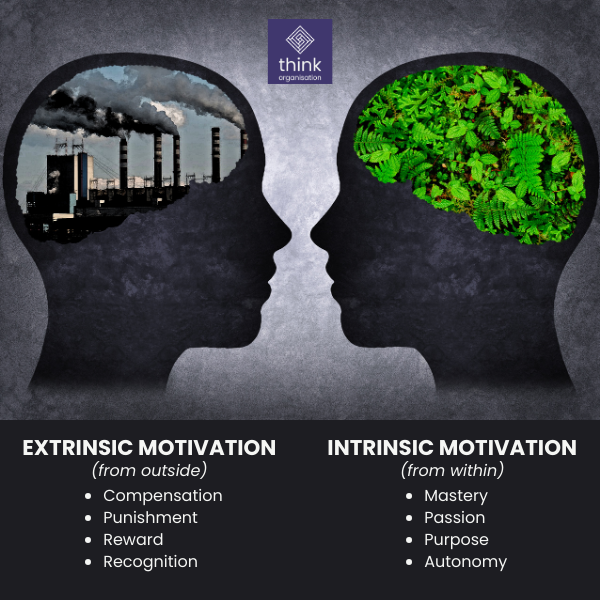
Sometimes having a good night’s sleep can increase motivation, whereas for others it could be working with people or having space to work alone. But to provide an alternative to the carrot and stick it is vital leaders focus on the intrinsic drivers people have. Reward versus punishment is extrinsic. In contrast, intrinsic motivations are driven from within us.


These include, but are not limited too:


1. Purpose

People are driven by what really matters to them, and/or others. Think of children. When they have a purpose and know what they are doing matters then they are motivated to keep doing what they are doing. The same is true in the workplace.


Simon Sinek famously outlined the importance of purpose, and finding your why, at an organisation level (Sinek, 2009). More recently, his book ‘Finding Your Why’ focuses on individual purpose which can be helpful for some individuals. Yet be warned, handing out this book to your team is NOT the answer. For many, this can be too much too soon. Instead, focus on the individuals, use coaching and active listening to really understand them.


Purpose should not be forced or coerced, it is about self-reflection and self-awareness but as a skilled leader your job is to uncover this for your people – reaching them on their level (not yours).


2. Autonomy

There is a myth going around that people hate change.


This is not true. In reality, people love change e.g. new hairstyles, new houses, different place for holidays, new clothes but they like change when they choose it.


When change is forced on someone they tend to resist. This is why autonomy is so crucial in motivating people at work.


Allowing people to have a say in what they are doing, how they are doing it and allowing them to use their own mind and thoughts to solve problems, is critical to ensure buy-in, commitment and motivation at an intrinsic level.


Leaders have a role in providing guardrails to ensure employees have a plan (direction & purpose), and that they are in control of their own destiny, with the tools and resources to be successful.


3. Mastery

People always like to improve.


Think about how competitive people are, especially children. Many of us, to differing degrees, have a competitive streak. It is that sense of improvement, getting better, developing, learning more or growing which helps ensure we keep doing what we are doing, and improving.


Individuals who get stuck in jobs where there is no room to improve, where suggestions no matter how good they are, are rejected and where status-quo is everything, can be extremely detrimental to our health and well-being.


People are motivated by seeing, feeling, hearing and getting external feedback on how they are improving and growing. This keeps us motivated. How often have you moved jobs or companies because you felt you were stuck? Or going nowhere?


4. Belonging

People need to belong.


It is an innate need for all humans built from our primal survival instincts. Because humans who didn’t work with others, or belong to a group, did not survive.


This need to belong may vary, and can be met through friendships, work or other activities but feeling like you don’t belong, can quickly demotivate people in the workplace. Every leader has a responsibility to ensure that all employees see, think and feel that they are part of something.


It is fundamental to ensuring people are deeply motivated at work. Motivation also fosters collaboration, innovation and improves people’s health and wellbeing. Diversity has been shown to add value to organisations, but only when people feel included and that they really belong.


5. Trust

Trust is a fundamental element which all leaders need to cultivate with their employees, teams, peers and organisations.


Delivering 1-4 helps with this but ultimately if leaders can’t be trusted then motivation will dissipate.


Trust is discussed in another article we recently published, however, motivation is all about connection, purpose and trust.


How often have you been let down at work? Or someone has promised they will deliver and this hasn’t happened?


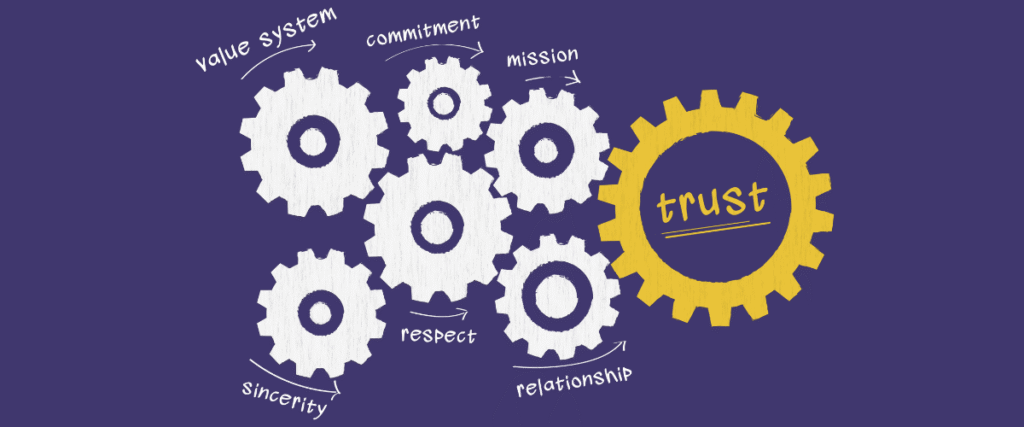
Creating trust is multifaceted as people need to be capable, willing, able, consistent as well as really care about each other to build and maintain trust.


What Next?

Forget the carrots. Ditch the stick. At Think Organisation we help leaders create cultures people want to be part of – not ones they fear or tolerate because they have no choice.


We help everyone in your organisation think differently, so contact us today to know more. If you are ready to move beyond compliance and gain real commitment from your employees then reach out to us today.

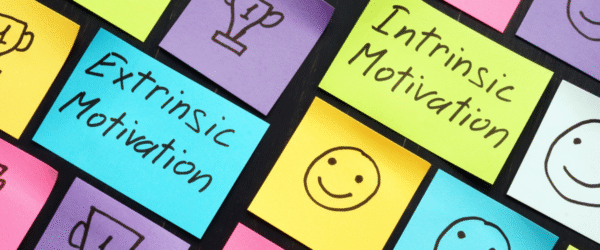
Motivation post it notes. Intrinsic or extrinsic.

More about Motivation

There’s more about Motivation in this Think Organisation Post: Leadership Fundamentals : Psychology, People, Purpose, Plans

Alternatively, copy and paste this link into your browser: https://cortex.clyq.co.uk/leadership-fundamentals-psychology-people-purpose-plans/

How To Create Trust: The Invisible Thread of Successful Cultures

There is one thing that has remained constant over the 25+ years Sarah Clarke and Steph Durbin, our Co-Founders, having worked across 35+ industries: culture is the bedrock of success. Culture is built on trust.

While strategy, plans and performance targets are all vital, organisations ultimately succeed or fail based on how things are done around here. The unwritten norms, the everyday behaviours and the energy of the workplace, ultimately at the very core of all of that lies something less tangible but far more powerful: trust.

What Do We Mean by ‘Organisational Culture’?

Organisational culture is more than a mission statement or company sayings. It is the shared values, beliefs and behaviours that shape how work gets done.

Culture is felt in:

  • How decisions are made
  • How people communicate
  • How leaders lead
  • How employees interact with one another

And beneath all of this? Trust. At the heart of a healthy culture and a thriving organisation lies trust – without it, no matter how good they are, even the best strategies crumble.

What Is Trust & Why Does It Matter?

Trust is the firm belief in the reliability, truth, ability or integrity of someone or something.

Trust is context-dependent and built over time. Trust is influenced by our thoughts, feelings, experiences and relationships. In the workplace, trust can take many forms:

  • Interpersonal Trust: Confidence that others will act fairly, honestly and with goodwill.
  • Organisational Trust: Belief in the intentions and ethics of leadership and the wider business.
  • Technological Trust: Confidence in the accuracy and reliability of systems and data.

In a recent client meeting, most of the discussion focused on whether the data was accurate (and not on what the data was telling them). This is a clear sign of eroded trust. When trust in information or technology breaks down, it stalls progress and clouds decision-making.

So, how can we build and maintain trust across organisations?

Ken Blanchard’s ABCD of Trust

In his book Trust Works! (2013), Ken Blanchard outlines four key elements of trust, using a simple but powerful framework: ABCD. While it simplifies a complex concept, it provides a helpful lens for reflection and action:

  1. Able – Do you have the competence and skills to deliver?
  2. Believable – Are you honest, with a strong sense of ethics and integrity?
  3. Connected (Caring) – Do you show concern for others? Do people feel you have their interests at heart?
  4. Dependable – Do you follow through on promises and stay consistent?

Let’s break this down a bit further, and if you need more information we recommend purchasing this book.

Are You Able to Be Trusted?

Trust starts with ability. You need to demonstrate the competence to deliver on your promises. Whether you’re a senior leader setting strategic direction or a team member committing to a deadline, credibility comes from capability.

When people fail to deliver, especially repeatedly, trust is reduced. But mistakes happen. The key is how we respond: are we accountable, transparent, and proactive in recovery? Do we keep people up to date and communicate what is happening, which leads to the next element.

Are You Honest and Open?

Integrity is non-negotiable. When people act dishonestly or prioritise personal gain over the team or organisation, trust erodes rapidly. Openness, transparency and moral consistency create safe and high-functioning environments.

There are elements to consider. For example, are your teams confident that others have their backs? Or are they second-guessing motives and questioning transparency? Regularly measuring perceived integrity across teams can shine a light on hidden issues that undermine trust. Understanding levels of psychological safety can also help.

Do People Know You Care?

Trust grows when people feel seen, heard and valued. Leaders who genuinely care about their teams (and show it through actions, not just words) will create psychological safety.

That sense of connection builds the kind of loyalty and mutual respect that fuels high-performing teams.

Are You Dependable?

Consistency is often underrated. In reality, the simple act of doing what you say you’ll do, time and again, builds a strong foundation for trust.

Being dependable shows people they can rely on you, especially when things get tough. Again communication can be key, being dependable is about keeping people up to date and in the loop.

Culture Doesn’t Exist Without Trust

In every organisation we’ve worked with, trust has been the critical, non-negotiable ingredient for cultural health. The moment trust doesn’t exist, or dwindles, or is questioned there are different directions which cultures can go.

Because trust influences how people behave, what they believe is possible, and influences whether they bring their best selves to work. Many clients have invested heavily in employee engagement surveys and measures, however when they fail to deliver improvements this can erode trust. Because the organisation is seen as not dependable.

As leaders and teams, if we want to build resilient, adaptive and high-performing cultures, we must ask ourselves regularly:

  1. Are we truly able to be trusted?
  2. Are we acting with integrity?
  3. Are we showing we care?
  4. Are we consistent and dependable?

These questions can be asked at an individual, team or organisational level. For example, if a board isn’t able to be trusted, or doesn’t act with integrity this quickly undermines trust in the board and organisation as a whole.

The answers to these questions will tell you everything you need to know about the strength of trust, and culture, in your team or organisation. Especially, when the answers are gleaned from multiple sources by experienced, competent, open and honest experts who consistently deliver improved cultures and do what they do because they care about creating workplaces where everyone can thrive.

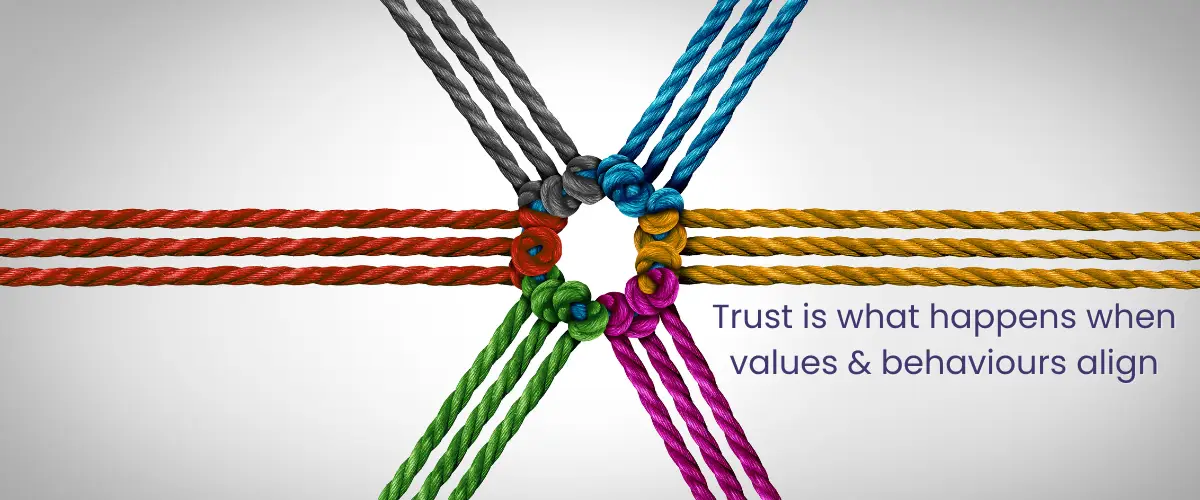
Trust

More about Culture

There’s more about Culture in this Think Organisation Post: How To Make Your Work Culture Fair

Motivation: Understanding What Drives People at Work

The reason a person acts or decides to behave in a certain way is usually down to motivation. Motivation itself is not visible. It is an internal process. Motivation is the driving force behind human actions that initiates, guides and maintains goal-oriented behaviours.


With over 18 million references to motivation on Google it is easy to become lost in the complexities of motivation. So what do you need to know about motivation at work?


The future is intrinsic motivation.

Work is an activity which someone undertakes to gain a benefit or achieve a purpose. Years ago, the majority of work consisted of tasks which needed to be undertaken (often physical e.g. ploughing).


Workers would be skilled in their task (e.g. a farrier) and this would become their profession. Workers would often get promoted to the role of manager or supervisor. Their task would be to ensure that all workers completed their tasks on time, on budget and to the required quality.


Think about a task you have completed at work recently. Did you feel a sense of accomplishment when you’d finished? Did you lose track of time as you were completing it? Or did you rush to complete it focusing on when you would be paid? Were you bored or uninterested when you completed the task? Depending on your responses will depend on whether you were intrinsically or extrinsically motivated.


Motivation is complex and many tasks fit into both extrinsic and intrinsic – if you would like to discuss motivation book a free 30-minute consultation here.


This image shows the two sides to motivation - extrinsic and intrinsic.


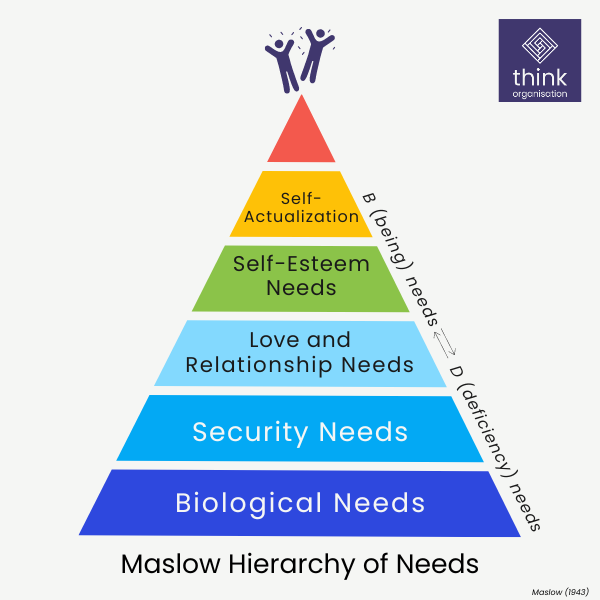
Everyone has basic needs.

Abraham Maslow designed the Hierarchy of Needs to explain motivation in the 1940’s and it is still helpful today – especially when at work.


Think Organisation often works with clients to utilise individual, team and organisational hierarchy of need models to revolutionise employee engagement and productivity as part of our culture transformation projects.


Have a look at the model below and ask yourself what are your needs at each of the different levels?


So often organisations focus on the higher needs, such as providing development opportunities, especially when the basic needs of a salary commensurate with the role are not being delivered. The other challenge is this model is unique for every employee, and employees will only share their true thoughts, feelings and motivations if they feel psychologically safe in their team.


Psychological Safety is key.

When an employee feels, and thinks, they are psychologically safe then they will share their true thoughts, ideas, feelings, concerns and suggestions. Psychological safety is multi-faceted and arises as a result of the experiences, reactions and behaviours of others. It is not something you can tell people to be. To understand your perception of psychological safety in your organisation our free measure.


Think about when someone at work, like your Manager, has asked you to explain what you think, or what you need. Have you felt safe being open and honest? Or have you said what you thought you should say? What fitted in with the expectations of what you should say? Humans need to feel like they belong so will often say things to help this, avoiding confrontation and conflict.


Authentic environment.

The environment is the conditions and surroundings in which a person lives or operates. It has a huge impact on how humans behave. Have you ever tried to tell someone to be motivated? The surroundings we find ourselves in impact our motivation.


At times, our environment is a product of our motivations, effort and talents. Linked to the first few levels of the hierarchy of needs, humans have physical requirements such as warmth, shelter and somewhere to work effectively. At work, the environment needs to be authentic, stable and safe.


When this is not the case people’s motivations focus on creating a safe, stable environment they can influence or control. This often leads to negative behaviours as a result of the environment being inauthentic.


Ken Blanchard (2013) designed a model where trust is created when people demonstrate competence (are able), act with integrity (are believable), care about others (are connected) and behave reliably (are dependable). In many ways, this applies to environments as well.


Clear purpose.

Many organisations focus on their purpose, investing significant sums in purpose identification, strategies and marketing communication plans to communicate it effectively. This builds on the need for an environment to be authentic.


Without this focusing on purpose can be detrimental to businesses. History is plagued with scandals where people’s actions and behaviours have been misaligned to the publicly professed purpose of an organisation. People will know if there is any degree of misalignment and the depth and breadth of this can significantly impact the motivation of all employees.


To understand more about what drives you, and others, at work then please subscribe to our LinkedIn page.


Conclusions

How does intrinsic motivation play a critical role in enhancing employee engagement and productivity at work, compared to extrinsic motivation?


Intrinsic motivation is pivotal in enhancing employee engagement and productivity because it stems from within the individual, driven by personal interest, enjoyment, and a sense of accomplishment in the work itself. Unlike extrinsic motivation, which relies on external rewards such as money, promotions, or recognition, intrinsic motivation fosters a deeper commitment to the task.


Employees who are intrinsically motivated are more likely to experience job satisfaction, exhibit creativity, and persist in the face of challenges. This internal drive encourages a more meaningful connection to their work, leading to sustained effort and higher-quality performance.


In contrast, extrinsic motivators can sometimes undermine intrinsic interest, especially if overemphasised, potentially leading to reduced motivation once the external rewards are removed (e.g. bonuses).


What strategies can organisations implement to ensure psychological safety among employees, fostering an environment where they feel comfortable sharing their true thoughts and ideas?


Organisations can ensure psychological safety by implementing several key strategies that promote openness and trust. First, leaders should role model inclusive behaviour, actively listening to and valuing all employees’ input without judgement. Establishing clear communication channels and regular feedback loops allows employees to voice concerns and suggestions safely.


Experiential programmes on active listening and empathy can equip managers with the skills needed to foster a supportive atmosphere.


Additionally, recognising and rewarding vulnerability and honest communication can reinforce a culture where employees feel safe to express their true thoughts. Creating diverse and inclusive teams also contributes to psychological safety, encouraging different perspectives.


Addressing any instances of behaviour which are detrimental to psychological safety need to be dealt with swiftly and transparently. This helps maintain a respectful and trusting workplace environment.


How can organisations align their stated purpose and values with their employees’ experiences and the overall work environment to avoid misalignment and maintain high levels of motivation and trust?


Organisations can align their stated purpose and values with employees’ experiences by ensuring that their actions consistently reflect their professed ideals. This alignment starts with transparent and authentic leadership that exemplifies the company’s values in everyday decisions and interactions.


Regularly communicating the organisation’s purpose and demonstrating how it translates into concrete policies and practices helps reinforce this alignment.


Involving employees in the development and refinement of the organisation’s mission can also foster a sense of ownership and connection and ensure authenticity.


Once basic needs are met, opportunities for professional growth, recognising achievements that align with the individual’s values, and creating a supportive and inclusive work environment are crucial. By maintaining this alignment, organisations can build trust and help employees be motivated.


Over time, as employees see that their work contributes to a greater, consistent purpose, this enhances overall engagement and loyalty fourfold.


Think Performance. Think Excellence. Think Impact.


Check our Insights page for more valuable information.

More about Motivation

There’s more about Motivation in this Think Organisation Post: How Can Leaders Improve Motivation in their Workplace Culture

Alternatively, copy and paste this link into your browser: https://cortex.clyq.co.uk/how-can-leaders-improve-motivation-in-their-workplace-culture/
Are you ready to

start your joruney?

Take the first step to transform your workplace.

Call us on 07123 456 789
Email us at sarah@cortexworx.com

© Copyright Cortex Worx LTD. All rights reserved. | Website by Clyq