
Tag Archive for: organisation

Human Behaviour and Artificial Intelligence: Why Their Connection Really Matters

Artificial Intelligence (AI) is everywhere.


First invented in 1950s, it is only recently that Artificial intelligence has become so prolific across society as a whole. Ten years ago AI was still a dream for the majority of us. (Deutsch, 2012).


What is Artificial Intelligence?

Let’s look at some dictionary definitions.


Intelligence is the ability to acquire and apply knowledge and skills. It is the ability to reason or make judgements. The word artificial refers to something which is produced by humans, meaning it does not occur naturally. It is machines which are capable of artificial intelligence. Machines are an apparatus which use mechanical power, and consist of several parts, which function together to perform a task.


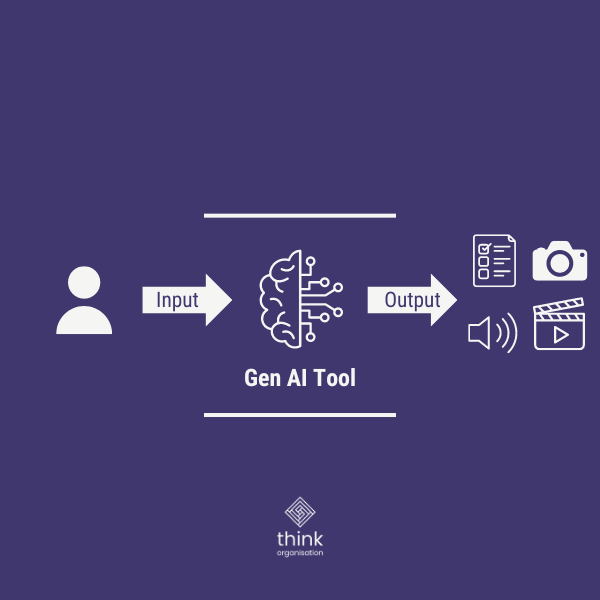
Artificial intelligence is a machine which has the ability to learn, understand and make judgements or have opinions based on reason. The machine is capable of building something new, as opposed to just reprocessing information which has been entered.


Artificially intelligent machines were first invented in the 1950s (Harvard, 2017). These machines were significantly slower (and larger!) as well as being less powerful compared to today’s computers. At the time, AI pioneers like Alan Turing and Marvin Minsky laid the groundwork for the AI we enjoy today. At the time, AI machines could perform relatively simple tasks such as logical reasoning, solving mathematical problems, and playing simple games like tic-tac-toe.


At this point, the main focus was on developing algorithms and exploring the theoretical foundations of artificial intelligence rather than more practical applications.


For example, it wasn’t until forty years later, in 1997 that AI really cracked playing chess. IBM’s Deep Blue machine made headlines by defeating world champion Garry Kasparov in a six-game chess match. This marked a significant milestone in AI’s ability.


What has Artificial Intelligence got to do with Psychology?

Understanding human intelligence has alluded humans for years. Psych (meaning soul) ology (meaning study of) is a multi-faceted discipline covering many areas of science. Today, humans (including Psychologists) still debate what intelligence is and how to measure it.


Psychologists have proposed various definitions and theories of intelligence over the years, reflecting different perspectives on what intelligence encompasses. Some psychologists view intelligence as a single, general cognitive ability (GCA), while others argue for a broader, more multifaceted understanding.


Theories of Intelligence

Leading experts have proposed various theories of intelligence, each offering distinct perspectives on the nature and measurement of cognitive abilities:


      • Psychometric approach

      • Multiple intelligences theory

      • Triarchic theory of intelligence

      • Theory of multiple factors


    These theories all represent different perspectives on intelligence, highlighting the complexity of the concept and the diverse ways in which it can be conceptualised and measured.


    The human brain is an intricate organ

    It serves as the control centre for the body’s functions and behaviours. It consists of billions of nerve cells called neurons, which communicate with each other through electrical and chemical signals. The brain is divided into different regions, each responsible for specific functions such as movement, sensation, language, memory, and emotions.


    Sensory processing centre

    Information processing in the brain occurs through complex neural networks. When we perceive sensory information from the environment, such as seeing, hearing, or feeling, neurons in the sensory areas of the brain process this information and transmit it to other regions for further interpretation and action.


    Memory formation involves the encoding, storage, and retrieval of information. Different types of memory, including short-term memory and long-term memory, are supported by various brain structures and neural pathways. Emotions are regulated by regions such as the amygdala and prefrontal cortex, which play crucial roles in processing and responding to emotional stimuli.


    Consciousness, awareness, and higher cognitive functions like decision-making, problem-solving, and creativity involve interactions between different brain regions, particularly the cerebral cortex—the outer layer of the brain responsible for higher-level processing.


    Overall, the human brain functions through the coordinated activity of neurons and neural circuits, enabling us to perceive, think, feel, and act in response to our environment and internal states.


    We must consider this when discussing artificial intelligence, can a machine do all of this? And how can it do all of this?


    Why does this matter?

    The human brain has over 86 billion neurons, which we couldn’t see until the 1970s when magnetic resonance imaging (MRI) was first developed. So how do we know what AI is doing? How can we see inside the minds of the machines?


    Today AI has learned to do a wide range of tasks across various domains, including:


      1. Playing Games: AI can play complex games like chess, Go, and video games at a level surpassing human experts.
      2. Natural Language Processing (NLP): AI can understand, generate, and translate human languages, enabling applications like chatbots, language translation services, and sentiment analysis.
      3. Image Recognition: AI can accurately identify objects, people, and scenes in images, powering applications like facial recognition, image search, and autonomous vehicles.
      4. Medical Diagnosis: AI algorithms can analyse medical data to assist in diagnosing diseases, detecting abnormalities in medical images, and predicting patient outcomes.
      5. Autonomous Vehicles: AI enables self-driving cars to perceive their environment, make decisions, and navigate safely on roads.
      6. Recommendation Systems: AI algorithms can analyse user preferences and behaviour to recommend products, movies, music, and other personalised content.
      7. Financial Trading: AI is used in algorithmic trading to analyse market data, identify patterns, and execute trades at high speeds.
      8. Drug Discovery: AI accelerates the process of drug discovery by predicting molecular interactions, designing new compounds, and identifying potential drug candidates.
      9. Robotics: AI enables robots to perform tasks such as assembly, navigation, and object manipulation in diverse environments.
      10. Personal Assistants: AI-powered virtual assistants like Siri, Alexa, and Google Assistant can understand spoken commands, answer questions, and perform tasks like setting reminders and sending messages.


      These are just a few examples and are not exhaustive due to the speed at which AI is developing.


      Why should I care?

      For the majority of the population, it probably wasn’t until the end of 2022, when ChatGPT was launched, that we began to think and consider AI. This morning, a morning greeting from ChatGPT is shown below asking what it can help with.

      You should care, because these questions are based on my search history. And the speed of change is ground-breaking.


      It took the telephone just over 75 years to reach 100 million users. The mobile phone took 16 years, with the world wide web halving this, reaching 100 million users in 7 years. ChatGPT took 2 months. Surpassing previous record breakers, TikTok which took 9 months and Uber which took 70 months. The speed at which AI is advancing is faster than anything humans have ever seen before.


      So what next?

      All humans need to understand AI.


      Psychologists bring invaluable expertise to the field of AI, contributing insights crucial for the development of responsible and user-centric technologies. With their deep understanding of human behaviour, cognition, and emotions, psychologists play a pivotal role in shaping AI systems to align with human preferences, needs, and ethical considerations.


      The ability to ensure big data used in AI is robust, reliable and valid is fundamental to the integrity of the algorithms. Psychologists have long focused on the need for machine innovation, whilst ensuring they are ethically sound, especially in terms of addressing concerns related to privacy, bias, fairness, and transparency.


      As AI becomes increasingly integrated into daily life, psychologists contribute valuable insights into human-machine interaction, much like ergonomics and health and safety in the past.


      Understanding the human factor in AI and machine integration is fundamental to the success of organisations, and society as a whole, just as it was in transforming how humans interacted with airplanes (Harris, 2014).


      If you would like to discuss how the Think Organisation can ensure your organisation and its people can harness the power of AI please contact us.


      Think Performance. Think Excellence. Think Impact.

      Check our Insights page for more valuable information.

      More about Artificial Intelligence

      There’s more about Artificial Intelligence in this Think Organisation Post: Leadership In An Artificially Intelligent World

      Alternatively, copy and paste this link into your browser: https://cortex.clyq.co.uk/leadership-in-an-artificially-intelligent-world/

      THINK: How Can You Help People and Organisations Think?

      Words convey how we think by serving as vessels for our thoughts, ideas, and perceptions, reflecting our cognitive processes and the depth of our understanding.


      Words create reality.

      The co-founders of Think Organisation took many months to agree what the Think Organisation should be called because of the power of words. Words possess immense power, shaping beliefs, emotions, and actions. They inspire, console, educate, and influence. With words, we connect, heal, and build. They reflect culture, shape identities, and preserve legacies.


      Words empower, transform, and define the human experience, resonating deeply within hearts and minds.


      Why is the word ‘think’ so important to organisations?

      The word ‘think’ is vital to organisations as it prompts critical analysis, innovation, and strategic decision-making. It fosters a culture of creativity, problem-solving, and continuous improvement. Through thoughtful consideration, teams devise effective solutions, anticipate challenges, and adapt to dynamic environments, driving success and sustainability. Everyone in an organisation needs to think.


      Successful organisations provide structure, employment, and invaluable societal contributions. They offer goods, services, and innovation, shaping communities and driving economies. Through collaboration and purpose, organisations fulfill needs, foster growth, and drive progress, enhancing quality of life for individuals and society. Every organisation needs people to exist.


      Everyone has a brain.

      People’s brains power organisations, driving innovation, collaboration, and productivity. Individuals bring diverse skills, perspectives, and creativity, while collective intelligence shapes strategies and solutions.


      Successful organisations harness human potential, fostering growth and adaptability to thrive in dynamic environments, creating value and benefiting society as a whole. Because every person has a brain, which processes information, everyone needs to think.


      Everyone needs to think.

      This act of processing information is called thinking. If someone has a particular belief, opinion or idea about someone or something this is a thought.


      Thinking is the cognitive process of analyzing, evaluating, and synthesizing information to make decisions, solve problems, and generate ideas. It is the foundation of innovation, problem-solving, and strategic planning. The power of thinking lies in its ability to drive creativity, adaptability, and progress, shaping individual and organizational success.


      Every organisation has people.

      This is the only truth about any organisation. In fact, no organisation can exist without at least one person. Even the word organisation is important – it means a group of people with a particular purpose. This could be business, a charity or a government. The key is that people work together in an organised way towards a shared purpose. A school is an organisation. A social enterprise is an organisation.


      Many businesses function but don’t have a truly shared purpose. How can you be successful if you don’t know the purpose of your organisation? Profit is not purpose. It is an output. People and planet will not survive if profit is the purpose, neither will the organisation.


      Organisations need sustainable thought.

      Organisations need a clear purpose to flourish sustainably. A shared purpose aligns teams, energises efforts, and fosters resilience amid challenges. It guides decision-making, inspires innovation, and attracts talent and stakeholders who resonate with the mission.


      Purpose-driven organisations cultivate loyalty, trust, and societal impact, essential for long-term success and survival.


      Think Organisation

      These two words bring together the essence of helping people. Helping people to understand themselves, and others.


      By doing this Think Organisation empowers organisations to prosper and thrive. Everyone can be more effective using the power of psychology. Harnessing the science behind behaviours, emotions, and motivations allows companies to create environments and cultures where every individual prospers and grows – enabling the collective to benefit.


      Organisations need to think. Humans need organisation.


      Envision a thriving work environment where individuals collaborate, support one another, and freely express themselves. Here, using their intellect to innovate and tackle organisational challenges is encouraged. It’s more than following orders or completing tasks; it’s about critical thinking and problem-solving, not mere automation.


      Take Time to Think

      Firstly you need time. Being able to take time to think has been proven to improve effectiveness of individuals, as well as teams and organisations1. Nancy Kline discussed how to create Time to Think in her book which we highly recommend. As a summary, Think Organisation recommend organisations to focus on:


      1. Setting Clear Goals & Priorities
      2. Breaking down complex problems
      3. Gathering information & opinions
      4. Considering multiple perspectives
      5. Reflecting & Learning (continuously!)


      Communication is key

      Secondly you need other humans. Being able to share ideas, talk through issues and solutions is fundamental to a thinking organisation. To do this everyone needs to be able to communicate their thoughts effectively. As a summary, Think Organisation recommend organisations to focus on:


      1. What is being communicated:
        • the content, message, or information being conveyed, including key points, details, and objectives.
      2. When it is being communicated:
        • the timing or schedule for sharing the information, considering factors such as relevance, urgency, and audience availability.
      3. Why it needs to be communicated:
        • the purpose or rationale behind sharing the information, whether it’s to inform, persuade, motivate, or address specific needs or challenges.
      4. Who needs to do the communication:
        • the appropriate individuals or stakeholders responsible for delivering the message, considering factors such as authority, expertise, and relationship with the audience.
      5. How is best to communicate it:
        • the most effective methods, channels, or platforms for conveying the message, taking into account factors such as audience preferences, accessibility, and the nature of the content.


      The THINK Model

      To do all of this, we always recommend the T.H.I.N.K. model, which has been revised many times by many practitioners over the years.


      1. Is it true? Ensure information is based on fact, evidence or personal opinion (not hearsay)
      2. Is it helpful? Ensure sharing the information benefits others (not just yourself)
      3. Is it inspirational? Ensure the information will help things to move forward, ideally positively.
      4. Is it necessary? Ensure it will help things, that by sharing information things could change.
      5. Is it kind? Vital to ensure information share is sensitive, appropriate and done in a safe manner.


      Conclusion

      By leveraging the T.H.I.N.K model as a way of communicating, individuals can support others and help foster a culture where people can think and communicate effectively.


      The Think Organisation empowers organisations to foster a culture of creativity, collaboration, and critical thinking, supporting leadership teams and boards to drive forward-looking strategies and solutions.


      To learn more about how this T.H.I.N.K can benefit your organisation reach out to us at Think Organisation.


      Think Performance. Think Excellence. Think Impact.


      1. Kline (1999) – Time to Think ↩︎

      More about Motivation

      There’s more about Motivation in this Think Organisation Post: Why Organisations Need to Stop Making Inclusion Exclusive

      Alternatively, copy and paste this link into your browser: https://cortex.clyq.co.uk/inclusion-why-organisations-need-to-stop-making-inclusion-exclusive/
      Are you ready to

      start your joruney?

      Take the first step to transform your workplace.

      Call us on 07123 456 789
      Email us at sarah@cortexworx.com

      © Copyright Cortex Worx LTD. All rights reserved. | Website by Clyq