
Think Better, Not Faster: The Science of Pausing for Innovation and Growth
In a world that celebrates productivity, it’s easy to mistake motion for progress. How often do you take a breath or pause at work? Innovation happens when we deliver something new and useful to our customers, organisation or even society as a whole. But with innovation constantly declining, how can pausing help us innovate faster?
Think about your average week at work. . . .meetings roll into more meetings, inboxes refill faster than they empty, and reflection feels like a rare luxury.
For psychologists, leaders, and anyone guiding people through change, there is a growing scientific evidence that pause, which is a deliberate, reflective space, is not wasted time. In fact, it is this time to think which is the birthplace of creativity, clarity, and sustainable innovation (Kline, 1999).
When Doing Less Creates More
The paradox of creativity is that our best ideas often emerge when we stop trying to have them. Stepping away from active problem-solving allows the mind to reorganise information, draw unexpected connections, and reveal insights that relentless focus can obscure.

Scientists refer to this as incubation. It is a recognised stage in the creative process first described by Graham Wallas in 1926 and now well supported by neuroscience research.
During incubation, the brain quietly continues to process information beneath our awareness, in our subconscious. It explains why solutions appear in the shower, or clarity strikes whilst we are on a quiet walk. We may not look like we are doing anything. However, this does not mean we have stopped thinking. In fact, it is because we’ve stopped forcing ourselves to think, that we allow our brains to really think.
Ask yourself, where am I when I have my best ideas? For some it may be on walks, for others in the bath, the shower or even in the gym. Giving our brains time to pause and think, deeply and subconsciously, is crucial. Yet why do organisations seem to promote motion for progress?
Tomorrow, many HR leaders, people experts and inspiring leaders and experts will be descending on the CIPD Conference 2025, aptly focusing on championing people to transform work. Our Co-Founder, Sarah Clarke, is supporting the Semper Hopkins team to deliver 6 interactive sessions we call the Creative Pause in the Relax & Rewind area of the conference but this is about anything but relaxing and rewinding. This is about helping people use the power of their brain to become more innovative, more productive and improve their own, and others, well-being through creativity and allowing time to think.
The Neuroscience Behind the Creative Pause
Our Co-Founder undertook extensive research which transformed her misconceptions and understanding of creativity whilst completing her MSc dissertation. One element is that creativity is not down to a single area of the brain. Current research shows there is not a single “creative region” of the brain that sparks ideas, but it is the interaction between three key networks which drives creative thoughts in our brains. These are referred to as:
- The Default Mode Network (DMN), which is active when we daydream or reflect inwardly, responsible for imagination and association thoughts.
- The Executive Control Network (ECN) which is active during focused problem-solving, analysis, and decision-making.
- The Salience Network (SN) which acts as a switch, guiding attention between inner reflection and external focus.
Based on studies by Beaty and colleagues (2015 & 2019) research shows that creativity depends on how fluidly we move between these networks. It was based on this research that the creative pause sessions were first designed. Because, focusing on something else, allowing our brain to be creative helps allow this shift.
Fuelling and releasing the brain from the narrow beam of focused attention and enabling it to diffuse and move to more associative thinking that can, and often, fuels originality of thought.
In other words, pausing isn’t doing nothing. It is allowing your brain to do what it does best: integrate, imagine, and make connections. Many of which you will be unaware of, that is until the idea or solution pops into your conscious thought.
During her research, our Co-Founder’s supervisor was Dr Mark Batey, an innovation and creativity guru who worked at the University of Manchester. His seminal research highlighted that creativity doesn’t exist in isolation. In fact, it can operate across four levels. The person, the process, the environment (refereed to as the press) and the product. These levels interact, which makes measuring creativity so difficult as it is vital to decide which lens is being used (Batey, 2012).
This heuristic model focused on the following elements:
- The person brings motivation, mindset, and self-belief.
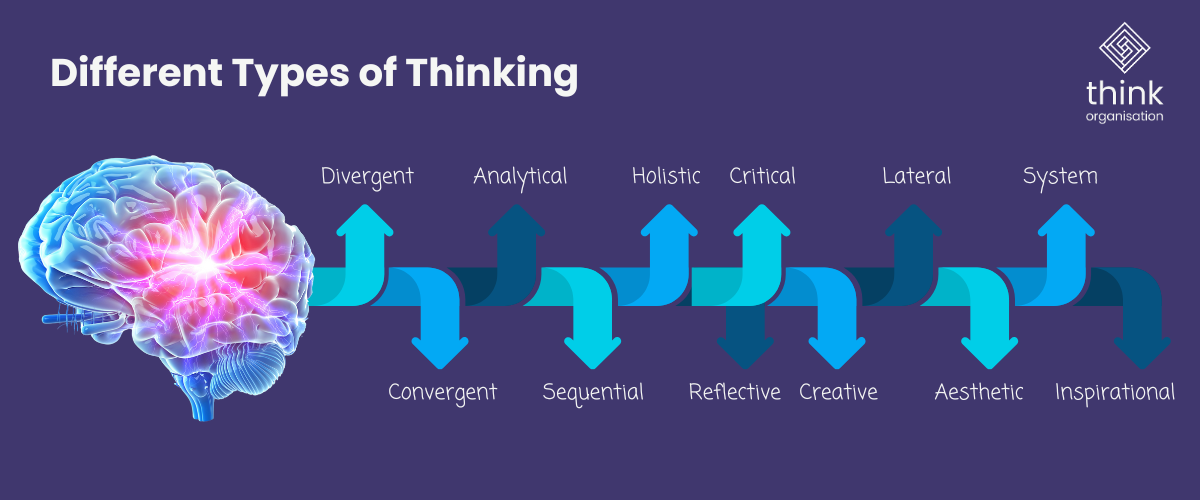
- The process involves divergent (idea-generating) and convergent (idea-selecting) thinking.
- The press, or environment, either nurtures or constrains creative behaviour and innovation.
- The product is what emerges, this can be tangible innovation or a new understanding.
Based on this, the suite of Creative Performance workshops were designed. In addition, our creative pause sessions touch on all four levels within an hour.
Join us to allow yourself time to reconnect with the person, understanding your intrinsic motivations, where we will support you in the process of reflection, and help you understand the elements of the pressures which impeded or fuel creativity and innovation.
As Batey notes, creativity thrives when people feel psychologically safe, valued, and given permission to think differently. The pause, therefore, is as cultural as it is cognitive. How often do you pause to think in your work?
Why Psychologists and Leaders Should Model the Pause
Psychologists and leaders are often at the centre of complexity. That is certainly how the Think Organisation team operate. Every week we are helping teams adapt, shifting cultures, and navigating uncertainties with the businesses we support. Yet constant responsiveness can come at a cost.

When we don’t pause, we lose access to deeper intuition, empathy, and perspective. These are the very capacities that make us effective in human systems. That’s why some of our great thoughts come whilst we are on holiday, well away from the office and constant motion of being at work.
So how can leaders embed creative pauses into their organisational and team cultures?
Embedding pauses into professional and organisational practice isn’t indulgent; it is strategic.
Research shows that reflective time improves problem-solving, boosts wellbeing, and enhances collective learning.
In cultures that reward speed, modelling stillness is an act of ultimate leadership.
Designing the Pause Into Organisational Life
To make the creative pause part of daily practice, Think Organisation recommends small, intentional shifts:
- Micro-pauses: Take 5–10 minutes before key decisions or during meetings to ask, What assumptions are we holding? What might we be missing? A quick walk to gain some fresh air is often all the time that is needed.
- Reflection rounds: Begin or end meetings with space for sense-making rather than updates.
- Thinking time: Schedule undisturbed blocks in calendars and protect them as fiercely as client time. If these are the first elements of time to be sacrificed what does this say about your commitment to innovation?
- Creative spaces: Build environments that signal reflection is valued in your organisations. Areas such as quiet zones, promoting walking meetings, off-site thinking days or booking creative performance workshops all empower employees to be more creative.
- Model curiosity: Leaders who share their reflective practices give permission for others to pause too.
We know it is difficult, which is why at Think Organisation, we work with leaders who understand that the future of performance is not about doing more, but about thinking better.
Whether you need an ICF accredited executive coach, leadership development or an organisational culture review. The science is clear: creativity, innovation, and resilience all depend on our ability to pause, to step back, connect ideas, and reimagine what’s possible.
So, next time you feel the urge to rush from one task to another, take a breath.
The most important thing you could do might not be the next thing, it might be the pause before it.
Reach out to the Think Organisation for more support. More information about our Creative Performance Workshops can be found here or for your own bespoke onsite solution, reach out.
References
- Beaty, R. E., Benedek, M., Silvia, P. J. (2019). Network neuroscience of creative cognition: Mapping cognitive mechanisms and individual differences.
- Batey, M. (2012). The Measurement of Creativity: From Definitional Consensus to the Introduction of a New Heuristic Framework.
- Wallas, G. (1926). The Art of Thought.
More about Innovation
| There’s more about Innovation in this Think Organisation Post: How to Create a Culture of Innovation Alternatively, copy and paste this link into your browser: https://cortex.clyq.co.uk/how-to-create-a-culture-of-innovation/ |