Tag Archive for: wellbeing

Toxic Culture : Behaviour Is At The Heart of Scandal & Failure

The news is full of stories about toxic culture. Toxic cultures have contributed to financial collapses, personal scandals and reputational downfalls. From politics to business to public institutions, the number of examples seems to be growing exponentially.


Whether it is politicians abusing power, corporate leaders chasing profit at all costs or charities losing the trust of the very communities they serve, culture is the term many would use to describe the cause of the crisis. But does this description add value?


Does Culture Eat Strategy for Breakfast?

It’s often said that “culture eats strategy for breakfast” but is this really true? Despite the endless discussions of whether Peter Drucker actually said this, or if he did has it been interpreted how he intended? It is a prime example of the impact culture can have on how information is interpreted.


A bold plan, a strong financial model, or even the most talented leadership team cannot survive long in the shadow of a toxic workplace culture. If behaviours are unchecked, if voices are silenced, and if the pursuit of short-term gains overrides long-term purpose, failure is only a matter of time. How visible this is internally versus externally is also on the clock in terms of exposure, that and the investment in a good marketing team.


So What Are The Warning Signs of a Toxic Culture?

Toxicity rarely happens overnight. And we have yet to meet a leader who deliberately designed a toxic culture.


It creeps in slowly, often disguised as “high performance” or “efficiency” and is often an indirect result of misaligned goals, metrics or increasing pressure being place on people.


Warning signs can include:


    • Fear & Silence – where employees stop raising concerns or ideas, and conversations become hidden or none existent.

    • A Hero Culture – where success become tied to specific individuals, as opposed to teams

    • Blame Becomes A Game – mistakes become hidden, or deflected, and people are worried about what others think

    • Misaligned Values – values may not exist or be stated, or if they are then which is said publicly doesn’t match daily behaviours

    • Wellbeing Washing – pressure, burnout and high staff churn could be seen as ‘normal’ and wellbeing isn’t a priority


This list is not exhaustive, and often toxic cultures can look positive on the outside, but not truly live and breath these behaviours in reality. When these behaviours become embedded, accountability disappears and poor decisions are rationalised, hidden or just become part of the expectations.


The cost of a toxic culture can be huge, both in terms of negative PR and brand image, and the lost employee productivity. Because a toxic culture doesn’t just damage staff morale, it destroys value.


A toxic culture leads to higher turnover, spiralling sickness costs, disengagement, customer mistrust, regulatory fines, and, ultimately, reputational collapse.


For leaders, ignoring cultural red flags is no longer an option. Regulators, investors, and the public are scrutinising culture like never before and the pressure is mounting.


So How Do We Build Healthy & Resilient Cultures?

The good news is that cultures can always be shifted. Sometimes quickly, other times more slowly. This can be done by leaders who take tangible steps to rebuild trust and create healthy workplaces where people – and businesses – thrive.


Key actions often include:


1. Starting with a purpose – because it is vital to reconnect everyone to the “why” behind the organisation

2. Modelling the behaviour you expect – people follow people, and this is where leadership authenticity sets the tone

3. Create psychological safety – encourage employees to speak up, be open to feedback and understanding reality

4. Listen and act on feedback – show that raising concerns leads to change, don’t penalise people for being honest

5. Measure what matters – track engagement, wellbeing, trust and psychological safety alongside financial metrics

6. Recognise and reward the right behaviours – culture is reinforced by what is celebrated and promoted


Whilst toxic cultures may dominate many headlines currently they don’t have to dominate workplaces.


Organisations that choose to prioritise culture alongside performance will not only avoid the scandals we see in the news, but they will also build stronger, more resilient businesses where people genuinely want to contribute and grow and bottom lines benefit.


If you would like to measure your culture please reach out.

More about Culture

   
There’s more about Culture in this Think Organisation Post: Conscious Competence

Alternatively, copy and paste this link into your browser: https://cortex.clyq.co.uk/how-to-use-the-four-stages-of-conscious-competence-to-improve-your-culture/

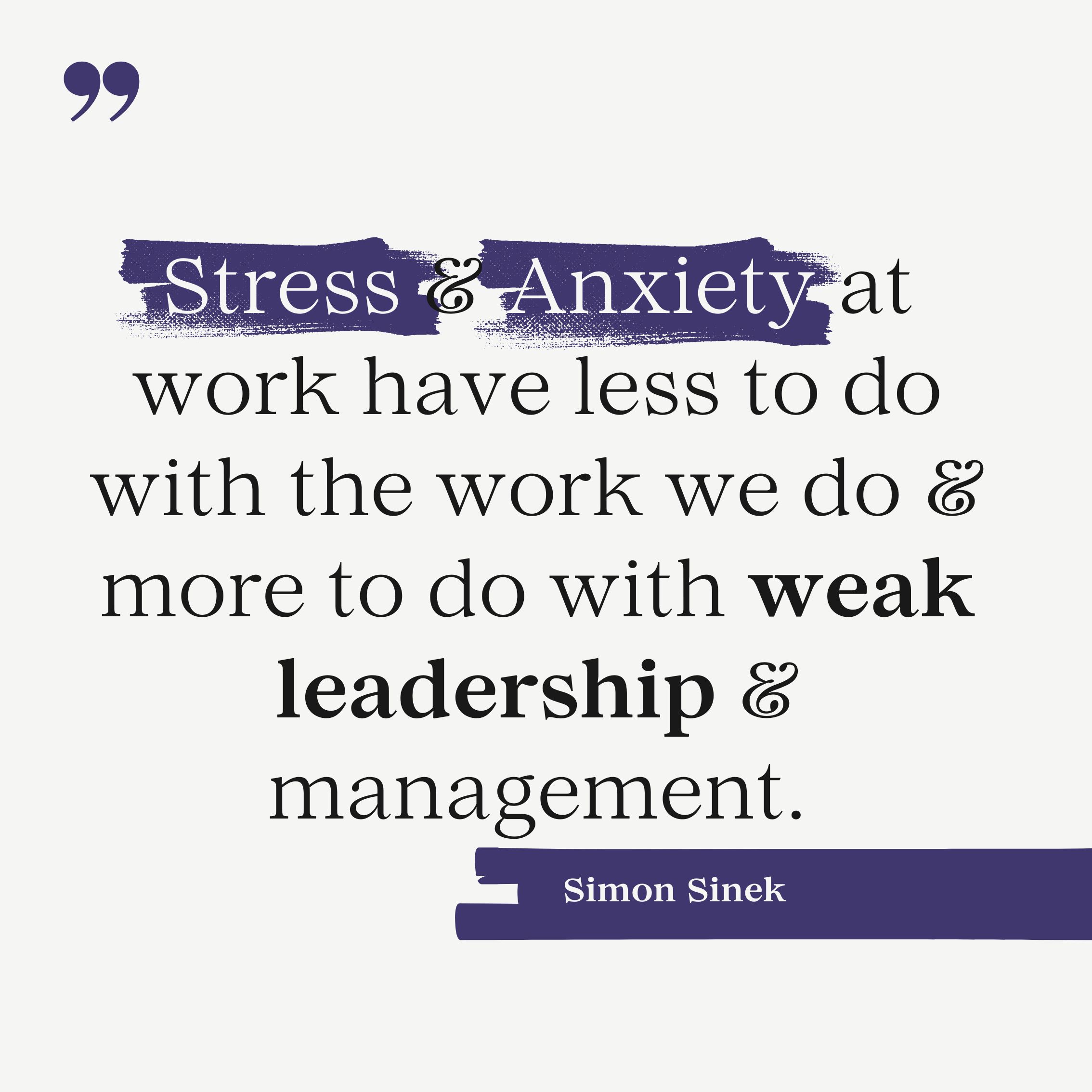
How to Successfully Lead & Reduce Stress

Leaders are vital to reduce stress

Leaders play a vital role in reducing employee stress by fostering open communication, empathy, and support. Setting clear expectations, creating work-life balance initiatives, and recognising efforts – they all help create a positive environment where employees feel valued and heard.


Providing resources for stress management, promoting self-care practices, and addressing organisational stressors contribute to a healthier workplace culture.


Leaders can cultivate an environment where employees can thrive and flourish by leading by example and continuously seeking feedback for improvement.


Organisational Stressors

Stress caused by an organisation, often called organisational stress, encompasses the psychological and physical strain experienced by employees due to various factors within the workplace environment.


This type of stress can arise from excessive workload, unrealistic deadlines, unclear job roles, poor communication, lack of support from supervisors or colleagues, perceived unfair treatment, inadequate resources, or toxic work culture.


Organisational stress can lead to decreased job satisfaction, impaired performance, burnout, and negative health outcomes if not effectively managed.


A Healthy Culture Reduces Stress

Culture in an organisation plays a more significant role than well-being yoga in promoting health and well-being due to its pervasive influence on employees’ daily experiences and behaviours. While yoga sessions can offer physical and mental health benefits, a positive organisational culture provides a supportive framework which extends beyond individual activities.


A healthy culture prioritises employee well-being at its core, fostering an environment where individuals feel valued, supported, and respected.


This includes promoting work-life balance, encouraging open communication, recognising achievements, and providing opportunities for growth and development. In contrast, well-being yoga, while beneficial, addresses only one aspect of employee well-being and may not address broader cultural issues.


Identify Systemic Issues Which Cause Stress

Moreover, a positive organisational culture contributes to stress reduction by addressing systemic issues such as excessive workload, poor management practices, or a lack of work-life balance policies.


By promoting a culture of collaboration, trust, and empathy, employees are more likely to feel psychologically safe and supported in managing their stress levels effectively.


Ultimately, whilst well-being initiatives such as lunchtime yoga can complement efforts to promote health and well-being, a positive organisational culture serves as the foundation for creating sustainable, long-term improvements in employee health, engagement, and overall performance.


Top Ten Things a Manager can do to Support Employees

  1. Set Clear Expectations

    • Provide clarity on job roles, responsibilities, and performance standards to minimise ambiguity and prevent unnecessary stress.
    • Support people to understand their roles.
  2. Foster Open Communication

    • Encourage regular dialogue with employees to understand their concerns, challenges, and ideas for improvement.
    • Be open to feedback.
  3. Promote Work-Life Balance

    • Offer flexible work arrangements, encourage the use of vacation time, and discourage overworking to support employees’ well-being outside of work.
    • Be flexible to the needs of employees.
  4. Recognise and Appreciate Efforts

    • Acknowledge and celebrate employees’ achievements and contributions to foster a positive work environment and boost morale.
    • Be authentic in your praise.
  5. Provide Resources and Support

    • Equip employees with the tools, training, and support they need to perform their jobs effectively and manage stressors.
    • Ensure everyone is set up for success with the resources required.
  6. Encourage Self-Care

    • Promote healthy habits such as taking regular breaks, staying physically active, and practising mindfulness to help employees recharge and stay resilient.
    • Be mindful that people relax in different ways and don’t use a one-size-fits-all approach.
  7. Lead by Example

    • Demonstrate healthy work habits, manage stress constructively, and prioritise self-care to set a positive example for employees to follow.
    • You need to role model behaviours.
  8. Address Organisational Stressors

    • Identify and address systemic issues within the organisation, such as excessive workload or poor communication, to alleviate stress at its root cause.
    • Provide clear measurements of progress and be aware that stressors can also have a positive impact in the short term e.g. productivity.
  9. Empower Employees

    • Delegate tasks and responsibilities appropriately, involve employees in decision-making processes, and provide opportunities for growth and autonomy.
    • Empower employees to be responsible for themselves.
  10. Foster a Supportive Culture

    • Cultivate a culture of trust, collaboration, and empathy where employees feel valued, supported, and respected.
    • This tip often happens as a result of the previous nine actions.


By implementing these recommendations, managers can create a supportive work environment that promotes employee well-being, reduces stress, and enhances overall performance and satisfaction.


The most important is to ensure high psychological safety in your organisation (Free Measure) so that people are able to express themselves authentically.


Now is the time for action. For a complimentary 30-minute consultation, reach out to Think Organisation.


Think Performance. Think Excellence. Think Impact.


Check our Insights page for more valuable thought leadership.


More about Wellbeing

There’s more about Wellbeing in this Think Organisation Post: Navigate Life Stress

Alternatively, copy and paste this link into your browser: https://cortex.clyq.co.uk/how-to-successfully-navigate-stress-in-your-life/

How do you unlock employee engagement in the workplace?

Do you enjoy your time at work?

We all spend a third of our lifetime asleep and a third of our lifetime at work (OWID, 2024), so it would be perfect if we could all enjoy our time at work. Organisations benefit with higher innovation and productivity when employees are highly engaged (Gallup, 2020). Employee engagement is defined as the level of enthusiasm and dedication an employee feels towards their job. It is about feelings, thoughts and behaviour. Understanding whether you enjoy your work is the first foundation in employee engagement.

To enjoy something is to take pleasure in a state, process, activity or action. 

Decades of research and experience has led to Think Organisation understanding how a culture is created to drive engagement in the workplace. People need autonomy, mastery, purpose and affiliation to be engaged at work, or even content in life. This is based on the theory of Daniel Pink (2009), McClelland (1961) and Maslow (1954).  

Being contented is feeling of happiness or satisfaction. 

So think about how much you enjoy being at work? If you had to answer on a scale of 0-10, where would you score? What leads you to this level? How would you increase this level? The chances are it would relate to one of the four categories below.


Autonomy

Autonomy refers to the ability and freedom for individuals or entities to govern themselves, make their own decisions, and act independently without external control or interference. It implies having the authority and capacity to determine one’s own course of action. In the workplace, this means being able to decide how you fulfil your role. You know what needs to be achieved, but it is down to you to achieve it. The opposite to this is often called micro-management. 


To measure your autonomy at work think about how you would respond to the following questions:


  1. How much control do you feel you have over your daily tasks and decisions at work? 
  2. Are you able to work independently and make decisions without constant supervision? 
  3. Do you have the flexibility to choose how you approach your work and manage your time? 
  4. Are you encouraged to take initiative and innovate in your role? 
  5. How much input do you have in determining your goals and objectives? 


It always helps to answer questions such as this using a 0-10 scale, as this gives more perspective. It also then allows you to think about, if I am at 6 then what would getting to an 8 look like?


Mastery

Mastery is the state or quality of possessing comprehensive knowledge, skill, or expertise in a particular subject, activity, or craft. It involves reaching a high level of proficiency and understanding through continuous practice, learning, and refinement of one’s abilities.


In the workplace, this means being able to do things with you enjoy and give you energy, usually based on your strengths. Mastery comes out of having a psychologically safe culture. 

To measure your mastery at work think about how you would respond to the following questions:


  1. How confident do you feel in your skills and abilities related to your job? 
  2. Do you feel challenged and engaged by the tasks you perform at work? 
  3. Are you provided with opportunities for learning and skill development? 
  4. Do you receive constructive feedback and support to improve your performance? 
  5. Are you able to apply your knowledge and expertise in meaningful ways within your role? 


Purpose

Purpose is the reason for which something is done or created, or for which something exists. It involves having a clear sense of direction, meaning, or significance in one’s actions, goals, or endeavours. Purpose often provides motivation, fulfilment, and a sense of belonging or contribution to something greater than oneself. In the workplace, this means more than making a profit, which is an output of business. 


To measure your purpose at work think about how you would respond to the following questions:


  1. Do you feel that your work aligns with your personal values and goals? 
  2. What motivates you to perform well in your job? 
  3. Do you understand how your role contributes to the overall objectives and mission of the organisation? 
  4. Do you feel a sense of fulfilment and satisfaction from the work you do? 
  5. Are you able to see the impact of your contributions on others or society as a whole? 


Affiliation

Affiliation refers to the act of associating or connecting oneself with a particular group, organisation, community, or cause. It involves forming bonds, relationships, or alliances with others who share common interests, values, or objectives. Affiliation can provide a sense of belonging, identity, support, and mutual cooperation. In the workplace, this is about having a team you can trust, a group of people who work with you and support you to achieve autonomy whilst ensuring you are not isolated. 


To measure your affiliation at work think about how you would respond to the following questions:


  1. How would you describe the sense of community and camaraderie among your colleagues? 
  2. Do you feel connected to your coworkers and the larger team or organisation? 
  3. Are there opportunities for collaboration and teamwork in your workplace? 
  4. Do you participate in social activities or events with your colleagues? 
  5. Do you feel supported and valued by your peers and supervisors? 


In reality, there are no right or wrong responses to these questions, as it is all based on perception and personal preferences. The value of the questions is to get you thinking, and they can apply to work as well as other facets of your life. All of us need to earn money to feed, clothe and house ourselves and our dependents, which is why we spend a third of our life working. However, what if we could improve our level of enjoyment and contentment at work?


Research over the years has shown that improving autonomy, mastery, purpose, and affiliation in the workplace can significantly enhance employee engagement, satisfaction, and overall organisational performance. 


10 actions your organisation could do to grow employee engagement


1. Encourage a Culture of Trust and Empowerment

Foster an environment where employees feel trusted to make decisions and take ownership of their work. Provide opportunities for autonomy by allowing employees to have control over their tasks, schedules, and projects. Understand levels of trust in teams and take steps to improve this if required.


2. Promote Continuous Learning and Development

Offer training programmes, workshops, and resources to support employees in developing their skills and expertise. Encourage a growth mindset and provide opportunities for employees to learn new things and expand their knowledge. Be mindful that some people will have a strong appetite for learning whilst others may need some encouragement. Understanding people’s learning styles can help with this.


3. Clarify Organisational Mission and Values

Ensure that employees understand the purpose and values of the organisation. Communicate the company’s mission and goals clearly and regularly, and help employees see how their work contributes to the larger purpose. Involving employees in the evolution of missions and values helps encourage buy-in but is not essential. The quality of the mission and values is how they help guide decisions and ways of working in the real world.


4. Provide Meaningful Work for Engagement

Design jobs and tasks that are challenging, engaging, and meaningful to employees. Align individual roles with employees’ skills, interests, and career aspirations to increase their sense of purpose and fulfilment. With the introduction of machine learning and artificial intelligence, there are new ways of working emerging daily. Utilising technology to enhance meaningful work is crucial for organisations to remain at the forefront of innovation.


5. Offer Opportunities for Collaboration

Create opportunities for teamwork, collaboration, and peer support. Encourage cross-functional projects, team-building activities, and social events to foster a sense of affiliation and belonging among employees. Any team which works in silo will be less innovative, less productive and ultimately less profitable. Ensuring effective communication between teams is crucial for employees to be engaged, and organisations to be successful.


6. Recognise and Reward Achievement for Engagement

Acknowledge and celebrate employees’ achievements, milestones, and contributions. Provide regular feedback and recognition to reinforce positive behaviours and accomplishments, which can increase motivation and mastery. This must be done in an inclusive format to suit the needs and preferences of the individual as well as the collective.


7. Promote Work-Life Balance for Engagement

Support employees in achieving a healthy work-life balance by offering flexible work arrangements, such as remote work options or flexible hours. Encourage employees to take breaks, vacations, and time off to recharge and prevent burnout. These can be agreed upon through ground rules or ways of working which suit the nature of the business and industry.


8. Foster Open Communication for Engagement

Create channels for transparent and open communication within the organisation. Encourage feedback, suggestions, and ideas from employees at all levels, and ensure that their voices are heard and valued. It is vital to understand automatic facial expressions and body language as part of this, as just requesting it is not enough. Leaders need to be open to embracing the information when it is offered. Frequently, this requires training and practice.


9. Invest in Employee Well-being to enhance Engagement

Prioritise employee well-being by offering wellness programmes, mental health resources, and support services. Show genuine care and concern for employees’ physical, mental, and emotional health, which can enhance their sense of affiliation and belonging. Often organisations focus on high-level activities (e.g. yoga at lunch), yet there is a much higher return from having a culture which truly supports wellness. Employees who are not psychologically safe will not be engaged, or high-performing over the long term, and yoga at lunch will not solve this problem alone.


10. Lead by Example to grow Engagement

Demonstrate leadership behaviours that embody autonomy, mastery, purpose, and affiliation. Set a positive example for employees by showing trust, providing support, communicating purpose, and fostering a sense of community within the organisation. Humans learn from others’ behaviours so role modelling is crucial to ensure high employee engagement is unlocked in your organisation.


By implementing these strategies, organisations can create a workplace culture that promotes autonomy, mastery, purpose, and affiliation, leading to higher employee satisfaction, engagement, and performance. 


Think Performance. Think Excellence. Think Impact.

If you would like help unlocking employee engagement in your organisation then reach out to Think Organisation.

More about Motivation

There’s more about Motivation in this Think Organisation Post: Can Leaders Really Motivate Their Employees

Alternatively, copy and paste this link into your browser: https://cortex.clyq.co.uk/can-leaders-really-motivate-their-employees/
Are you ready to

start your joruney?

Take the first step to transform your workplace.

Call us on 07123 456 789
Email us at sarah@cortexworx.com

© Copyright Cortex Worx LTD. All rights reserved. | Website by Clyq