How To Select The Right Culture Consultant For Your Business.

Many organisations hire, or borrow talent when required, especially during periods of transition or transformation. Often talent required on a more permanent basis may not suit times of change. Or projects need specific talent to help get them set up but then very different skills to maintain them. So what options do businesses have? A Culture Consultant is someone who professionally provides expert guidance or expertise to businesses.


Worryingly, many managers do not find the time or have the expertise, to effectively select Culture Consultants to deliver projects. This often results in businesses making decisions by ‘putting their finger in the air‘ to decide who feels right. But what are the risks of this?


Firstly, financial risks.

Many businesses pay Culture Consultants for services that do not yield results. Multiple research sources show that at least 70% of large projects fail (McKinsey, 2019). Whilst this failure may be complete, or partial, this is costing businesses money. Both in terms of unrealised ROI (return on investment), and wasted resources which have indirect implications.


Despite large investments in effective project management less than 36% of organisational projects are delivered within budget (PM Survey, 2019). So even businesses with large project teams are not immune to this risk, the larger the project the greater the risk.


Secondly, operational disruption.

Can be caused through misguided strategies. Many Culture Consultants offer a ‘one size fits all’ solution. Historically, this worked at least to some extent. However, business is different today.


Faster, more complex, hybrid, new technology and change is the new normal. This leads to operational disruption when culture consultants join businesses with misguided strategies. Businesses, and many Culture Consultants, need to think differently.


Communication which is reactive or poorly managed can incite confusion, further fuelling an increase in change resistance. Employees who are not bought in make initiatives significantly harder (if not impossible!) to implement. Humans like change in many ways, especially when they perceive they are in control which is when understanding the science of human behaviour can be so invaluable.


Emotional turmoil risks further reducing productivity, guarantees resources are used ineffectively and can also result in a lower health and wellbeing of employees.


Thirdly, talent drain.

Occurs when employee engagement starts to decline. Culture Consultants who fail to engage with employees across a business, or don’t see the value in this activity, can quickly alienate your talented employees.


Unfortunately, high-performing employees tend to be more likely to join competitors or move onto pastures new. Disillusioned employees can become toxic, absorbing managers’ time and effort, as they focus on the negative elements of the change or transformation. In reality, this is a normal human reaction. It is also a predictable reaction, as it is how humans have survived successfully for years.


Unfortunately, in the business setting this innate unconscious psychological process can be detrimental to both the business, the teams and the individuals involved.


Fourthly, reputation or brand damage.

Negative stories, disgruntled employees, unhappy customers are just some of the results which an unsuccessful transformation can deliver.


Often organisations go public with their changes, promoting and marketing their plans, which when they fail or don’t deliver the promised north star, stakeholders become disgruntled.


Think about when you have been promised something, which failed to materialise.


How did you feel? What did you think?


This is something which many Culture Consultants often fail to prioritise. Either through time or resource constraints or through a gap in their skills and expertise.


Often organisations get tarnished by investing significant sums of money in projects and consultants, which fail to deliver, further infuriating shareholders.


On the other side, if the transformation was critical (e.g. when BHS tried to reinvent itself) then the brand can continue a decline as consultants fail to deliver the transformation or promises promoted.


So what is the solution to recruiting the right culture consultant?

The first is to measure the current culture of your organisation. Is it hierarchical? Is it democratic? Is it inclusive? Is it open or closed? What three words would you use to describe your organisational culture? Are these descriptions consistent across teams, employees and levels of management? This is important as it allows a consultant to understand the real elements of the business they are working with. Organisations are very different in terms of what they say they do, versus how they do things in reality.


Unwritten rules, shortcuts and more effective ways of working are what keep organisations functioning. These are never written down. Whilst structures, employee engagement scores and focus groups give some insight it is observing, analysing and understanding the true culture which sets up transformation projects for success.


The second is to engage in an effective procurement search for the right consultant. Many businesses are attracted to consultants who are like them, or who they know. People they have worked with before. The majority of SMEs fail to get a broad range of consultants to tender for the work. Or when they do they focus on price, as opposed to outcomes and ROI as selection criteria.


Collaboratively designing the transformation, engaging with stakeholders and listening to what is really required are fundamental to success. In reality, as McKinsey’s extensive research shows many transformations start to fail from day one (McKinsey, 2021).

The third is to ensure your consultant has the skills and expertise to deliver. The following questions can help with this:


Questions to help you recruit the right Culture Consultant

  • What are your educational and professional qualifications?
  • Can you provide details of how your qualifications or certifications relate to cultural transformation?
  • Can you please talk us through similar projects you have delivered?
    • On a scale of 0-10, how successful would the clients have said the project was?
    • What would you have done differently on these projects?
  • Do you have any client references or clients we can speak to?
  • How do you customise your approach to fit the specific needs of an organisation?
  • What tools and techniques do you use for cultural assessment?
  • How do you ensure sustainable change is delivered and continues after the project concludes?
  • How do you handle resistance to change within an organisation?
  • Can you describe your approach, and experience, to facilitating workshops or training?
  • How will you ensure buy-in for cultural change initiatives with employees?
  • What are the key milestones and deliverables for this project?
  • What do you think the biggest risk is for this project? How will you help us overcome this?
  • How do you measure the success of your cultural change initiatives? What metrics and KPIs do you use? What if we don’t have them today?
  • Can you please explain your fee structure and talk us through the cost breakdown?
  • Are there any additional costs we should anticipate beyond your quoted fees?
  • What are your proposed timelines for this project, and what could potentially derail this?
  • How many clients are you currently working with, and how will you meet our needs and manage your time?
  • What business continuity do you have in place in case you cannot complete our project?
  • How will you ensure compliance with regulatory, industry standards and legislation?
  • Can you please give us some examples of how you have demonstrated your ethical credentials in previous projects?
  • How do you adapt your strategies to suit situations which may arise?
  • What potential risks do you foresee with this project? How would you mitigate them?
  • How will you engage with our stakeholders and ensure buy-in?
  • How will you blend the diverse needs and requirements of our stakeholders?
  • What digital tools will you use, or do you recommend we use?
  • How will you leverage data and information as part of this project?
  • What do you think we have missed or need to consider before we start this project?
  • What do you believe sets you apart from other consultants in your field?
  • What additional value will you bring to our organisation that we may not have considered?


With decades of experience working across over 30 industries, the team at Think Organisation have extensive expertise in transforming cultures. We also provide independent advice and support to businesses to help ensure they make effective decisions.


To learn more please book a free consultation with us or email sam@cortex.clyq.co.uk.


Think Performance. Think Excellence. Think Impact.


Check our Insights page for more valuable information.

More about Culture

There’s more about Culture in this Think Organisation Post: How to Protect Culture During Cost Reduction

Alternatively, copy and paste this link into your browser: https://cortex.clyq.co.uk/how-to-protect-culture-during-cost-reduction/

Human Behaviour and Artificial Intelligence: Why Their Connection Really Matters

Artificial Intelligence (AI) is everywhere.


First invented in 1950s, it is only recently that Artificial intelligence has become so prolific across society as a whole. Ten years ago AI was still a dream for the majority of us. (Deutsch, 2012).


What is Artificial Intelligence?

Let’s look at some dictionary definitions.


Intelligence is the ability to acquire and apply knowledge and skills. It is the ability to reason or make judgements. The word artificial refers to something which is produced by humans, meaning it does not occur naturally. It is machines which are capable of artificial intelligence. Machines are an apparatus which use mechanical power, and consist of several parts, which function together to perform a task.


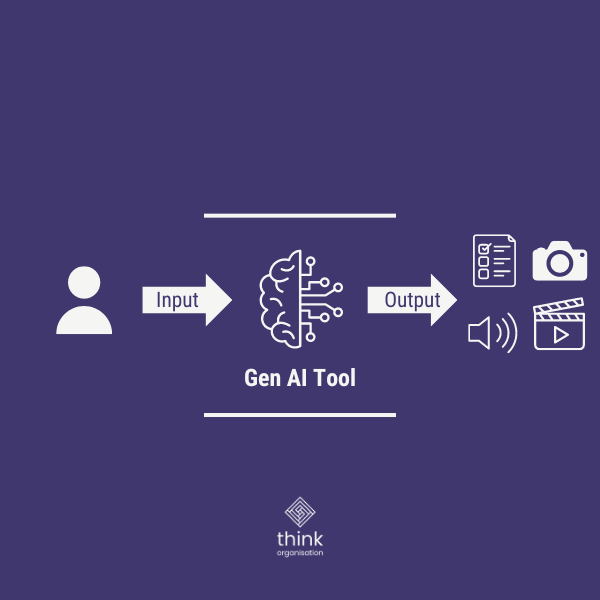
Artificial intelligence is a machine which has the ability to learn, understand and make judgements or have opinions based on reason. The machine is capable of building something new, as opposed to just reprocessing information which has been entered.


Artificially intelligent machines were first invented in the 1950s (Harvard, 2017). These machines were significantly slower (and larger!) as well as being less powerful compared to today’s computers. At the time, AI pioneers like Alan Turing and Marvin Minsky laid the groundwork for the AI we enjoy today. At the time, AI machines could perform relatively simple tasks such as logical reasoning, solving mathematical problems, and playing simple games like tic-tac-toe.


At this point, the main focus was on developing algorithms and exploring the theoretical foundations of artificial intelligence rather than more practical applications.


For example, it wasn’t until forty years later, in 1997 that AI really cracked playing chess. IBM’s Deep Blue machine made headlines by defeating world champion Garry Kasparov in a six-game chess match. This marked a significant milestone in AI’s ability.


What has Artificial Intelligence got to do with Psychology?

Understanding human intelligence has alluded humans for years. Psych (meaning soul) ology (meaning study of) is a multi-faceted discipline covering many areas of science. Today, humans (including Psychologists) still debate what intelligence is and how to measure it.


Psychologists have proposed various definitions and theories of intelligence over the years, reflecting different perspectives on what intelligence encompasses. Some psychologists view intelligence as a single, general cognitive ability (GCA), while others argue for a broader, more multifaceted understanding.


Theories of Intelligence

Leading experts have proposed various theories of intelligence, each offering distinct perspectives on the nature and measurement of cognitive abilities:


      • Psychometric approach

      • Multiple intelligences theory

      • Triarchic theory of intelligence

      • Theory of multiple factors


    These theories all represent different perspectives on intelligence, highlighting the complexity of the concept and the diverse ways in which it can be conceptualised and measured.


    The human brain is an intricate organ

    It serves as the control centre for the body’s functions and behaviours. It consists of billions of nerve cells called neurons, which communicate with each other through electrical and chemical signals. The brain is divided into different regions, each responsible for specific functions such as movement, sensation, language, memory, and emotions.


    Sensory processing centre

    Information processing in the brain occurs through complex neural networks. When we perceive sensory information from the environment, such as seeing, hearing, or feeling, neurons in the sensory areas of the brain process this information and transmit it to other regions for further interpretation and action.


    Memory formation involves the encoding, storage, and retrieval of information. Different types of memory, including short-term memory and long-term memory, are supported by various brain structures and neural pathways. Emotions are regulated by regions such as the amygdala and prefrontal cortex, which play crucial roles in processing and responding to emotional stimuli.


    Consciousness, awareness, and higher cognitive functions like decision-making, problem-solving, and creativity involve interactions between different brain regions, particularly the cerebral cortex—the outer layer of the brain responsible for higher-level processing.


    Overall, the human brain functions through the coordinated activity of neurons and neural circuits, enabling us to perceive, think, feel, and act in response to our environment and internal states.


    We must consider this when discussing artificial intelligence, can a machine do all of this? And how can it do all of this?


    Why does this matter?

    The human brain has over 86 billion neurons, which we couldn’t see until the 1970s when magnetic resonance imaging (MRI) was first developed. So how do we know what AI is doing? How can we see inside the minds of the machines?


    Today AI has learned to do a wide range of tasks across various domains, including:


      1. Playing Games: AI can play complex games like chess, Go, and video games at a level surpassing human experts.
      2. Natural Language Processing (NLP): AI can understand, generate, and translate human languages, enabling applications like chatbots, language translation services, and sentiment analysis.
      3. Image Recognition: AI can accurately identify objects, people, and scenes in images, powering applications like facial recognition, image search, and autonomous vehicles.
      4. Medical Diagnosis: AI algorithms can analyse medical data to assist in diagnosing diseases, detecting abnormalities in medical images, and predicting patient outcomes.
      5. Autonomous Vehicles: AI enables self-driving cars to perceive their environment, make decisions, and navigate safely on roads.
      6. Recommendation Systems: AI algorithms can analyse user preferences and behaviour to recommend products, movies, music, and other personalised content.
      7. Financial Trading: AI is used in algorithmic trading to analyse market data, identify patterns, and execute trades at high speeds.
      8. Drug Discovery: AI accelerates the process of drug discovery by predicting molecular interactions, designing new compounds, and identifying potential drug candidates.
      9. Robotics: AI enables robots to perform tasks such as assembly, navigation, and object manipulation in diverse environments.
      10. Personal Assistants: AI-powered virtual assistants like Siri, Alexa, and Google Assistant can understand spoken commands, answer questions, and perform tasks like setting reminders and sending messages.


      These are just a few examples and are not exhaustive due to the speed at which AI is developing.


      Why should I care?

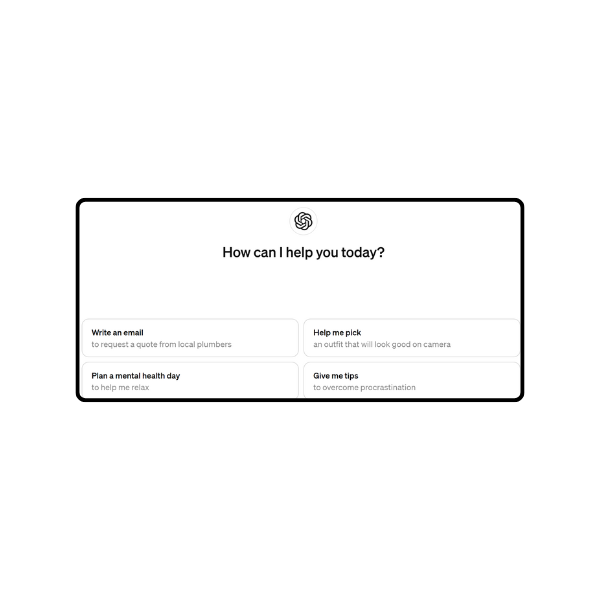
      For the majority of the population, it probably wasn’t until the end of 2022, when ChatGPT was launched, that we began to think and consider AI. This morning, a morning greeting from ChatGPT is shown below asking what it can help with.

      You should care, because these questions are based on my search history. And the speed of change is ground-breaking.


      It took the telephone just over 75 years to reach 100 million users. The mobile phone took 16 years, with the world wide web halving this, reaching 100 million users in 7 years. ChatGPT took 2 months. Surpassing previous record breakers, TikTok which took 9 months and Uber which took 70 months. The speed at which AI is advancing is faster than anything humans have ever seen before.


      So what next?

      All humans need to understand AI.


      Psychologists bring invaluable expertise to the field of AI, contributing insights crucial for the development of responsible and user-centric technologies. With their deep understanding of human behaviour, cognition, and emotions, psychologists play a pivotal role in shaping AI systems to align with human preferences, needs, and ethical considerations.


      The ability to ensure big data used in AI is robust, reliable and valid is fundamental to the integrity of the algorithms. Psychologists have long focused on the need for machine innovation, whilst ensuring they are ethically sound, especially in terms of addressing concerns related to privacy, bias, fairness, and transparency.


      As AI becomes increasingly integrated into daily life, psychologists contribute valuable insights into human-machine interaction, much like ergonomics and health and safety in the past.


      Understanding the human factor in AI and machine integration is fundamental to the success of organisations, and society as a whole, just as it was in transforming how humans interacted with airplanes (Harris, 2014).


      If you would like to discuss how the Think Organisation can ensure your organisation and its people can harness the power of AI please contact us.


      Think Performance. Think Excellence. Think Impact.

      Check our Insights page for more valuable information.

      More about Artificial Intelligence

      There’s more about Artificial Intelligence in this Think Organisation Post: Leadership In An Artificially Intelligent World

      Alternatively, copy and paste this link into your browser: https://cortex.clyq.co.uk/leadership-in-an-artificially-intelligent-world/

      Is Poor Leadership Fuelling the Mental Health Crisis?

      Leaders Impact Mental Health.

      Leaders can impact the mental health of their team, significantly more than doctors and therapists.


      In fact, according to 69% of people surveyed across 10 countries leaders have the biggest impact on their mental health1.


      What is your Leadership Standard?

      Have you ever reflected on your leadership skills? Whether you perceive yourself as a good or bad leader, or if leadership was even a deliberate pursuit? How can you measure the standard of your leadership?


      Leadership is the ability to understand others and their motivations, and working with them to leverage their strengths to achieve a shared goal.


      It can be formal (e.g. hierarchical a manager role) or informal (e.g. someone people look to, but has no title).


      Many leaders fall into a leadership style through trial and error. Unfortunately, the majority don’t get chance to reflect and hone their leadership style.


      Despite leadership being a multifaceted endeavour, the average age at which individuals receive formal leadership training is 42, a decade after assuming supervisory roles2.


      Leaders Influence Mental Health.

      As humans, we have the opportunity to influence 2.8 people per day, in either a positive or a negative way.


      This is much higher for leaders, who are responsible for making the greatest impact on organisations.


      50-70% of an employee’s perception is linked to the attitudes and behaviour of their leaders (Business Leadership Today, 2022).


      Leadership encompasses guiding and influencing individuals or groups within an organization, yet stories of poor leadership abound. How often do people make you cringe at how they have been treated at work?


      Currently, the top reason employees leave organisations is poor management3, with 1 in 3 citing this as the direct cause, whilst many others contemplate departure. This contemplation leads to poor performance, lacklustre engagement and a focus on the negative.


      The ramifications of poor management extend beyond turnover; it breeds stress, diminishes performance, and reduces productivity.


      Research by the CIPD underscores the link between leadership quality and mental health issues, with inadequate management perpetuating stress and exacerbating mental health challenges4.


      Despite these alarming statistics, only 53% of organisations had standalone wellbeing strategies in 20235.

      Concurrently, with 1 in 3 employees currently quitting their jobs due to leadership there is a critical need for organisations to prioritise wellbeing initiatives alongside leadership development.


      So, What Can Organisations Do?


      1. Assess the quality of leadership

      Firstly, assess the quality of leadership and management. This evaluation isn’t punitive but catalyses tailored development and training programs, fostering psychologically safe teams.


      High-quality leaders don’t manage everyone in the same way, they tailor their approach to the needs of their followers.


      Managers who understand the motivations and strengths of themselves and their team members are much more successful (Clifton & Harter, 2019).


      2. Help leaders

      Secondly, foster self-awareness and interpersonal understanding among team members. Recognising diverse responses to stress and providing space for reflection cultivates supportive environments, essential for mental well-being. Leaders need help and support to achieve this. Strengthscope® empowers people to bring their best selves to work and is a fantastic first step to helping leaders understand themselves, and their impact on others. Often, when organisations focus on improving weaknesses, they miss the power of focusing on strengths.


      3. Focus on Strengths

      Thirdly, design roles that empower employees, leveraging their strengths and fostering autonomy.


      Organisations with high role clarity are 25% more productive than those without6.


      A lack of role clarity, where employees are unsure what needs to be achieved, has a proven link to an increased stress response, which when prolonged can lead to burnout.


      4. Focus on leading others

      A culture which helps everyone be successful creates more successful organisations.


      Much research shows helping others leads to higher success for leaders (Anderson, 2019). In fact, Managers should view their team’s success as an extension of their own, not as a threat.


      Often when a team member is performing highly and getting positive feedback, managers can feel threatened and step back from supporting the individual. Ironically, this is normal as humans have innate attentional cognitive biases, just knowing this is ‘normal’ has helped many leaders to adapt their behaviour (Very Well Mind, 2019).


      5. Gain Feedback

      Prioritise feedback mechanisms and support systems. Ensure employees know where to seek assistance and evaluate the efficacy of existing programs regularly. Feedback can come in many different forms, including surveys, focus groups and observations.


      6. Update Leadership Training

      Despite advancements, the delay in leadership training persists. Leaders may operate for ten years before receiving formal development opportunities. This trend perpetuates outdated notions of ‘learning on the job,’ hindering progress in leadership effectiveness.


      Every leaders’ learning experience may come with unintended consequences for employees who bear the brunt of suboptimal leadership practices.


      7. Align Leadership and Wellness

      Let’s not overlook the profound impact of leaders on mental health. By integrating this understanding into leadership discourse, we can pave the way for holistic organisational growth and individual well-being.


      Now is the time for action. For a complimentary 30-minute consultation, reach out to Think Organisation.


      Think Performance. Think Excellence. Think Impact.

      1. Work Institute (2023) ↩︎
      2. HBR (2012) ↩︎
      3. Guardian (2023)  ↩︎
      4. CIPD (2023) ↩︎
      5. Personnel Today (2023) ↩︎
      6. Effectory (2019) ↩︎

      More about Wellbeing

      There’s more about Wellbeing in this Think Organisation Post: The Hidden Cost of Stress

      Alternatively, copy and paste this link into your browser: https://cortex.clyq.co.uk/the-hidden-cost-of-stress-in-your-organisation/

      Is your People Experience Missing Baked Beans or Peas?

      For a moment, think about the experience where you work.

      What signs are there that you have a positive culture? What does your company do to support employees. When you receive external awards do you agree that your company deserves them? Do the social media posts portray your lived experience working in the company?


      Or is there a cultural mismatch between the external and internal perception? The result of this mismatch is a negative impact on staff retention, sickness rates, performance and profits (HBR, 2017). 


      Think Organisation has extensive experience measuring, analysing and understanding organisational cultures, to ensure we understand the root causes of cultural dimensions.


      Understanding these root causes are critical to decrypting why internal perceptions may be very different from the external ‘what is said on the tin’ perceptions.


      Imagine you want beans on toast for breakfast.

      You walk into your local retailer to buy some baked beans, yet when you get home and open the tin a pile of green sludge oozes out of the can into your pan. How disappointed would you be? Would it matter or would you be ok with the green sludge? Maybe you could learn to like the green sludge on toast? Or maybe you put the sludge back in the can and take it straight back to the retailer to complain?


      The retailer may be sympathetic and try to help make it right, or maybe you fall out swearing never to use them again – and telling your network how bad they are for ruining your breakfast for good measure. But you end up with green sludge instead – how disappointed would you be?


      Similarly, research shows people don’t tend to take direct action when they are unhappy. The majority would throw the beans away, as 96% of people don’t complain about a bad experience. However, they will tell 9-15 people about the negative experience (O’Neill, 2022).


      So, what have baked beans, green sludge and your employees’ experience got in common?

      Think about this situation in relation to your job.


      Have you ever spoken to your employer when the organisational experience they advertised did not match what you expected? Or did you just wait it out hoping your experience would improve? Did you tell people not connected with your work the reality of your experience?


      Whilst smiling at your employer and saying everything was ok? Then if things didn’t improve or change you reached another form of equilibrium – like leaving, working minimally or moving to another role?


      Quantitative & qualitative information about your culture ensures you meet the expectations.

      As an organisation it is vital to be honest with potential recruits. Giving them quantitative and qualitative information about your culture, including where it was, where it is and most importantly, where your cultural strategy is taking you.


      Culture is the attitudes, behaviours and values of everyone working at your company; it is the unique way your organisation interacts with employees, customers and each other. As the legendary leadership consultant Peter Drucker said in 2006 ‘culture eats strategy for breakfast’, because the majority of business decisions come down to culture.  

      Culture eats strategy for breakfast, operational excellence for lunch and everything else for dinner. 

      Peter Drucker, 2006


      Summary

      When there is a disparity between expectations and reality, what measure can an organisation take to rectify the situation and ensure poisiive workplace experiences?


      The organisation needs to really listen. They should encourage open communication channels where employees feel comfortable expressing their thoughts, ideas and feedback.


      Then, they can analyse the feedback received and implement any necessary changes. Culture is all encompassing so these could be anything from revising policies, improving recruitment processes, providing additional training, or creating work environment improvements.


      It is crucial that organisations are transparent with their employees about the steps being taken, involving them on the journey.


      The more this happens, the more the organisation fosters trust and accountability within its culture.

      Think Performance. Think Excellence. Think Impact. Think Organisation.


      Adapted from an article originally published on LinkedIn, February 6th, 2023. 


      References

      1. Harvard Business Review (2017). Accessed Jan 2023 at https://www.forbes.com/sites/williamcraig/2017/11/21/8-ways-your-company-culture-directly-impacts-your-bottom-line/?sh=39c4aea767f0 
      2. O,Neill, S. (2022) Word of Mouth: Stats and Trends for 2023. Accessed Jan 2023 at: https://www.lxahub.com/stories/word-of-mouth-marketing-stats-and-trends-for-2023#:~:text=Negative%20Reviews,bad%20experiences%20with%2020%20people 


      More about Culture

      There’s more about Culture in this Think Organisation Post: A Speak-up Culture

      Alternatively, copy and paste this link into your browser: https://cortex.clyq.co.uk/practical-tips-to-create-a-speak-up-culture/

      How to create a culture of innovation? 

      Last week Steph Durbin – ICF PCC and Sarah Clarke CDir Fellow ABP had the pleasure of attending the Salford Business School Centre for Sustainable Innovation (CSI) launch event and it got us thinking – how do you create a culture of innovation?  

      Innovation in business: the ability to conceive, develop, deliver, and scale new products, services, processes and business models for customers 


      Some important questions to consider:


      1. Can you create a culture of innovation? 

      YES. YES. YES  


      Many people believe that you cannot create organisational cultures because they evolve over time. Organisational culture is based on the social connections of the people in an organisation, it is a result of the norms, behaviours and ways of working unique to that business, so individuals are always influencing culture.


      Using the science of human behaviour you can create a culture which delivers innovation. Just as many leaders unintentionally create cultures which hinder, limit or reduce innovation – often in complete contrast to what they want to enhance.  


      2. How do I create a culture that delivers innovation? 

      There is no ‘one size fits all’ answer to this question, although there are several principles which can be applied to help create a culture that delivers innovation.


      At the event we were privileged to listen to numerous success stories including Arjen Cooper-Rolfe who was an unintentional CEO but led a family business to huge success through purpose-led innovation. So often businesses think they need more people to be more successful. However, this is not the case when you have a skilled leader creating a culture aligned to purpose where idea generation is brought into the everyday life of a business.  


      3. Why do I need a Culture of Innovation? 

      Because without it you won’t exist. The business resources will get depleted and the business will fail.


      Research suggests 65% of children at school now will be applying for jobs which don’t exist yet (British Council, 2018) and in our opinion this is conservative in its estimates. It took the telephone 76 years to reach 100 million users, ChatGPT took 2 months. Speed of innovation is fundamental to the success of businesses.  

      Speed: the rate at which something or someone moves or operates at 

      Organisations who embrace innovation have at least a 59% higher rate of revenue growth than those that don’t (BCG, 2017), however the rise of unicorn businesses (over USD 1 billion) has increased dramatically in recent years showing the ROI for innovation is limitless. CBInsights, 2022


      Innovation: a new or changed entity, realising or redistributing value 


      4. So what now?  

      The purpose of The Centre for Sustainable Innovation is to provide critical services to the business eco-system.


      Bringing academia and businesses together, by providing a platform for industry partners to access cutting-edge knowledge, research, skills and capacity-building workshops to empower businesses to stay ahead of the competition. Much more information can be found here – CSI Website.  


      5. What if I don’t have time?  

      Often, business leaders are highly time-poor, with multiple pressures coming from all angles, and the day job taking up the majority of time.


      Reacting to customers, solving problems, and responding to queries all mount up and it is often difficult ‘to see the wood for the trees’. If you feel like you don’t have time, or don’t even know where to start, we recommend a diagnostic – to give you the data you need to know where to start.


      If this could help you, reach out to Think Organisation and we will help you create the time you need to think about innovation.


      Think Performance

      Think Excellence

      Think Impact


      Adapted from an article originally published on LinkedIn, January 30th, 2024.

      Check our Insights page for more valuable thought leadership.

      More about Innovation

      There’s more about Innovation in this Think Organisation Post: How to Create Sustainable Success in a Project Managing Culture

      Alternatively, copy and paste this link into your browser: https://cortex.clyq.co.uk/how-to-create-sustainable-success-project-managing-culture/
      Are you ready to

      start your joruney?

      Take the first step to transform your workplace.

      Call us on 07123 456 789
      Email us at sarah@cortexworx.com

      © Copyright Cortex Worx LTD. All rights reserved. | Website by Clyq