Are your leaders equipped to inspire and lead others?

Our insight articles help develop self-aware, people-smart leaders who drive impact with confidence.

How To Manage High Performance at Work

Have you ever asked the question in your workplace – what do we mean by high performance?


High performance is defined as ‘able to operate to a high standard or at a high speed’ (Cambridge, 2025) but what does this look like in the workplace?


Last week, we shared a story about a well-known coffee shop, reflecting on how the employees worked together to problem solve.


This led us to consider:

  • When is high performance enough?
  • When does it become over-servicing?
  • Can high-performance reduce productivity?


Can the very definition of high performance actually lead to poor customer service? After all, receiving a coffee at high speed and to a high standard – is that high performance? Or is the experience, the conversation, and the feeling of connection the real measure of high performance in a coffee shop? It all depends on the customer’s purpose in visiting the coffee shop in the first place.


Think about your favourite coffee shop—whether a local boutique, a large chain, or, like my friend, your own home coffee station. What does high performance look like to you as the customer?


The Performance Curve: Balancing Challenge & Support
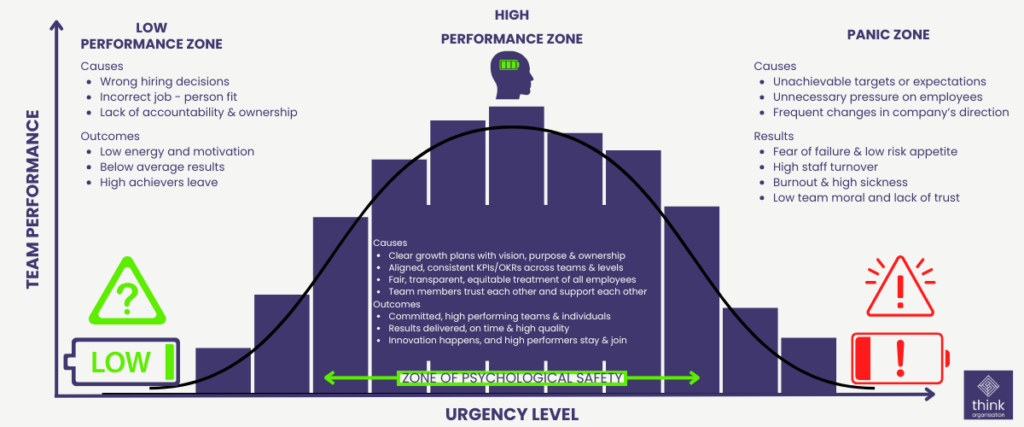
 

Performance Curve


Psychological theory tells us that performance follows a curve (which is often referred to as the Yerkes-Dodson Law – shown above). This principle suggests that moderate levels of stress and challenge can enhance performance, but too much pressure leads to diminishing returns and, in some cases, eventual burnout.


A high-performing team needs to operate at an optimal point on this curve, where there is sufficient challenge to drive motivation but not so much pressure that it leads to disengagement or exhaustion. Leaders play a key role in balancing these factors, ensuring their teams are stimulated but not overwhelmed.


The Role of Psychological Safety in Sustained Performance


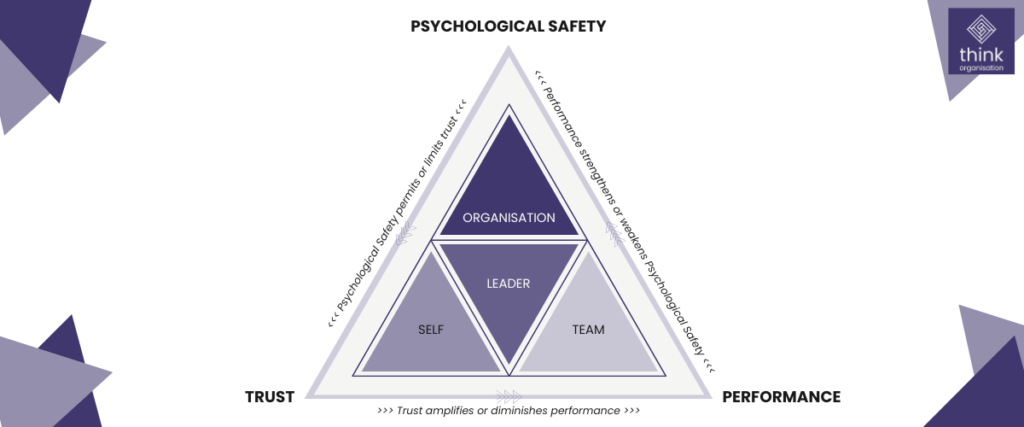
For high performance to be sustainable, psychological safety is critical. Psychological safety, as defined by Amy Edmondson, is the belief that one can take risks, make mistakes, and express ideas without fear of humiliation or punishment. When employees feel psychologically safe, they are more likely to contribute ideas, collaborate effectively, and recover quickly from setbacks.


Without psychological safety, teams may hesitate to challenge poor decisions, leading to group-think and stagnation. Conversely, fostering an environment where diverse thoughts are encouraged ensures innovation and resilience, which are both crucial elements for long-term success.


Defining High Performance in Your Workplace

As psychologists, we often work to understand the lens through which people view performance and success. Assumptions, biases, and habitual thinking all shape the way human decisions are made – some are practical, some emotional, some time-bound, and others context-specific. In many cases, there is no conscious thought process involved in decision-making.


Think back to the last time you were in a coffee shop, what was the process of your decision-making about what your ordered? Can you write it down in detail? Explaining all the options you discounted?


If I asked you to explain why the person standing next to you made their decision about their coffee choices – what would you say? Would you know? You may if you knew them well, or you may not have any idea. But imagine if their definition of success was different to yours?


To define high performance for your team, consider these key questions:


  1. What does success look like for our team? – Is it efficiency, creativity, collaboration, or something else entirely?
  2. What is critical to our success? – Are there key behaviours, skills, or processes that underpin high performance?
  3. What behaviours or ways of working are crucial to our success? – Do we prioritise speed, precision, customer experience, or continuous improvement?
  4. What does failure look like for our team? – Understanding what ineffective performance looks like helps avoid missteps and course-correct effectively. Whilst it is important not to dwell on the negative looking at the opposite of success can be extremely helpful and insightful.


Rethinking High Performance: It’s More Than Just Speed

Going back to our coffee shop analogy. . .


High performance is not just about fast service. It’s about the right service, at the right time, in the right way.


In the workplace, high performance isn’t just about productivity metrics. High performance at work is about sustainable, meaningful, and impactful ways-of-working that align with organisational goals, whilst ensuring employees thrive and grow.


By considering the performance curve and psychological safety, organisations can redefine what high performance truly means which benefits everyone.


Organisations who create environments where both individuals and teams thrive, are proven to be more profitable. Repeatably, time and time again after all – Money Matters But People Matter More.


More about Workplace Psychology

There’s more about Workplace Psychology in this Think Organisation Post: Integrate Psychology Into Training to Deliver Optimal Results

Alternatively, copy and paste this link into your browser: https://cortex.clyq.co.uk/how-to-integrate-psychology-into-training-to-deliver-optimal-results/

Three Ways Employee Behaviour Can Impact Your Profit

How we behave at work is down to the individual. Behaviour at work is down to the team, manager, organisation and society. Humans learn behaviours from their lived experience and other people. In reality, no amount of rules, procedures, operating models or surveillance can outweigh having staff who enjoy what they are doing, enjoy where they work, and enjoy who they are working with.

Sitting in a well-known coffee shop this week as I watched two members of staff discussed their recent Area Manager visit. The visit has been positive, which was a relief as we are 12.5 times more likely to share negative stories. The Area Manager had given them some ideas to work on before the next visit and both employees were discussing the options of how they could achieve this request. One highlighted some of the risks, issues and potential pitfalls of some of the ideas was the other came up with broader and broader ideas. After about ten minutes, during which there was some laughter and joviality the staff members had isolated a couple of potential options. They agreed to talk to the others and get their input and catch up later, which was good because at this point there was a run on coffee and cake as the morning rush took hold.

Fast forward a few hours, and I was back again, and a shift change and two new members of staff discuss the same problem as the afternoon lull takes hold. Initially I thought they were having an almost identical conversation to the morning staff but they weren’t. In fact, they were building on what the earlier team had been talking about. Taking their ideas, adding others and playing with options, risks, benefits and plausibility of the suggestions. Again speckled with some joviality, laughter but underpinned with focus: how do we solve this problem/challenge we have been set?

From the outside these behaviours may have appeared unproductive. In reality, to the casual observer these staff members could have been mistaken for not working. They weren’t cleaning tables, or serving drinks. But equally no one was waiting either. What they were doing was communicating with each other and working as a team. They were inspired by this challenge which has been set. It had given them purpose, direction and a focus. It had also given them a reason to work together.

1. Managing Behaviours

With clients, Think Organisation works on a preventative approach wherever feasible. The ability of managers to engage, inspire and provide direction for their team inspires the right behaviours. Not because people are afraid of what might happen if they don’t, but because they want to behave in that way and do a good job. Most people are people pleasers, and like to feel valued – it is part of our innate human psychology. Did you ever turn up at a job on your first day wishing you could be bad at it? Hoping you would get shouted at or belittled by your manager?

We didn’t think so.

2. Behaviour Guidelines

The organisation, and the manager, were clear about how the team could behave. Laughing, joking and talking together was great as long as there wasn’t a line of people waiting. Having a well-used, but clean and friendly, environment was also ok. But in that conversation everyone was aligned about what was ok, what was not and what might be a bit close to the wire. Discussions were had about these suggestions which were close to the wire. Which in many ways, reaffirmed the behaviour guidelines as the staff members discussed their own opinions, interpretations and understanding of what these meant. Interestingly and positively, one of the newer members of staff thanked one of the more experienced members of staff for explaining something to them from their own experience – role-modelling good mentorship.

Do you know what your behaviour guidelines are in your organisation? Do you know what is close to the wire and what is acceptable or unacceptable? Most importantly, do you know why those guidelines are in place?

The challenge is that humans often behave in a way, because that is the way they always have done. It is an unconscious assumption, and can often lead to detrimental far-reaching societal impacts. Talking to a friend earlier this week, I said ‘Ooo, that’s great – I loved it when I was just a Mother.’ The word “just” extends many connotations, and in many ways belittled the huge jump she was making in her career and life to put her family where they needed to be at that point in time. She had also been treated appallingly by her current organisation, who on paper said they were flexible, supportive and inclusive but in reality their treatment of her has led to this decision.

Whilst I noticed my faux pas, of saying the word just, I apologised this manager wasn’t open to the feedback or learning from their behaviours. The behaviour guidelines in this organisation were archaic, gender-biased and not fit for purpose.

Have you assessed your behaviour guidelines? Do you know why people behave as they do in your organisation? Are these guidelines helping deliver profit? Or are they having a detrimental impact on your bottom-line?

3. Freedom To Think

Being able to have the time to reflect, think and process our behaviours and our impact on others is invaluable. It was a previous manager who explained to me about the impact of adding the word just to sentences. Think about it – Are you just having one child? Are you just ok with that? Are you just a mum?

Back to our lived example this week. There was no rule, or time, set aside to allow this team of people to think. They weren’t brought onto a team away day, or pulled together in a large meeting room to discuss the current problem. The manager knew how to plant the seeds to get the problem fixed. Most importantly, by allowing this group of people to think and work together they were creating a team. A team of people who had high trust, psychological safety and brilliant cross-location communication. There were no silos in the problem-solving, and everyone was involved. We will let you know what happens next week, but for now, we will leave you with some practical insights and suggestions which you may find helpful if you want your culture to be the best it can be.

  1. Ensure your boss, and you, have the same understanding of what your job really is. What needs to be achieved, what are the problems and who is going to do what? By when? This does not need to be prescriptive, action based but more goal and solution focused.
  2. Notice, and authentically praise, behaviours which work towards the behaviours your organisation or team needs. Whilst the solution may not have been successful, or what they tried may have failed, this team worked together to solve a problem and they all felt part of it. The positive focus, praise and support each member of staff gave to each other was role modelled on the behaviours of the manager.
  3. Speak and converse as soon as possible, especially if something isn’t right or working as planned. Include how the issue makes you feel, but also the impact on the organisation, team or customer. But don’t make it personal. One action does not make a person. A new starter who makes a mistake won’t have done it deliberately. It could have been they didn’t understand, or they were given misaligned goals or they didn’t have the skills required to succeed. Either way, the way managers response is key to ensuring that employee behaviours have a positive impact on profits.

Reflection: Psychology of Learning Proven To Improve Training ROI

Have you ever been forced to attend a training course you felt was a complete waste of time? Or worked with someone who simply wouldn’t listen? Have you ever reflected on something? Deliberately? So that in hindsight, if you’d been the one who could have listened more, the situation may have become crystal clear sooner? Learning the power of reflection can help with all these challenges.


As we face a new year, budgets are being slashed, recruitment strategies are in turmoil, and business leaders are grappling with mounting pressures.


With all these demands, it’s no surprise that workplace behaviour standards can start to decline. So, what can leaders do to make a difference? How often have you invested in training only to see no change in behaviours in the workplace?


Workplace training and development is at an all-time low. Last autumn, the Government announced plans to prioritise improving skills across the UK workforce. But how much training or development have you completed in the past month? More importantly, has it led to a change in your behaviour?


On average, only 28% of employees have participated in any training or development within the last three months. For those who are self-employed or work solo, this figure drops to just 13%1. In this challenging landscape, the power of reflection and fostering a culture of self-directed learning becomes even more vital. Here’s how understanding the psychology of learning can benefit you, your team, and your organisation.


Reflection involves absorbing information, asking deep and probing questions, and challenging your understanding of situations or events.


Cultivating a reflective mindset opens the door to learning, greater understanding, and seeing things from new perspectives. While reflection can feel uncomfortable at times, like any skill or competency, practice makes it easier – until it becomes a habit and second nature. When it does, considering how to improve, gain knowledge, or grow becomes an instinctive part of who you are.


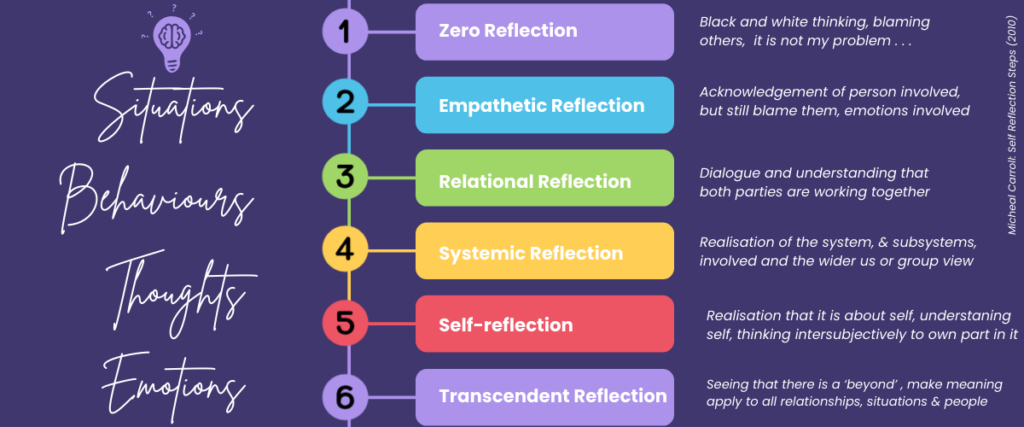
The following model, designed by Michael Carroll (2010), outlines a simplified process of the stages people typically go through when reflecting. In reality, reflection isn’t always linear. Often people jump between stages or revisit earlier steps as their understanding evolves.


Reflection Steps designed by Micheal Carroll (2010). The Six steps include situation, behaviours, thoughts and emotions and information summaries on each of the six steps of reflection.


Think of an iceberg.


At first glance, you see the part above the waterline, and when we’re younger, we often assume that’s all there is. But through education, experience, and the knowledge we absorb, we come to realise that the bulk of the iceberg lies hidden beneath the surface. This concept underpins a model designed by Michael Carroll2.


Level 1: Zero Reflection

At this level, an individual is not open to feedback and often exhibits black-and-white thinking. There is a tendency to blame others, with no resources or energy devoted to reflection.


This stage frequently appears at the start of a coaching journey when issues that seem irrelevant (hidden beneath the iceberg’s surface) are neither acknowledged nor discussed. At this point, individuals focus entirely on others, without any introspection.


Level 2: Empathetic Reflection

Here, a person begins to establish an emotional connection with the situation or another individual. While they may feel empathy or understanding, there’s s no link to their own actions or behaviours. Instead, they remain detached, observing from the sidelines and often attributing blame externally.


Whilst, they may recognise other perspectives or alternatives they remain firmly in their own position. For a coach, this stage involves understanding the coachee’s situation without yet forming a deep connection to the events, experiences, or emotions involved.


Time plays a significant role here. It is a journey that ICF accredited coaches are trained in. Greater sharing of information can help progress reflection, but some individuals may become stuck, shutting down further exploration. This is where a coach can be invaluable.


Level 3: Relational Reflection

This stage marks a turning point, where the perspective shifts from “I” and “You” to “Us.” Individuals begin to understand the interplay between their personal history and that of others. It’s not just about the other person or the situation but about how both sides contribute to the dynamic.


For a coach, this is often the “lightbulb moment” when the coachee realises, “It’s not just them, it is about me too, it is about how we interact or my perception of the event.” This is where genuine reflection and understanding begin to take shape, though it cannot be rushed or forced. It is a process.


Level 4: Systemic Reflection

At this level, individuals recognise the influence of broader systems and sub-systems on their understanding and actions. They realise that everything (from perceptions and behaviours to thoughts, emotions, and even physical responses is interconnected). Reflection here delves into one’s past, including history, culture, and ancestry, examining how these shape current perceptions. However, there remains an invisible barrier.


This barrier is an incomplete acceptance of one’s role in events, leaving gaps between self, the situation, and others. Coaches play a crucial role in supporting individuals to safely and progressively move beyond this barrier.


Level 5: Self-Reflection

This stage brings a profound realisation: it’s about the self. The metaphor of the iceberg becomes clear. What lies beneath the surface often dwarfs the visible tip.


Rooted in a growth mindset, this level focuses on the individual’s ability to change and the transformative power of that change. It shifts from blaming others to acknowledging personal patterns, themes, and behaviours that influence interactions and experiences.


Unlike Level 1, where the focus is entirely on the self in a defensive way, this level centres on personal growth and accountability.


Level 6: Transcendent Reflection

Reaching this stage signifies a deep understanding of the connections between self, others, situations, and life as a whole.


Individuals, teams, and organisations at this level move beyond the immediate and surface-level to grasp the bigger picture of life. At this level individuals deliberately explore beneath the surface, uncovering insights they’ve never encountered before.


At this stage, they are ready to expand their understanding and transform, moving from where they are now to new, brighter possibilities.


Reflective Practice Delivers ROI in Training

This model provides a roadmap for reflection, however it does require individuals to be willing and open to the journey.


An expert coach can guide this process, often without explicitly outlining it to the coachee. However, high levels of psychological safety are critical for success, particularly when addressing culture or team dynamics.


This model was introduced through a practical (and fun!) icebreaker activity when working with a group of hesitant employees preparing for training. Over time, Think Organisation recorded a 20% average increase in post-training behavioural changes, as reported by line managers, when this model and icebreaker were used, compared to other solutions.


With European countries investing double the amount in training compared to the UK3, we must maximise the return on our investment. If you’d like to learn more, get in touch for a free 30-minute consultation.


To know more reach out for a free 30-minute consultation.

  1. Institute Fiscal Studies (2023). Read here ↩︎
  2. Michael Carroll, Six Steps of Self Reflection (2010). Read here . ↩︎
  3. Learning & Work Institute (2024). Read here ↩︎


More about Workplace Psychology

There’s more about Workplace Psychology in this Think Organisation Post: Drive Profits – How To Help People Be Humans at Work

Alternatively, copy and paste this link into your browser: https://cortex.clyq.co.uk/how-to-help-people-be-humans-at-work-to-drive-profits/

How To Break The Moaning Cycle For A Productive Workplace

This week has brought with it an abundance of moaning, both at home and in the office. Humans need time to adapt, and while change is inevitable in life, it is essential for businesses to survive. In several offices this week, after the obligatory exchanges about the festive season, people quickly turned to moaning (about the weather, their colleagues, football, the news – it doesn’t seem to matter). Negative Nellies have been rife everywhere.


The definition of a moan, in this context, refers to an informal complaint or grumble where people express dissatisfaction about something, often perceived by others as repetitive or unproductive. So, have you noticed others moaning to you this week? Have you had a greater tendency to moan more than usual?


Moaning can Feel Cathartic

The challenge with moaning is that, while it can feel cathartic in small doses, it can also influence our thoughts, emotions, and behaviours when it begins to dominate. It affects others too, pulling them down and creating a spiral of negativity. Have you measured the levels of employee negativity in your business recently? More importantly, have you assessed the cost of this negativity to your organisation?


Years of research have shown that employees with low morale, those who speak negatively about their company, or those who are disengaged are less productive. In 2024, Gallup estimated the global cost of low employee engagement at $8.8 trillion – larger than the economic output of Japan! This figure represents 9% of worldwide GDP. Imagine if your manufacturing line could produce 9% more output at the same cost, or if your agency team could deliver high standards with 9% fewer resources. What if your company became 9% more profitable? The possibilities are vast, and this is just the beginning.


At Think Organisation, January is always a busy month for us. We help clients analyse the past 12 months’ data to develop the latest benchmarks on organisational culture across UK businesses. Like much other research, the trends don’t look particularly positive. But how can we use this as an opportunity? As many films and adverts have said before: how can we turn frowns upside down?


Step 1: Moaning Context

The first step is to understand the context or environment that has triggered the moan. Was it caused by a recent event, a shared connection, or something deeply important to the person? Often, people join in with others’ moaning to be polite or sociable. But it’s worth considering the source of the moan.


Moaning can occur for various reasons, including seasonal or physiological influences that many people aren’t even aware of. For example, the American Psychiatric Association (2022) found that 40% of Americans experience a significant decline in mood during the winter, with 66% reporting that this negatively affects their behaviour. Key factors include:


  • Decreased sunlight: Lower levels of vitamin D affect mood and sleep regulation.
  • Increased illness: Winter brings higher chances of sickness, which can lead to anxiety and depression.
  • Isolation and hibernation: People feel more fatigued, are less keen to socialise, and prefer to stay warm indoors, which can lead to loneliness.
  • Reduced exercise: Cold, damp weather discourages outdoor activity, reducing the release of mood-boosting chemicals from exercise.


When someone moans to you (or you find yourself moaning!) pause and consider the context:


  • Is there a deeper problem being highlighted?
  • Does the person (or do I) want a solution, or just a chance to vent frustrations?
  • What would the world look like if this issue were resolved?


Step 2: Clarity of Moaning

Once you understand the context, the next step is clarity. Ensure you grasp the issue clearly and simply. Perceptions vary, so it’s vital to investigate, query the reality, and support yourself or the individual in addressing the moan.


Ask yourself: Do they really want help fixing this issue, or do they just need a sympathetic ear? Offering support and empathy while listening can be powerful. Useful questions include: Who? What? Why? When? How? Where?


Instead of asking these directly, reflect on your own behaviour next time you’re mid-moan:


  • Who am I moaning about?
  • What is the issue?
  • Why has it affected me?
  • When did I start to feel this way?
  • How do I want to feel or react?
  • Where do I tend to moan?


Humans have a negativity bias, making us 12 times more likely to focus on negatives than positives. For every 12 moans, there’s just one positive comment. Consciously work on shifting this balance.


For example, in situations like bad weather, ask:


  • What can I control? (e.g. preparing for rain)
  • What can I influence? (e.g. carrying an umbrella)
  • What’s beyond my control? (e.g. the rain itself)


Step 3: Moaning Communication

Moaning can be both addictive and temporarily soothing. Sharing frustrations with someone offers short-term relief, but does it change anything?


Humans are inherently social, and communication is fundamental. Think of the last time you were in a positive environment filled with laughter – how infectious it was! Unfortunately, moaning is just as contagious. When one person starts, others often join in to bond.


To break the cycle, next time you find yourself moaning or in a group of moaners, try this:


  • Will moaning solve the problem? For example, complaining about poor customer service achieves little unless you address this directly with the organisation responsible.
  • Reframe your complaint or moan. Describe the issue factually and explore constructive alternatives. For instance, instead of complaining about rain, consider how it benefits nature or gives you time for your favourite indoor activity.


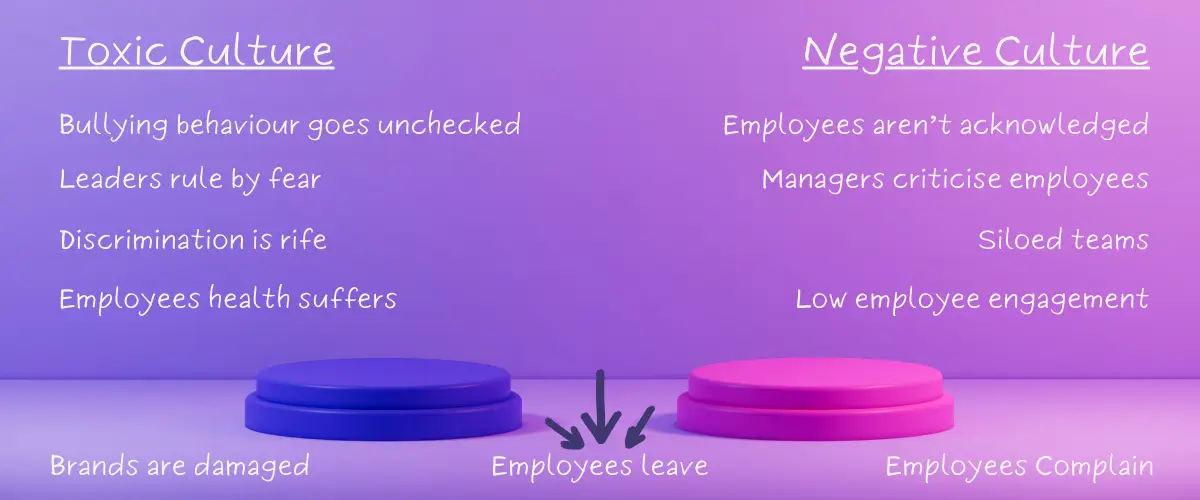
In organisations, unchecked moaning can create a toxic culture. It’s tough to be assertive and resist joining in, but start small. Notice the moaning and take steps to shift the tone. Reducing negativity can lead to profound changes, not just for individuals but for entire teams and businesses.


For help or support, or a measure of your current culture reach out to us – sam@cortex.clyq.co.uk.


More about Motivation

There’s more about Motivation in this Think Organisation Post: Unlocking Employee Engagement

Alternatively, copy and paste this link into your browser: https://cortex.clyq.co.uk/how-do-you-unlock-employee-engagement-in-the-workplace/

How To Use The Four Stages of Conscious Competence To Improve Your Culture

The Conscious Competence model, also called the Four Stages of Competence, is a simple yet powerful way to understand how we acquire new skills and navigate any learning curve. First developed by psychologists and management experts, it is widely attributed to Noel Burch in the 1970s when it gained prominence.


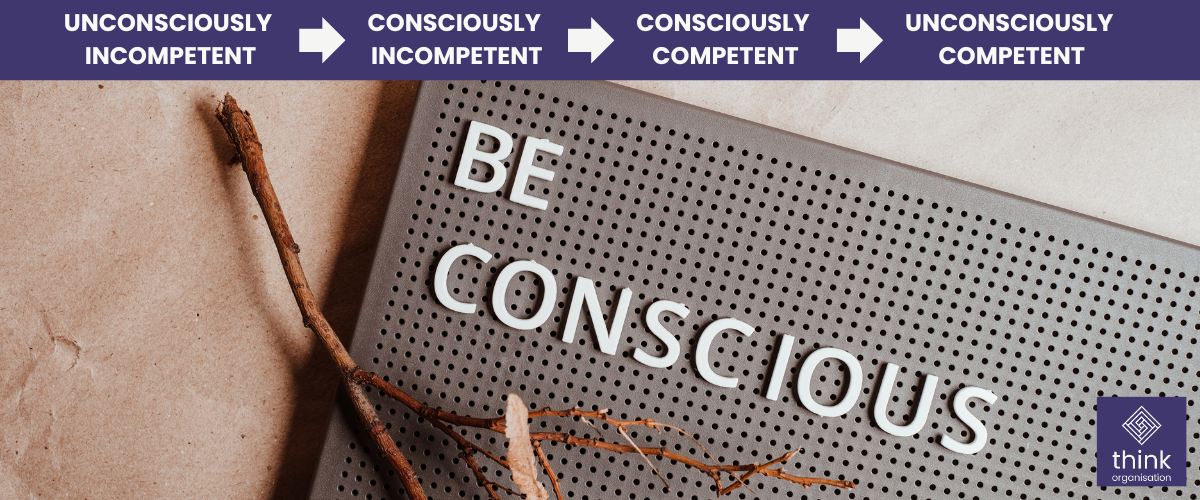
The model is a clear and adaptable 2×2 framework, as shown below. It helps people understand their learning journey and at Think Organisation we often use it to take the heat out of difficult conversations.


For example, during workshops, it can be useful to introduce this model when participants are grappling with challenging feedback, or struggling with new concepts. Supporting individuals to identify where they think they are on the grid can be a great coaching conversation.


This model offers clarity, helping remove emotion from discussions, allowing it to become easier for people to reflect on their progress.


The model shows that being “stuck” is normal and part of growth as is not knowing something.


Stage 1: Unconscious Incompetence

At this stage, you don’t know what you don’t know. There is a lack of awareness about a skill or knowledge you need. For example, as a child, you might watch your parents drive a car without considering that one day, you’ll need to learn this skill too.


Questions are a powerful way to prompt awareness. By asking the right questions, we can help people move from being unaware to recognising areas for growth.


Stage 2: Conscious Incompetence

This stage is when you realise you lack a skill or knowledge. Awareness can be uncomfortable, especially when the scale of the challenge becomes clear.


An example might be your first driving lesson – it can be overwhelming when you learn about gears, signals, and road safety all at once. The key to moving forward here is persistence.


By embracing the discomfort and seeking feedback, individuals can begin to make progress.


Stage 3: Conscious Competence

Here, you’ve developed the skill, but it still requires effort and focus. In driving, this is the stage where you know what to do but need to think about it – mirror, signal, manoeuvre.


This stage is about practice, reflection, and continual improvement. Feedback and support are crucial to embedding the skill.


Stage 4: Unconscious Competence

At this level, the skill becomes second nature. You can perform it instinctively without much thought.


For example, experienced drivers often reach their destination without recalling every step of the journey.


While this stage is ideal, it’s important to stay open to new learning and feedback to avoid complacency.


Applying the Model to Organisational Culture

This model isn’t just about individual skills; it can be a powerful tool to improve organisational culture.


At Think Organisation, we often see leaders in the Unconscious Incompetence stage one when it comes to understanding their company’s culture.


Many leaders are unaware of the hidden dynamics within their organisation.


Culture impacts behaviours, morale, and performance, yet its influence often goes unnoticed – like having a sign stuck to your back that only others can see.


To address this, we developed the Think Culture Measure. This tool helps leaders uncover blind spots in their organisational culture. It provides clear data and insights, moving them from unconscious to conscious awareness.


The Journey to Conscious Competence in Culture

Leaders who use the Think Culture Measure can start to see how their organisation’s culture impacts their people and performance. With this awareness, they can begin to:


  • Identify areas for improvement.
  • Engage employees in honest conversations.
  • Create actionable plans for change.


Think of how consciously competent you or your leaders are about your team or organisational culture? What behaviours are completed unconsciously, or consciously? Have you attempted culture change but it has failed to be delivered?


Even after over twenty years working within, on and as part of organisational cultures we find very few leaders reach unconscious competence in cultural leadership. This is because every culture is unique, and it requires consistent feedback and trust.


Leaders are part of the culture, so it is people who are not part of the culture who have true unconscious competence at diagnosing cultures. Ironically, leaders who claim this unconscious competence are often leading poor cultures, where employees may feel unsafe sharing the truth.


However, any leader who embraces the Think Culture Measure, or any of our other measures, can make significant progress. Measuring psychological safety, boardroom effectiveness or the culturescape of your organisation empowers leaders to become more attuned to their organisation’s dynamics.


Think measures provide clarity allowing better decisions to be made, and create an environment where everyone thrives.


Why Does This Matter?

In the workplace, people have different levels of skill, experience, and competence. Some may stay at earlier stages due to personal preferences or limitations, while others strive for mastery.


For leaders, the Conscious Competence model offers a roadmap. It helps them recognise where they and their teams are on the journey and guides them to take the next step.


By applying this model, you can unlock growth—for yourself, your teams, and your organisation. Whether it’s developing new skills or transforming culture, the journey is worth it.


So, where are you on the Conscious Competence curve? And where is your organisation?


Contact us and let’s start the conversation.


More about Culture

There’s more about Culture in this Think Organisation Post: Forming, Storming, Norming & Performing

Alternatively, copy and paste this link into your browser: https://cortex.clyq.co.uk/how-to-use-norming-forming-storming-performing/

The Importance of Job Design for Leaders: Practical Tips for Success

Effective job design is a critical element for any leader aiming to enhance organisational performance and employee engagement. A well-designed job goes beyond creating a simple job description listing tasks and objectives to be achieved. It involves structuring tasks, responsibilities and systems in a way that aligns with organisational goals, supports employee well-being, and fosters growth.


When done well, job design can boost productivity, engagement, and innovation while reducing turnover and absenteeism. The Think Organisation explores why job design matters and provides practical steps for ensuring it is effective.


Why Job Design Matters

Job design is the foundation of an effective workforce. It defines the scope and boundaries of a role, sets expectations, and ensures alignment with strategic priorities.


A well-designed role provides clarity, autonomy, and opportunities for skill development. This feeds into a well designed organisation which fosters a sense of purpose and motivation among employees. Conversely, poorly designed roles can lead to confusion, stress, and disengagement, ultimately impacting organisational success.


Inclusivity and fairness is a legal requirement for job design. But more importantly, effective job design reduces barriers for diverse candidates and promotes a positive workplace culture. Employees who have clear pathways for growth and progression are more likely to remain in your organisation. This is essential for retaining top talent in today’s competitive job market.


Practical Tips for Effective Job Design

1. Align with Organisational Goals


Ensure the role is directly linked to the organisation’s strategic objectives, values, and priorities. Ask whether the objectives and responsibilities contribute to key performance indicators (KPIs) or broader organisational outcomes.


2. Provide Clarity


Define the responsibilities and objectives clearly, leaving no room for ambiguity. A well-crafted job design outlines the scope and boundaries of the role, ensuring employees understand what is expected of them.


3. Ensure Relevance

Regularly review and update job descriptions to reflect changes in the organisation or industry. Remove outdated tasks and incorporate any new responsibilities that align with evolving priorities.


4. Balance Skills Requirements


Specify the qualifications, technical skills, and interpersonal competencies needed for the role. Strike a balance between technical expertise and human skills to ensure the role is effective and engaging.


5. Foster Inclusivity


Use unbiased, inclusive language in job descriptions to ensure accessibility for diverse candidates. Avoid unnecessary requirements that could create barriers for individuals from different backgrounds.


6. Highlight Growth Opportunities


Include clear opportunities for skill development, career progression, or lateral movement within the organisation. Employees are more engaged when they see potential for growth in their roles.


7. Create Flexibility


Design roles with adaptability in mind, allowing for adjustments as organisational needs evolve. Flexibility ensures roles remain relevant and employees feel supported through change.


8. Build a Solid Foundation for Performance Reviews


A clear job design provides a framework for performance evaluations and development discussions. Use the description to set measurable expectations and track progress effectively.


9. Seek Feedback


Engage employees in discussions about their roles to identify areas for improvement. Feedback can highlight tasks or responsibilities that may be missing or need refinement.


10. Ensure Simplicity and Accessibility


Ensure the role is easily understood, even by someone unfamiliar with the organisation. A well-written job description captures the essence and purpose of the role in clear, concise terms.


Leading Job Design

For leaders, job design is a vital tool in building a productive, motivated, and engaged workforce. By aligning roles with organisational goals, providing clarity, fostering inclusivity, and offering opportunities for growth, leaders can create a culture which benefits both employees and the organisation. Job design is an evolving process, with employees crafting their own roles which they deliver. Regular reviews and employee feedback are crucial to ensure effective job design.


Job design is not a ‘one-off’ recruitment task. Job design evolves alongside business needs, it is fundamental in driving success.


Next time you are asked to rewrite a job description or get an advert out by the end of the week please follow these helpful tips as they are designed to help leaders maximise the potential of their workforce and create a thriving organisational culture which benefits all.


More about Leadership

There’s more about Leadership in this Think Organisation Post: What Can a Successful Leader Learn from Shoelaces

Alternatively, copy and paste this link into your browser: https://cortex.clyq.co.uk/what-can-a-successful-leader-learn-from-shoelaces/

Why All Leaders Need To Be Authentic

Having a boss, or superior who is authentic is something that people may take for granted. But is authenticity important and does it matter? Authenticity is the quality of being true, or real. In today’s social media frenzy, with Zoom meetings offering image filters to improve your appearance, is anyone really authentically themselves anymore?

One of our Co-Founders was asked to do a quick, five minute introduction to herself and our business. After some tech issues, a quick relocation and a reboot on her laptop she found herself sitting in her car answering a series of quick-fire questions. On one level, and probably in hindsight, maybe she should have delayed until she could be more ‘professional’ and have the right backdrop. But then on another, after spending the morning talking about the assumptions people make, there seemed little point. Wasn’t it better to be authentic and deliver the introduction as planned? Or would that be seen as unprofessional?

Twenty years ago, when the divides were clearer we all had a professional image. This term meant – how people perceived you at work. This combination of characteristics could come across as professional or unprofessional, depending on how you presented yourself. However, in reality what you are wouldn’t change. You would still have the same knowledge and expertise sitting at home, wrapped up in your oversized blanket, even though wearing this to the office may be considered ‘unprofessional’. But how does being professional and unprofessional relate to whether we are authentic?

To be professional, means you are skilled, experienced and competent in a particular activity. It means your image reflects this, so that people know (e.g., how you dress and behave) you know what you are doing and are good at doing it. So, just because someone may not turn up in the attire we expect them to wear this does not mean they are not highly skilled and competent. Ironically, when asked to imagine a successful professional, the vast majority of people still imagine a man in a suit. This in itself is a very non-inclusive image and based on a vast array of societal assumptions.

Many branding experts highlight that the point of a professional image is to increase trust between consumers and your business. By doing this, leads can increase, because people believe (rightly or wrongly) that you are professional. In that, you show capable skills and high levels of competency because you ‘look’ professional in their mind. The rise of social media has allowed many people to appear professional, or even unprofessional, in ways that never used to be available to us.

When you meet someone, generally it becomes clear whether they know what they are talking about, especially if you are an expert. But online, this perception can be managed and promoted. Think back to the five-minute video question introduction our Co-Founder did. If it had been in a huge office (as opposed to a car) with detailed slide deck, the chances are people may report a higher level of trust for our company. But in reality, the office space and backdrop would have had no material impact on the ability and competence of the team. Because (and I can assure you as I am said Co-Founder who is writing this article!) the knowledge and expertise haven’t changed of the people involved. In addition, for any potential clients reading this, the team at Think Organisation do not deliver workshops from our cars. Not only would this look unprofessional, but it wouldn’t meet the objectives of a workshop which is the purpose of us facilitating them. Or would it? Maybe carpool karaoke could become a thing for team-building workshops?

The reason, in the opinion of the Think Organisation, and based on over twenty years experience across over 30 industries, all leaders need to be authentic because authentic leaders are what build cultures that drive business success. Professional behaviour is characterised by being considerate, focused and empathetic. All key attributes of being professional, as outlined by Indeed (2019) also outline what attributes are required for an inspirational and successful leader.

In fact, for those unsure there is even a list of how to come across as professional (HR Future, 2024). So, if it is so easy to ‘appear’ professional – how do we know if people really are ‘professional’ as in ‘skilled and capable’.

Authenticity

Harvard Business Review outlined in 2019, that Authentic leadership is a leadership style exhibited by individuals who have high standards of integrity, take responsibility for their actions, and make decisions based on principle rather than short-term success.”.

To determine if you are truly authentic – ask yourself?

  • When was the last time you acted in a way that felt completely true to yourself, even if it was challenging?
  • How do you ensure your actions align with your personal values, especially in difficult situations?
  • Are there moments when you feel pressured to conform or present yourself differently to meet others’ expectations? How do you manage those situations?
  • What role does vulnerability play in how you communicate or connect with others?
  • How do you balance being open to growth and change while staying grounded in who you truly are?

These questions, whilst difficult to answer, help us understand more about ourselves.

Authentic individuals tend to use their inner compasses to guide their daily actions, which enables them to earn the trust of their employees, peers, and shareholders. This creates work environments where people trust each other and team performance is boosted. Through introspection, we can all become more authentic.

Ask yourself if your own leader is authentic?

  • Do they consistently act in a way that aligns with the values they promote within the organisation?
  • How do they respond when faced with difficult decisions or feedback – do they take responsibility and show transparency?
  • Do they genuinely listen to others’ perspectives and encourage open, honest dialogue?
  • Can you see evidence of their commitment to personal growth and self-awareness, particularly in how they adapt and improve over time?
  • Do their actions inspire trust and respect, or do they seem to prioritise appearances over substance?

At times it can be difficult to understand authenticity, especially in a world that promotes ‘images’. However, these questions aim to assess whether a leader demonstrates integrity, self-awareness, and a genuine connection with their team. All of which, if they do, drive high performance, trust and success.

Does Reducing Bureaucracy Make Your Business More Profitable?

Is bureaucracy helping or hindering your business profitability?


When a client tells us they are frustrated because nothing gets done in their business because there is too much red tape we feel their pain.


We have all worked in organisations like this. We have fixed organisations like this.


If we say to you – “would you like to work in a highly bureaucratic culture?” What would you say?


Inefficient Decision-Making

Cultures with high bureaucracy are often described as inefficient, slow, complicated and extremely process-driven and where decision-making takes ages.


A recent client shared with us how their processes often lead to the wrong decisions being made – hindering their ability to move the organisation forward. This client described that it was because of the process, and people trying to circumvent the process, which led to ineffective decision making.


Other employees cited that they ran out of effort and energy to keep fighting for the right decisions to be made. One Manager explained how they counted up the level of people in the decision-chain who would work out whether the decision would be yes or no, often weeks ahead of hearing the actual outcome. With some humour, they described the process and how it was designed to ensure no-one ever agreed with each other. But just think of all this wasted resource? Imagine if this brain power had been put to better use?


As specialists in culture, the team at Think Organisation are privileged to gain insights into hundreds of organisational environments. Every single one is unique.


Based on years of experience, we define a work environment as the sum of all the relationships an individual has built in the existing business infrastructure. This has often evolved over time, and many times has grown and evolved, as opposed to been strategically managed.


Bureaucracy and Motivation

A recent paper shows a strong relationship between organisational bureaucracy and motivation (Kang et al., 2024).


Highly bureaucratic cultures can often lead to demotivation, but then on the flipside, some research shows the opposite is true. People who have high internal motivation can often be motivated in highly bureaucratic and process-driven organisations. But what is better and more profitable for organisations?


Well, it depends.


But you can use these questions to work out if increasing or decreasing bureaucracy can make your organisation more profitable?


Bureaucracy in organisations and businesses refers to a structured system of administration, regulation, and management where tasks and responsibilities are divided and assigned according to formal rules and procedures.


The first question is, do your employees want to work in a place like this? And the second is, do you need this level of structure to be successful in your industry?


Clear Hierarchy & Control

Highly bureaucratic organisations typically have a well-defined chain of command, where each employee knows who their supervisor is and who their subordinates are.


Authority flows from top to bottom in a hierarchical structure. In many industries, this can be crucial. Think about the nuclear industry, does red tape add value to this industry or hinder it?


Structured Roles & Task Alignment

The third question is how important is it that tasks are clear and structured?


In some industries, a high level of skill and expertise is needed to undertake a specific task, in others, the majority of people could complete some tasks. Think about your business.


Have a look around at the tasks which need to be completed. Tasks can be broken down into specific roles, and employees are assigned specialised duties based on their expertise. Is this necessary? Does this division help improve efficiency? Does this type of structure ensure that the work is performed by those with the appropriate skills?


Rules, Repetition & Resources

Bureaucratic organisations rely on standardised rules, regulations, and procedures to guide decision-making and operations. The fourth question is “how important is it that services or products are consistent or standardised?”


Which leads to the fifth question, “how available or important is objective criteria in making decisions or monitoring progress?”


Think about the creative design industry, often this process is messy, individual and difficult to track. But manufacturing, or production, there is something physical which is produced, which usually needs to be consistent.


The benefits of bureaucracy are that decisions can be made on objective criteria, not personal preferences or emotions. This helps to minimise biases and helps ensure measurable progress.


Tracking, Documentation & Evidence

A client who works in pharmaceutical research needs to keep logs, track progress and have clear visibility of the research journey they have been on.


So, the sixth question is, “how important is tracking and documentation to the success of your business?”


Tracking things that are not required, and can slow progress down, can hinder profitability, however, without evidence in the pharma industry, their developments would be worthless.


The nuclear industry needs to have clear measures and tracking in progress, as does the aviation industry, however, in other industries this is less important. And this is where bureaucracy can often fit the pareto principle, of the 80-20 rule. What are the 20% of rules, regulations, and procedures which add 80% of the value?


The Value of Bureaucracy

In our experience, and it varies by organisation and industry, the 20% of rules, regulations and procedures which add 80% of the value are the ones which ensure clarity, accountability and efficiency.


Examples of these can include; clear role definitions and descriptions, standardised processes (such as SOPs) which are accessible, accurate and up to date.


Ensuring decision-making authority is appropriately delegated, and that performance is based on merit are also crucial.


Often areas of risk, compliance and regulation add value, where operations need to be streamlined, clear and consistent.


Regular reviews of this are critical as these do change over time.


So, what next?

As business leaders, the key question is not whether bureaucracy is inherently good or bad, but whether it’s serving your organisation’s goals effectively.


Bureaucracy, when applied strategically, can provide structure, consistency, and accountability, and when it’s overdone, it can stifle creativity, slow down decision-making, and lead to frustration.


Ask yourself, and your team, whether your current structure empowers employees to make decisions, or if it’s creating bottlenecks that hinder progress.


The most successful organisations recognise when to streamline bureaucracy, creating enough structure to maintain control and compliance while empowering teams to act quickly and decisively.


By focusing on clarity, accountability, and efficiency, you can unlock greater agility and profitability without sacrificing the stability that bureaucracy can provide.


Consider how your business could perform if the most effective parts of your bureaucracy were enhanced, and the less impactful ones were removed. It’s about balance—and making bureaucracy work for you, not against you.


To know more reach out to sam@cortex.clyq.co.uk.


More about Leadership

There’s more about Leadership in this Think Organisation Post: How a Professional Facilitator Can Save Your Business Money


Alternatively, copy and paste this link into your browser: https://cortex.clyq.co.uk/how-a-professional-facilitator-can-save-your-business-money/

How to Successfully Lead & Reduce Stress

Leaders are vital to reduce stress

Leaders play a vital role in reducing employee stress by fostering open communication, empathy, and support. Setting clear expectations, creating work-life balance initiatives, and recognising efforts – they all help create a positive environment where employees feel valued and heard.


Providing resources for stress management, promoting self-care practices, and addressing organisational stressors contribute to a healthier workplace culture.


Leaders can cultivate an environment where employees can thrive and flourish by leading by example and continuously seeking feedback for improvement.


Organisational Stressors

Stress caused by an organisation, often called organisational stress, encompasses the psychological and physical strain experienced by employees due to various factors within the workplace environment.


This type of stress can arise from excessive workload, unrealistic deadlines, unclear job roles, poor communication, lack of support from supervisors or colleagues, perceived unfair treatment, inadequate resources, or toxic work culture.


Organisational stress can lead to decreased job satisfaction, impaired performance, burnout, and negative health outcomes if not effectively managed.


A Healthy Culture Reduces Stress

Culture in an organisation plays a more significant role than well-being yoga in promoting health and well-being due to its pervasive influence on employees’ daily experiences and behaviours. While yoga sessions can offer physical and mental health benefits, a positive organisational culture provides a supportive framework which extends beyond individual activities.


A healthy culture prioritises employee well-being at its core, fostering an environment where individuals feel valued, supported, and respected.


This includes promoting work-life balance, encouraging open communication, recognising achievements, and providing opportunities for growth and development. In contrast, well-being yoga, while beneficial, addresses only one aspect of employee well-being and may not address broader cultural issues.


Identify Systemic Issues Which Cause Stress

Moreover, a positive organisational culture contributes to stress reduction by addressing systemic issues such as excessive workload, poor management practices, or a lack of work-life balance policies.


By promoting a culture of collaboration, trust, and empathy, employees are more likely to feel psychologically safe and supported in managing their stress levels effectively.


Ultimately, whilst well-being initiatives such as lunchtime yoga can complement efforts to promote health and well-being, a positive organisational culture serves as the foundation for creating sustainable, long-term improvements in employee health, engagement, and overall performance.


Top Ten Things a Manager can do to Support Employees

  1. Set Clear Expectations

    • Provide clarity on job roles, responsibilities, and performance standards to minimise ambiguity and prevent unnecessary stress.
    • Support people to understand their roles.
  2. Foster Open Communication

    • Encourage regular dialogue with employees to understand their concerns, challenges, and ideas for improvement.
    • Be open to feedback.
  3. Promote Work-Life Balance

    • Offer flexible work arrangements, encourage the use of vacation time, and discourage overworking to support employees’ well-being outside of work.
    • Be flexible to the needs of employees.
  4. Recognise and Appreciate Efforts

    • Acknowledge and celebrate employees’ achievements and contributions to foster a positive work environment and boost morale.
    • Be authentic in your praise.
  5. Provide Resources and Support

    • Equip employees with the tools, training, and support they need to perform their jobs effectively and manage stressors.
    • Ensure everyone is set up for success with the resources required.
  6. Encourage Self-Care

    • Promote healthy habits such as taking regular breaks, staying physically active, and practising mindfulness to help employees recharge and stay resilient.
    • Be mindful that people relax in different ways and don’t use a one-size-fits-all approach.
  7. Lead by Example

    • Demonstrate healthy work habits, manage stress constructively, and prioritise self-care to set a positive example for employees to follow.
    • You need to role model behaviours.
  8. Address Organisational Stressors

    • Identify and address systemic issues within the organisation, such as excessive workload or poor communication, to alleviate stress at its root cause.
    • Provide clear measurements of progress and be aware that stressors can also have a positive impact in the short term e.g. productivity.
  9. Empower Employees

    • Delegate tasks and responsibilities appropriately, involve employees in decision-making processes, and provide opportunities for growth and autonomy.
    • Empower employees to be responsible for themselves.
  10. Foster a Supportive Culture

    • Cultivate a culture of trust, collaboration, and empathy where employees feel valued, supported, and respected.
    • This tip often happens as a result of the previous nine actions.


By implementing these recommendations, managers can create a supportive work environment that promotes employee well-being, reduces stress, and enhances overall performance and satisfaction.


The most important is to ensure high psychological safety in your organisation (Free Measure) so that people are able to express themselves authentically.


Now is the time for action. For a complimentary 30-minute consultation, reach out to Think Organisation.


Think Performance. Think Excellence. Think Impact.


Check our Insights page for more valuable thought leadership.


More about Wellbeing

There’s more about Wellbeing in this Think Organisation Post: Navigate Life Stress

Alternatively, copy and paste this link into your browser: https://cortex.clyq.co.uk/how-to-successfully-navigate-stress-in-your-life/

How to Reduce Organisational Hazards To Reduce Work-Related Stress

Organisations need to proactively manage workplace hazards to reduce the risk of stress for employees. This is a legal requirement.


Stress is a physiological response to stressors, which can be individuals, environments or situations. Stress is the biggest cause of workplace absence, costing economies millions and with no improvement in sight now is the time for organisations to take action. In 2024, work-related stress costs the UK economy £28 billion per year (CEBR, 2024).


Work-related Stress

Work-related stress refers to the physical, emotional, and psychological strain experienced by individuals due to pressures and demands within their work environment. It arises when the demands of a job exceed an individual’s ability to cope effectively.


This stress can be caused by various factors, including heavy workloads, tight deadlines, lack of control over one’s tasks, interpersonal conflicts, job insecurity, and organisational changes.


Work-related stress can lead to a range of negative consequences, such as decreased productivity, increased absenteeism, burnout, physical health problems, and mental health issues like anxiety and depression.


Organisations can implement strategies to mitigate work-related stress. Examples such as promoting work-life balance, providing employee support programmes, and creating a positive and supportive work culture.


Hazards Risk Causing Stress

A Hazard is something with the potential to cause harm.


In the context of stress, a hazard can be defined as any factor or situation within the work environment that has the potential to cause stress-related harm. These hazards can encompass various aspects of the work environment, including:


  1. Organisational factors (such as high workloads, tight deadlines, lack of control or autonomy)
  2. Physical factors (such as noise, temperature, ergonomic issues)
  3. Interpersonal relationships (such as conflicts with colleagues or supervisors)
  4. Job Security (such as control, awareness, future potential)
  5. Workplace Demands (such as tasks, development, use of skills or strengths)


Hazards related to stress are those elements that, if not effectively managed can lead to increased levels of stress. A hazard only has the potential to cause harm, whether it does or not is down to the risk factor and the individual situation.


If the hazard causes an increase in stress levels this can result in adverse effects on well-being, performance, and health.


Identifying and mitigating these stress-related hazards is essential for promoting a healthier and more supportive work environment.


Managing Risks in the Workplace

A risk is the possibility of a negative impact.


Managing the risks of stress in the workplace is paramount for ensuring the well-being and productivity of employees. Organisations can adopt several strategies to effectively manage these risks.


Firstly, it’s crucial to promote open communication channels where employees feel comfortable expressing their concerns and discussing potential stressors. Prevention is always better than a cure.


Many organisations invest heavily in solutions, as opposed to preventing stress in the first place. Providing training and resources on stress management techniques, such as time management, prioritisation skills, and how to be an effective leader can empower organisations to collectively reduce the risk of stress.


Additionally, implementing policies that promote work-life balance but are tailored to the needs of individuals, and the organisation, can help alleviate stress levels. It is important to understand that this is not just down to the organisation, individuals must take their own responsibility as well.


Most importantly, creating a supportive work culture that values employee well-being, recognises achievements, and fosters positive relationships among colleagues contribute to stress reduction through prevention.


Regularly assessing and addressing potential, and existing, sources of stress within the organisation through surveys, focus groups, or risk assessments allows for targeted interventions.


Ultimately, by proactively managing culture, organisations can help to reduce potential hazards, and decrease the associated risks, to prevent chronic stress becoming endemic to an organisation.


Indicators of Employees Suffering From Stress

  1. Changes in behaviour: Employees may exhibit noticeable changes in behaviour, such as becoming more withdrawn, irritable, or emotional.
  2. Increased absenteeism or lateness: Frequent unexplained absences, arriving late to work, or leaving early could be signs of stress affecting an employee’s ability to cope.
  3. Decreased productivity: A decline in work performance, missed deadlines, or reduced output may indicate that stress is impacting an employee’s ability to concentrate and complete tasks effectively.
  4. Physical symptoms: Employees may experience physical symptoms such as headaches, fatigue, muscle tension, gastrointestinal issues, or sleep disturbances due to stress.
  5. Emotional signs: Employees may display signs of stress through emotional reactions such as anxiety, frustration, mood swings, or tearfulness.
  6. Withdrawal from social interactions: Employees who begin to isolate themselves from colleagues or avoid social activities within the workplace may be experiencing stress.
  7. Increased mistakes or accidents: Stress can impair cognitive function and attention to detail, leading to an increase in errors or accidents in the workplace.
  8. Changes in eating habits: Stress can affect appetite, leading employees to either overeat or undereat, or make unhealthy food choices.
  9. Substance abuse: Some employees may turn to alcohol, drugs, or other substances as a coping mechanism for stress, which can manifest as changes in behaviour or performance.
  10. Complaints of physical or mental health issues: Employees may report experiencing physical or mental health problems that they attribute to stress, such as chronic pain, anxiety, or depression.


Summary

Leaders need to know and understand their employees, which is where Business Psychology can be so invaluable. Whilst these are signs an employee may be suffering from stress or burnout if these are visible then professional help should be sought.


If multiple employees are suffering then this is an endemic problem and the causes (hazards) need to be identified to prevent stress re-occurring.


Think Performance. Think Excellence. Think Impact.


Check our Insights page for more valuable thought leadership.


More about Leadership

There’s more about Leadership in this Think Organisation Post: Losing Teaches How to be Stronger Leaders

Alternatively, copy and paste this link into your browser: https://cortex.clyq.co.uk/dont-be-sad-losing-teaches-us-how-to-be-stronger-leaders/

Leadership Fundamentals: Psychology, People, Purpose, Plans

Leadership is often defined as the ability to inspire, guide, and support a group of people toward achieving a shared vision.


Whether this is in a formal capacity, by title, or informally as others look to someone for direction.


A leader plays a crucial role in the success of any organisation, charity, or business. When we think of leadership, it is often linked to people. Individuals and teams need leaders because the simple truth is that people are the foundation of every organisation.


Understanding what makes people tick, how to guide them, and how to connect with them on a meaningful level is crucial for any leader.


However, beyond just recognising the importance of people, leaders must grasp the deeper elements that bring successful organisations together: purpose, planning, and the psychology which helps leaders understand human behaviour.


Here’s an exploration of the essential “P’s” every leader should understand and how Business Psychologists play a vital role in shaping successful teams.


1. People: The Heart of Leadership

It may seem obvious, but people are the cornerstone of any organisation. Without them, there is no team, no innovation, and no progress. Leaders, whether formal or informal, cannot exist in isolation. Their power and influence only exist in relation to the people they guide and support.


Despite this, we frequently see people being overlooked in the daily grind of business. Human resource (HR) teams, who are tasked with managing and supporting the workforce, are often undervalued, underfunded, and in some cases non-existent. But people management goes beyond just filling out payroll and arranging benefits. It’s about recognising that humans are not always predictable or “structured.” People come with diverse motivations, emotions, and ways of working.


This is where the need for workplace psychologists becomes apparent. Psychologists specialise in understanding human behaviour, emotional well-being, and the dynamics of groups. Having a psychologist within the organisation ensures that people are not just numbers on a page. A psychologist ensures people are supported in ways that enhance their emotional, mental, and professional growth.


Leaders need to prioritise understanding their people, from their unique strengths to the emotional factors that influence their performance. Doing so creates an environment where individuals feel valued, supported, and motivated to contribute meaningfully.


2. Purpose: The Driving Force

A leader without purpose is like a ship without a rudder. Every organisation needs a clear purpose. Watch the famous Simon Sinek – start with why to know more. The purpose (or vision)is what guides an organisation and sets the tone for every decision, project, and team effort. For smaller start-ups or rapidly growing businesses, defining the purpose can sometimes be challenging. Purpose can often evolve over time as an organisation takes shape, it is more than founders. It is the essence, the why of the organisation.


The concept of purpose is not just about having a written mission statement; it is about creating meaning. Employees need to feel like they are working toward something greater than themselves, and leaders must be able to communicate this purpose clearly and consistently. In fact, successful organisations live, breath and orbit around their guiding purpose.


Psychologists understand how purpose influences motivation. Research in organisational psychology shows that employees who understand their role within the larger purpose of an organisation are more engaged, creative, and committed. Leaders who work with psychologists craft an organisational purpose which speaks to employees hearts, and minds, enhancing overall engagement and satisfaction.


3. Planning: Creating A Roadmap To Success

Plans provide structure and direction. They help teams understand the steps needed to achieve goals, whether that is meeting quarterly targets or launching a new product. But here’s where it gets tricky – while plans may offer structure, human beings are rarely as predictable as we’d like them to be. Change, uncertainty, and unexpected challenges can throw off even the best-laid plans.


So what can leaders do? They must embrace flexibility in their planning. Leaders need to plan not only for outcomes but also for the psychological resilience of their teams. Incorporating psychologists into this process can help ensure teams are prepared to handle the inevitable bumps in the road with adaptability and confidence.


Psychologists can help leaders design plans that take into account the emotional and psychological needs of their people. By building resilience into the team’s culture, leaders can ensure that their plans are not just practical but also sustainable in the long term. Creating sustainable, self-regulating cultures which drive success for organisations so everyone benefits.


4. Psychologists: The Missing Ingredient in Leadership

When you mention you’re a psychologist, you often get a range of responses – from curiosity to cautious intrigue. But in the context of business, psychologists play a critical role in shaping how leaders approach the complexities of managing people.

The common belief that humans don’t like change. This is a myth perpetuated in workplaces around the world. In truth, humans are incredibly adaptable, but they need to feel safe, supported, and understood to embrace change effectively. Psychologists are trained to decode the complexities of human behaviour, helping leaders to create environments where people can thrive during transitions and challenges.


From building emotional intelligence to understanding team dynamics and fostering a culture of growth, psychologists equip leaders with the tools they need to manage people more effectively. In a world where workplace cultures are increasingly diverse, complex, and fast-paced, the role of psychology in leadership is more important than ever.


Conclusion

Leadership is about far more than just steering the ship. It’s about recognising that people are at the core of every organisation, understanding the purpose that drives them, and creating plans that take into account not only business goals but also human needs.


As businesses grow and teams become more complex. Involving business psychologists in supporting leaders to manage people, purpose, and planning cannot be overstated especially in the early days of a new business. Bad habits formed as a culture develops can often be the source of the organisational downfalls we see in the news.


In short, every leader needs to know that people come first, purpose drives everything, and psychologists provide the expertise that allows organisations to thrive.


By embracing these P’s, leaders can create not just a successful business but authentic, safe workplaces where people feel valued, understood, and inspired to achieve their full potential.

More about Workplace Psychology

There’s more about Workplace Psychology in this Think Organisation Post: How to Understand Frustration at Work

Alternatively, copy and paste this link into your browser: https://cortex.clyq.co.uk/struggling-at-work-heres-how-to-understand-your-frustration/

What is Happiness? Can Anyone Really Be Happy At Work?

There are hundreds of books written about happiness: what it is, how to achieve it, why it is so important, and why happiness at work is crucial for performance. HBR (2023) highlight research which shows being happy can increase productivity by 13%, whilst being unhappy costs the global economy $8.8 trillion in terms of lost productivity. So if I asked you now, on a scale of 0-10 how happy are you at work? What would you say?

With 16 points to play for in Scrabble, making happiness has clear advantages. But what really is happiness? And can we be happy at work?

What is happiness?

Remember the last time you felt truly happy, have you ever felt truly happy? Have you ever felt truly content? When you think about it, defining happiness or when, where, if you were happy can be difficult. Many people don’t realise they are happy until they are not.

So here are the definitions:

Happiness: the state of being happy

Happy: feeling or showing pleasure or contentment

Which I will be honest, don’t really help. What is contentment or pleasure for one person, may not be for someone else. Plus is happiness a trait? Like ‘Bob is a happy person’, or it is a state ‘Bob looked happy this morning’, or is it a feeling ‘I felt happy this morning’. How often have you felt happy, because for example you got a good score or did something kind, only to feel less happy when someone else ‘out does’ your happiness. Comparisons can be so important when it comes to happiness.

Derren Brown wrote an amazing book called ‘Happy: why more or less everything is absolutely fine’ in which he outlines the history of happiness, defining happiness as a social and historical construct developed since Plato & Socrates (Brown, 2016). But by the end of the book, Derren has the reader questioning whether it is happiness that people should really seek. Afterall, if it is so difficult to define, or understand, how can we aspire to achieve it? Especially within the confines of work.

Happiness is an emotional state, characterised by positive feelings such joy, contentment, satisfaction and fulfilment, as well as life satisfaction.

How Do You Measure Happiness?

Currently, the World Happiness Report claims to measure happiness, after being established in 2012. Led by leading scientists, researchers and experts the 2024 report shows that USA happiness levels have dropped out of the top 20 for the first time since its inception. In reality, this measure focuses on a number of metrics – including health and wellbeing, wealth and perceptions as well as emotions linked to happiness. Yet this is not a viable option for people at work to utilise. So how can we measure happiness at work? Or should we?

No matter which definition used, happiness is positive when, or if, it is achieved. So having people who are happy at work is a definite bonus, imagine if everyone was unhappy at work? In fact, 19% of people across the globe report being unhappy at work (measured by low job satisfaction) according to Gallup (2022). So maybe it is not so difficult to imagine.

Why Does Perception Matter?

Happiness, or being happy, is linked to our personal perceptions. A perception is a belief or opinion based on how things seem. It can be held by an individual, or a group of people. Perception is the quality of being aware of things through your senses, it is how we understand the world around us. Our brains filter and select information, picking up on information we deem important. So perceptions can vary, because it is our brain which decided what we pay attention to. Which is vital for happiness, because in many ways happiness is what we perceive.

Think about focusing on all the good things you have. Spend time on this. Really think about it. Your brain will naturally feel slightly happier than it was because of this positive focus. So in some ways, you can move up the happiness scale – just be reading this article!

Controlling Happiness At Work

In reality, the only thing we can control is our thoughts and our actions. So often, especially at work, we focus on things we cannot control. What others think, how others behave, how rude people are, how much people listen to us, the list is endless. Whilst we may be able to influence some of these aspects, especially as a leader, focusing on what we can’t control is a one way ticket to unhappiness. So how do we increase our happiness at work?

1. Focus On What You Can Control in Your Role

Find aspects of your job which you can influence, focus your time and effort on these, as opposed to elements you can’t control. Deciding how you deliver tasks, how you develop your role is an opportunity to improve your happiness at work. No business, or leader, will be worried if you over deliver your role or job. Think about what the metrics of success are for your job, then work out, how you can increase these, do them faster or to a higher quality, or in a way which save resources. Focusing on what you can control will help improve your own happiness, as well as your effectiveness and efficiency. This will make your boss happy too.

2. Find Opportunities For Growth

This builds on point 1. Look at how you can improve, become more skilled, get better at delivering your role and learn new things. It might be trying different ways to deliver the same thing, or working out how to be more efficient. Find areas which interest you and can help improve your performance. With the advent of the internet learning has become more accessible than ever before. Look at how others have developed or progressed in similar jobs, keep stretching your mind and developing skills to improve your satisfaction and happiness levels. Humans were built to grow, this delivers contentment and creates positive emotions.

3. Look After Yourself

Being happy comes from being present, in whatever form that looks like for you. Having a good night’s sleep, eating healthy and focusing on your own wellbeing is crucial to this. It can be difficult to be happy and have positive emotions when you are in pain, tired or exhausted. But it is possible, many people overcome untold challenges and because they look after themselves manage to be content, satisfied or happy. Undertaking any physical exercise has been proven to raise ‘happiness’ hormone levels, but don’t be hard on yourself. Be kind to yourself. Do what you can.

4. Build Positive Relationships

Having meaningful conversations, connecting with your colleagues and working with others can all have a positive impact on how we feel at work. The degree to which individuals need this connection varies widely, so listen to others as well. The focus is building positive relationships at work. Connecting with people. Have people who support you, whilst you support others, helps promote a culture of positivity. Just smiling at another person has shown to lift how people feel, having a positive impact.

5. Work With Your Values

For many this is really difficult, as often we have jobs just to survive. But generally, it can be possible to work with your values. For example, different organisations have different cultures and produce different products. The key to working with your values, is that you focus on living your values every day at work. Offering to do projects, or help others, in the workplace which align to our values can really increase our perception, or feeling, of how happy and content we are at work. The small things, quickly add up to bigger things so go back to number 1 and focus on what you can control. How can you increase your role to become more fulfilling, especially if you are trained and experienced in your role, talking to your manager is always the first step.

And finally….

So, when we ask the question of whether anyone can be happy at work, think about what this really means, to you and to others. Having positive emotions, positive experience and focusing on what you can control is the start of achieving happiness, which will always ebb and flow throughout our life and experiences.

Culture Alignment is Key to Make Work Really Work

This article explores how outdated leadership styles, poor communication, a lack of employee investment, and low productivity, all contribute to work not functioning well for individuals, teams, and organisations.


As Culture Consultants we have seen what happens when work is working. Businesses are significantly more profitable. Employees are more engaged and have higher levels of well-being, and absenteeism is lower compared to other organisations.


Graph showing companies which have a culture strategy focusing on performance, inspiration and inclusion deliver higher growth, higher shareholder returns and out perform their counterparts,


Yet in 90% of businesses today, work is not working. And this is impacting individuals, teams, organisations and society as a whole.


Productivity in the UK has reached an all-time low, decreasing year on year to levels below the lowest productivity levels pre-pandemic (ONS, 2024). So what is it that means work is not working?


Leadership Styles need updating

Firstly, leadership styles and skills need to be updated to reflect the current needs of employees and organisations. Leaders of old were tasked with ‘policing’ performance, ensuring people were present, and in some industries operating like machines in the production process.


Today, repetitive, mundane, dangerous or dirty tasks can be robotised, freeing up humans for more meaningful work. Yet leaders are lagging behind in terms of gaining the skills required to effectively lead teams in today’s environment.


Sprinkle in some artificial intelligence and the complexity increases – even faster, in a more uncontrollable manner.


The result is 80% of workers currently report being stressed due to poor communication. Yet, 34% of workers wouldn’t tell their boss they are stressed for fear of repercussions. So it’s no surprise half of workers report being disengaged (Praslova, 2024).


Despite this, UK employers investment in training is 26% less in real terms than it was twenty years ago in 2005. Globally, the UK continues to lag behind in employee investment with our EU counterparts investing double the UK value.


This means the UK would need to invest an additional £6.5 billion per annum to be on par (Learning & Work Institute, 2024).


So whilst work is not working, the investment and hope for improvements in the future currently remains bleak, especially in the UK.


How can we expect employees to improve their productivity when employers are failing to invest in improvements?


Organisations need to invest in training, coaching and upskilling

Secondly, organisations need to invest in training, coaching and upskilling their current workforce. This includes ensuring that the skills which are due to exit the employee market are replaced where required.


With 1.4 million more people due to retire over the next 17 years than will enter the employment market is it imperative that organisations learn how to work smarter and not harder.


Embrace Technology at Work

Thirdly, there is an opportunity to embrace technology for businesses. But to do this business leaders need to rethink their organisational design.


Technology provides ample opportunities, but often ways of working, processes and job design need to be reconfigured to harness the power, speed and capabilities of technology.


Effective job design can increase productivity, improve engagement levels, reduce absenteeism and deliver higher-quality work when done effectively.


Job design is an area where Business Psychologists have the upper hand, understanding the psychology and the processes required to deliver organisational success.


Listen to your employees

Fourthly, listen to employees in your organisation. They have the answers on how teams can work smarter and not harder. There are numerous techniques to empower the creativity of teams and facilitate innovation.


Creating a psychologically safe space where divergent thinking can be applied to future problems and opportunities can deliver untold benefits.


For more information on psychological safety assessments, surveys and advice, please email sam@cortex.clyq.co.uk.


Divergent thinking can be used to improve work.


Ensure your business has a robust culture strategy

Finally, ensure your business has a robust culture strategy which is aligned across the organisation. Often a toxic culture can arise from situations due to a lack of focus, much like weeds growing in an untendered garden. In times of uncertainty, fear can creep in and lead to unhelpful behaviours which start to fuel uncertainty, fear and self-preserving behaviours which can be detrimental to business success.


For support ensuring that work really works in your organisation please reach out for a free 30-minute consultation.


More about Change & Transformation

There’s more about Change & Transformation in this Think Organisation Post: How to Maximise Your HR Budget to Deliver Goals


Alternatively, copy and paste this link into your browser: https://cortex.clyq.co.uk/how-to-maximise-your-hr-budget-deliver-goals/

Workplace Stress: Understanding the Hidden Dangers

In the 1980s asbestos had been killing people in the workplace for years. The research was there, but it took years before governments would do anything about it. The same is true for the fine dust air pollutants which killed people working in the coal industry. Both of these issues are physical dangers, and thanks to health and safety legislation, our workplaces are now much safer. In theory. Today, stress appears to be the biggest killer of people in workplaces. Yet how can we protect ourselves?

The environment we work in is vital to maintain our well-being and health. In 2021, research showed that working long hours was associated with coronary heart disease (CHD), as was job strain. People who recovered from their first myocardial infarction who worked longer hours when returning were more likely to suffer a second infarction, compared to those that didn’t. And whilst correlation does not mean causation, it is important to understand this data. In reality, other factors such as smoking, higher alcohol consumption, and physical inactivity are also more prevalent in people who work long hours (Trudel et al., 2021).

Eustress and Distress

In fact, it is much more complicated as some stress is actually good for you. Yes, you heard that right. But it depends on the ‘type’ of stress. Eustress occurs when you are excited, maybe it is the first date or you are doing something you love? Whereas distress, which is what people are often referring to when they mention stress is the other end of the scale. Stress empowers people to get things done, without any stress we may never get anything delivered.

Another article tracked thousands of white-collar workers over 18 years. Job strain (with high psychological demands) combined with low-decision latitude showed a twofold increased risk of atrial fibrillation. So what can employees do if they think their job makes them sick?

1. Look after yourself

Getting enough sleep is fundamental to looking after yourself, although in times of distress this can usually be the first thing which declines. Worrying, focusing on the problems and trying to ‘get everything done’ can all reduce the amount of high-quality sleep that people have. Try to keep a routine, with a set time you go to sleep. A good night’s sleep can be key to ensuring you overcome times of high stress.

2. Take breaks

When we are busy, under pressure, or suffering in times of stress it can seem impossible to take breaks. Often we keep going, pushing through, missing lunch and breaks which is proven to be detrimental. Even taking a micro-break, which is a few minutes to get some fresh air, will help clear your mind and provide some breathing space, allowing you to be more productive.

3. Build a Support Network

Humans need humans. We are social beings so it is vital to build a support network in times of high stress. Talking things through with trusted people, or having trusted advisors you can ask for support from can help reduce the isolation people can feel when under pressure. In times of high stress, it can be difficult to focus, having someone to talk to is invaluable.

4. Be More Selfish

So often people are keen to please others, or behave in ways detrimental to their own well-being for the risk of offending others. In times of distress, being selfish and putting your needs first is vital. Saying no and being clear about your boundaries can be vital to ensure you manage through times of distress. You cannot do everything, no matter how hard you try. Talk to others, ask for help and maybe work with someone who can advocate for you?

5. Prioritise to reduce stress

Distress can arise when we have too many priorities and it can be difficult to see the ‘wood for the trees’. Listing everything you have to do is always a good start. I advise using post-it notes as then you can move around your list. Ask yourself is this really urgent? Is this really important? What will happen if I don’t do this? Being able to work fewer hours is the outcome, and often being able to say no can come back to being able to prioritise.

We understand how hard this can be, and if you are reading this and your internal voice is saying – ‘I wish‘ or ‘IF I could do that I wouldn’t be feeling this way‘ or ‘easier said than done‘. Then, it may be worth reaching out for professional support. Many workplaces have EAPs (Employee Assistance Programmes) which can provide support, and there are online solutions which can also help.

Cardiovascular disease is the leading cause of death worldwide, more help can be found here.

Unlike the 1980s, when people were forced to work in asbestos-riddled environments, today we can have more control over whether we take on the distress which can make us sick. People respond to different stresses, for one person the stress of being a blue light first responder may be eustress, for someone else it could be distress. Understanding yourself is the start of ensuring your own health and wellbeing.

NHS help can be found here or reach out to us to improve the culture in your organisation. We recently helped reduce workplace stress by 45% based on employee feedback due to our work supporting job design and aligning teams across the organisation.

Think Rock: Aligning Culture with Strategy

Collaboration is how Think Organisation works, in fact, it is one of our Founders top strengths. So Sarah Clarke and Steph Durbin, loved meeting with Rachel Vigers from Rock Partners to share their own thoughts on where, and if, culture and strategy meet.

The article discusses how having core foundations are vital, but you also need to manage your culture, to ensure your company culture makes music.

Rock, a business consultancy, collaborates with Think Organisation, as both are specialists in their own area. Rock’s core foundations form the basis for a strong and sustainable business, whereas culture is crucial for bringing these foundations to life.

In this complex, and regularly competing arena, it is often difficult for leaders to know what to prioritise. This is where this article can help you.

If culture is what it is like to be here, then it is vital the foundations are strong to ensure a healthy culture is created.

The metaphor of a choir provides the perfect insight to how foundations and culture are both vital, in their own very different ways. After all, how doesn’t want a business working in harmony?

Read the Rock Partners Interview Here

#bemorerock

Teaching Leaders How To Think: Ten Tips

Leadership today is more complex than ever, and as the world continues to evolve, leaders must face challenges that often have no historical precedent. Humans need to learn how to think.


Leaders especially.


Forbes (2022) outlined that the most important lessons often occur through experience. Current scientific research suggests that 70% of learning happens through experience, 20% through interactions or discussions with others, and 10% through being ‘told’ or formally ‘taught’ what to do (McCall et al., 1980).


Yet how does this work where the speed of change is ever increasing and no one has yet experienced leading businesses of today?


In such an unpredictable landscape, the ability to think critically, make informed decisions, and adapt quickly has never been more crucial. Whether navigating emerging technologies like AI, facing crises or guiding teams through uncertainty, effective decision-making is a cornerstone of successful leadership.


Yet what is a successful leader?


Despite the existence of millions of books on the subject of leadership, there is no definitive way to classify a successful leader. Have you ever seen a ‘Perfect Leader’ profile, complete with the skills, expertise, and experience that guarantee success?


Many excellent leaders have faltered when changing roles or taking on new challenges, while other, less successful leaders have learned from their mistakes and become better as a result.


Below is Think Organisation’s top ten tips for helping leaders think clearly and make better decisions:


1. Develop Self-Awareness

Leaders must first be aware of their own thought processes to make sound decisions. This means identifying biases, assumptions, and emotional responses that could cloud judgement.


Self-reflection can help leaders recognise when they are making decisions based on impulse or habit rather than careful consideration. Take time to assess your motivations and understand what drives your decision-making.


Psychometrics (accredited by the British Psychology Society) are the best tools for this, and you can also get feedback from others, speak to trusted colleagues and analyse your decision-making processes.


2. Embrace Diverse Perspectives

No leader has all the answers, especially when dealing with unprecedented challenges.


Surround yourself with diverse voices, and actively seek out opinions that differ from your own. This minimises the risk of group-think and also provides a broader understanding of the problem at hand.


Diversity in thought can lead to more creative, innovative solutions that a single perspective might miss.


Building a diverse team is fundamental to success, however, this doesn’t guarantee diversity of thought.


High levels of psychological safety are paramount to ensure everyone feels listened to and can share their thoughts and ideas.


3. Leverage Data (and Harness Intuition!)

In today’s data-driven world, it’s tempting to rely solely on analytics to make decisions. However, effective leaders know that intuition, built from years of experience, also plays an essential role.


Whilst data provides insights and trends, your gut feeling may give you the nudge you need to act in ambiguous situations where data may not be conclusive. Balancing both ensures a more holistic approach to decision-making.


It is vital that leaders work out what information is being led by data, and what is being led by feelings and emotions. Intuition arises because our brain processes vast quantities of information automatically and unconsciously, so whilst it can be wrong, it can be useful to ‘tune in’ and listen to it.


4. Think Patience Before Action

In fast-paced environments, leaders often feel pressure to make decisions quickly. However, haste can lead to errors.


Whenever possible, take a moment to pause and reflect before acting. This pause can give you time to evaluate the situation more carefully, consider alternatives, and make a more deliberate decision.


Sometimes, slowing down is the key to better judgement.


Time To Think, written by Nancy Kline, provides amazing insight into how to do this. Whilst the process may not work for every organisation or leader, harnessing it and adapting it to suit can be invaluable. Leaders who have undertaken coaching which included reading this book, have seen vast improvements in their ability to think.


5. Focus on Outcomes, Not Outputs

In the face of immediate challenges, it’s easy to focus on quick fixes. However, effective leaders always keep long-term goals in mind.


When making decisions, consider not only the short-term benefits but also the potential long-term consequences. This future-oriented mindset ensures that decisions contribute to sustainable success rather than just addressing immediate issues.


Organisations often focus on hitting targets, and whilst these may help organisations achieve their goals often they become detrimental, leading to in-fighting between teams and a lack of resource collaboration.


6. Foster A Culture of Experimentation

In times of uncertainty, the right decision is often unclear. Organisations often put more pressure on making the ‘right’ decision when times are tough. Leaders can mitigate this by fostering a culture of experimentation.


Encourage your team to test small-scale solutions and learn from the results. This agile approach allows for real-time adjustments and minimises risk while ensuring continuous learning. Failure in this context is not a setback but an opportunity to refine strategies.


Many highly successful tech companies have managed to the harness this culture of experimentation.


The Agile mindset, or agile approach, is very different to the more traditional project management techniques.


7. Think about Emotions

Emotions play a significant role in decision-making, often in ways we are unaware of. A leader’s ability to manage their emotional reactions can greatly impact the quality of their decisions.


When faced with high-pressure situations, take steps to regulate emotions through techniques such as breathing exercises or cognitive behavioural coaching. Emotional intelligence helps leaders remain calm, focused, and objective.


Understanding the different types of intelligence humans have is fundamental to improving emotional management. Emotions are there to protect us, but it is important to see when they could be doing harm as well.


Emotions infect others, so a leader who is angry and stressed will create more angry and stressed employees.


8. Recognise Cognitive Bias & Manage It

Human beings are naturally prone to cognitive biases – mental shortcuts that can distort thinking. They kept us alive for years but can be less helpful in today’s world. For example, confirmation bias can lead leaders to seek out information that supports their existing beliefs, while availability bias can cause an over-reliance on recent events. Being aware of the numerous biases is the first step in counteracting them.


Encourage critical thinking and question your assumptions to ensure your decisions are grounded in reality. Ask yourself, and your team, could we have been prone to any of these cognitive bias?


9. Learn, Learn, Learn

The most successful leaders are those who recognise that learning never stops. Whether through formal education, peer discussions, or hands-on experience, leaders must constantly seek out new knowledge to stay ahead of emerging challenges.


The “70-20-10” learning model – 70% through experience, 20% through interactions with others, and 10% through formal learning – highlights the importance of learning through doing, which is especially relevant in unprecedented times.


In many ways this tip links the other 9 together, as mistakes will be made, and no one is perfect. However, the ability to continuously learn, continuously improve and work together is fundamental to the success of harnessing the power of thinking.


10. Trust Your Team

Leaders cannot do everything themselves. In complex and rapidly changing environments, leaders need to empower their teams to make decisions at various levels.


By fostering trust and providing employees with the necessary skills and autonomy, leaders enable more effective decision-making across the organisation. This not only builds a more resilient team but also allows leaders to focus on strategic issues without getting bogged down in operational details.


Trust is created when people are able to deliver what they say they will, asking for help as they go. Being dependable, and ensuring you are communicating honestly with the people around you helps build trust.


Read Ken Blanchard Trust Works to know more.


So What?

Today’s leaders are navigating a rapidly changing world where decisions must be made without historical precedent.


Employees have more freedom than ever before, but archaic leadership styles can be detrimental to this new way of working.


By staying self-aware, embracing diverse perspectives, balancing intuition with data, and fostering a culture of experimentation, leaders can make better decisions in uncertain times.


Being able to think clearly, understand different opinions, beliefs, ideas and how these impact effective decision making is fundamental to organisational success.


Above all, it is essential to remain emotionally grounded, continuously seek learning, and trust your team. In doing so, leaders can navigate the complexities of today and be prepared for the unknowns of tomorrow.


More about Leadership

There’s more about Leadership in this Think Organisation Post: Authenticity For Leaders

Alternatively, copy and paste this link into your browser: https://cortex.clyq.co.uk/why-all-leaders-need-to-be-authentic/

How To Ensure Job Design Delivers Organisational Success

In the fast-paced world of modern business, it can be difficult to know what to focus on first. Job design is one of those things which is vital to get right. So often the pressure to deliver results quickly is ever-present. This sense of urgency can often lead to decisions made in haste, with the best of intentions but potentially harmful long-term consequences.


A recent example involving a senior manager highlights this issue: a well-intentioned but hurried plan to “throw a job description together” within an hour. This approach, though understandable due to the culture of the organisation and need to recruit quickly, risks undermining motivation, resource allocation, and overall organisational performance.


Job descriptions are more than just a list of tasks and responsibilities; they are foundational documents that influence recruitment, employee engagement, and ultimately, the bottom line. Rushing this process can lead to a misalignment between the role and the individual, affecting not only the new hire but also the entire team and, by extension, the organisation’s success. Think about your current job description – do you have one? Is it up to date? Is it accurate?


The Role of Job Profiles and Descriptions

A job profile offers a broad overview of a role within the organisation, encompassing key responsibilities, required skills, and the role’s place within the company structure.


In contrast, a job description provides a detailed account of the tasks, duties, and objectives specific to the position. Organisations often have their own versions of these, or they may be amalgamated together. Either way, they are both critical components of effective job design, which significantly impacts employee motivation and satisfaction.


When a job is designed thoughtfully, employees are more likely to feel engaged, motivated, and aligned with the organisation’s goals. Conversely, poorly designed roles can lead to frustration, burnout, and ultimately, higher turnover rates. There are many elements to job design including behaviours, skills, competencies and duties which need to be fulfilled. There are also legal requirements, specific to location, more information can be found here.


Why Leaders Should Prioritise Job Design

Leaders must understand the profound impact of job design on employee performance and satisfaction. A well-crafted job description ensures that employees have a clear understanding of their responsibilities, the expectations placed upon them, and how their role contributes to the organisation’s success.


So often, jobs are designed to ‘replace someone’. Or job descriptions are only written for recruitment purposes and then never revisited. However, up-to-date, carefully designed jobs lead to increased job satisfaction, better performance, and higher retention rates. A Think Organisation client saw a 27% increase in productivity.


However, a hastily prepared job description can result in confusion, misaligned expectations, and decreased motivation. Employees may feel uncertain about their role within the team, leading to disengagement and decreased productivity. Duplication of work, confusion and sometimes conflict, can all result from poorly designed, or out-of-date, job descriptions. Employees will start to craft their own roles, shaping what they think they do, which creates confusion and reduced efficiencies.


Empowering Employees to Shape Their Roles

In fact, one of the most effective ways to ensure that job design is aligned with both organisational needs and employee strengths is through guided job crafting.


This approach encourages employees to take an active role in shaping their job to better suit their skills and interests. Training employees to engage in job crafting can lead to more effective role design and higher levels of job satisfaction. This ensures jobs are crafted in unison, aligned together, as opposed to by individuals in isolation.


At Think Organisation, we offer workshops designed to empower teams to improve job design across the board. Our experience shows that when employees are given the tools to shape their roles, the results can be transformative. For instance, our work with a tech firm resulted in a 27% increase in productivity after just one year, alongside an 18% drop in absences and a significant increase in employee engagement.


The Key Elements of Effective Job Design

Several key factors need to be considered when designing a job:


  • Understanding Touchpoints & Handovers: Clear communication and well-defined handovers are crucial for efficiency and accountability.
  • Suitable Spans of Control: Ensuring that managers have an appropriate number of direct reports prevents overload and allows for effective leadership.
  • Accountability & Ownership: Employees should have clear areas of responsibility and be empowered to take ownership of their work.
  • Inclusive Role Design: Roles should be designed to be flexible, progressive, and aligned with the strengths of the individual. This approach not only improves performance but also fosters a more inclusive workplace culture.
  • Direction Without Micro-Management: Providing direction while avoiding micro-management allows employees to feel trusted and valued, which in turn boosts motivation and innovation.


In reality, it can be difficult to work with employees to design jobs due to the fear it can invoke. Understandably people often get concerned, worried or fearful that they may lose their jobs when job design is mentioned. Understanding the psychological needs of employees is invaluable to ensure that job design becomes an activity of continuous improvement, as opposed to an infrequent but stress-inducing event.


The Reality of Job Design

In every organisation, every day, decisions are made that impact the company’s bottom line. While these decisions are often made with the best intentions, it’s important for leaders to consider the long-term implications of their choices. Job descriptions, when crafted well, can be powerful tools for enhancing motivation, performance, and organisational success.


Conversely, rushing the process can lead to misalignment, disengagement, and a decline in overall performance.


As leaders, taking the time to design roles and empowering employees to shape their own roles as a collective for the good of the organisation can lead to a more motivated, satisfied, and high-performing workforce. The results, as our work has shown, are well worth the investment.


To book a free 30-minute consultation please email us – sam@cortex.clyq.co.uk


More about Workplace Psychology

There’s more about Workplace Psychology in this Think Organisation Post: Critical Insight For People Who Don’t Have Mental Health Issues

Alternatively, copy and paste this link into your browser: https://cortex.clyq.co.uk/critical-insight-for-people-who-dont-have-mental-health-issues/

A Slice Of Culture: Why Cake Is So Important

As a Culture Consultant, defining our role can often be challenging.


For some clients, we delve into the intricate details of the evidence-based practices that underpin our work, ensuring behavioural changes across organisations. For others, we focus on the broader issues they need our help to address.


Similar to cake-making, culture is complex, with countless nuances to consider in creating the ideal environment for your business.


Just as an expert cake-maker possesses years of experience, training, and a natural talent for baking and decorating, an effective Culture Consultant requires similar expertise.


A Culture Consultant helps organisations align their values, behaviours, and practices to create a cohesive and productive work environment that benefits individuals, organisations, and society as a whole. So what can cakes teach us all about organisational culture?


The First Taste: The Initial Impression

Think about your favourite cake. Now, imagine the first time you tried it — did it match your expectations? Just like with cake, our initial impressions of an organisation’s culture can be deceiving. The aroma, the look, the promise of what’s inside — it all shapes our expectations. But sometimes, reality might differ, just like when you anticipate a rich chocolate cake but are surprised by a slice of fruit cake.


Similarly, a company’s culture might seem sweet on the surface but can be something entirely different once you’re inside.


The Recipe: Building Culture with Purpose

Every cake is made for a purpose — a birthday cake, a wedding cake, or even a cake to relax and eat with friends. Similarly, an organisational culture is crafted with a specific purpose in mind. The ingredients — the values, norms, and behaviours — need to align with the organisation’s goals.


A child’s birthday cake wouldn’t include alcohol, just as a culture meant to foster innovation shouldn’t be bogged down by rigid rules. Understanding the purpose behind your culture is key to ensuring it serves its intended function, just like a cake.


Presentation vs. Reality: The Surface and the Substance

A beautifully decorated cake might look perfect on the outside, but what if it’s just a plastic model inside? In organisations, culture is often presented in a polished, appealing way to attract new employees. But once inside, if the culture doesn’t match the expectations, it can lead to disappointment. A culture, like a cake, must have substance beneath the surface — a sweet façade with a bitter core will eventually leave a bad taste.


The Ingredients: Quality & Consistency

The quality of a cake depends on its ingredients. Fresh, locally sourced components make for a delicious cake, while cheap, low-quality ingredients result in something far less satisfying. Similarly, the elements that make up an organisational culture — trust, communication, and integrity — must all be of high quality. If these are compromised, the culture, much like a poorly made cake, will crumble under pressure.


Layers of Complexity: Balancing Different Elements of Culture

A complex, multi-layered cake requires careful balance — too much of one ingredient can overpower the others. The same goes for culture. A thriving organisational culture balances various elements like innovation, collaboration, and inclusivity. Just as a cake with the right balance of flavours becomes a masterpiece, a culture that authentically harmonises its core values will lead to a successful organisation.


Expectations vs. Reality: Managing Perceptions

Sometimes, a cake looks amazing, but when you bite into it, it’s dry or lacks flavour. This gap between expectation and reality can lead to disappointment, whether in a cake or an organisational culture. Managing expectations is crucial — overpromising and underdelivering in culture, as in baking, sets people up for dissatisfaction. Ensuring that what you promise aligns with reality helps to build trust and satisfaction.


Hidden Surprises: Dealing with the Unexpected

Have you ever cut into a cake expecting one thing and found something else entirely inside? Perhaps a hidden layer of fruit or an unexpected flavour? Organisations can be similar — what’s beneath the surface of culture might surprise you, sometimes in positive ways, other times not so much. Being open to these surprises, and learning to navigate them, is key to adapting to and thriving in any cultural environment. Just like an expert cake taster who can quickly unpick the issues of a poorly-tasting cake, an expert culture consultant can help leaders deal with the unexpected.


Serving Size: Scaling the Culture

Just as a cake must be sized appropriately for the occasion — enough to go around but not so much that it’s overwhelming — a culture must be scaled to fit the organisation. A small team might thrive with a close-knit, informal culture, while a large corporation might need more structured processes. Ensuring the culture fits the size and needs of the organisation is critical, just as it is in serving the right amount of cake.


Special Ingredients: The Unique Elements

Every cake has that special ingredient that sets it apart, whether its a hint of spice, a unique frosting, or a special filling. In culture, these special ingredients are the unique traditions, rituals, and practices that define an organisation. These elements can’t be easily replicated by others — they are what make the culture distinct and memorable, much like a cake with a secret family recipe.


The Final Slice: Reflecting on Culture

At the end of the day, just as you savour the last bite of cake, it’s important to reflect on the culture of your organisation. Is it something you would recommend to others? Does it leave you feeling satisfied, or is there something missing? Understanding the culture and its impact is crucial for making any necessary adjustments — whether it’s adding a new ingredient to the mix or refining the recipe to better meet the needs of everyone involved.

To learn more about how our team of Culture Consultants can help your organisation, please book a free 30-minute consultation with us or email – sam@cortex.clyq.co.uk.

To enjoy delicious cake we recommend Slatterys.

More about Culture

There’s more about Culture in this Think Organisation Post: Five Steps to Fix A Toxic Culture


Alternatively, copy and paste this link into your browser: https://cortex.clyq.co.uk/five-steps-to-fix-a-toxic-culture/

Five Steps to Fix A Toxic Culture

A negative workplace culture is an environment dominated by practices, policies and management styles that perpetuate unhealthy habits and conflicts.


In a negative culture, employees experience dissatisfaction, and low morale and are much less productive. Extremely negative cultures are often referred to as toxic.


However, it is important to understand the difference between negative and toxic cultures. A toxic culture is an extremely serious, potentially brand-damaging, company-ending culture which is detrimentally impacting employees and society.


From our own experience, working as culture consultants for over twenty years this is how we would define the difference between negative and toxic cultures.


Two buttons showing toxic and negative cultures word lists.


Whilst negative or toxic cultures often overlap, when a company is truly toxic the approach to improve the culture is very different to how we would recommend a negative culture is improved. This is because a toxic culture needs a full reset.


There are dangerous, discriminatory behaviours occurring which have often been left unchecked for years. It is therefore paramount that the toxicity is neutralised safely, with the correct support and guidance provided to ensure all employees come out of the experience as safely as possible.


In standard cultures, with a survey of over 1,000 employees, 29% of employees reported taking time off due to the impact of behaviours such as discrimination, sexual misconduct or harassment. In a toxic culture, this percentage can be 80-90%, which is why the approach needs to be led by a professional.


Below are our recommended steps to fix a toxic organisational culture.


Identify the signs which indicate a toxic culture


Toxic cultures have signs that may indicate the serious problems infecting the current culture.


For example, individuals who compete with each other as opposed to working as a team, or missed goals with high levels of blame. If there is a lack of recognition for high performers, or disrespect goes unchallenged and it is more important to deliver the numbers, no matter what the costs, then this could indicate high levels of toxicity.


Many toxic cultures have high employee turnover, but not always, as some toxic cultures incur limited employee turnover due to the negative impacts the culture has on individuals. Employees feel trapped, unhappy and lack confidence to move on. Their health may have been impacted, and they work such long hours to meet the increasingly negative demands of the culture they don’t have time to look for new roles.


Leaders of toxic cultures can often manipulate people into feeling so valued, at critical times, that people struggle to leave despite the toxic environment.


Toxic cultures are the worst level. They do not just emerge over night. And, in our opinion, there is often not ‘one person’ to blame. It is a way of working, which has been allowed to fester, grow in negativity but on some level may be achieving whatever arbitrary performance metrics the company is chasing.


Toxic cultures have been ignored for some time, even years, which is what has allowed the toxicity to grow, fester and continue to take over the culture increasing the scale of negativity as people fail to improve the culture in a positive way.


Understand the depth & scale of the toxicity


There is a huge difference between negative culture and a toxic culture. In some organisations there can be pockets of poor culture, or areas where there is positive culture and overall whilst the culture may not be helping deliver success it may not be so negative it is toxic.


A toxic culture perpetuates unhealthy behaviours and conflict between employees. A toxic manager can create negativity and toxicity in a certain area of a business, and can be easily remedied – if dealt with promptly. Again the HR data will indicate this, if there is psychological safety for people to provide open and honest feedback.


If the toxicity is across the business, with unhealthy and negative behaviours consistently going unchallenged, or even encouraged then you have a toxic culture.


Often organisations cultures come to light when there is a crisis. Perhaps, an employment tribunal or a negative press story about the state of the business.


Recently there have been multiple high-profile stories about negative cultures e.g. the Post Office.


The lack of trust, the way people were treated and the lack of listening from the leadership teams created such a toxic culture that many people lost their jobs, livelihoods and even lives to the toxicity of the culture. If the organisation had invested in Culture Consultants earlier, this could have been identified years ahead of the scandals which now continually plague them.


Ultimately, an early intervention could have saved the Post Office significant sums of money and safeguarded it against its current spiral of decline.


Create the Vision & Values of the Future


Many organisations with toxic cultures may not have defined values or behaviours. Others may have elaborate, clearly defined values and behaviours – but maybe they do not live by them. Often they adorn walls, are promoted externally but employees fail to live by them. They can become a source of amusement, and at times disrespect.


Many toxic cultures have a clear ‘this is what we say to follow what we should say’ and an undercurrent of reality in terms of ‘this is how we really do things’.


The leaders must inspire the new vision and values of the future. Everyone needs to be involved in creating them, owning them and most importantly ensuring everyone abides by them, supporting each other to achieve them and continuously improve. At times, toxic cultures can still be prolific but the leaders can be unaware of the situation. This is usually the case when a company’s performance has declined, leading to ineffective toxic leaders being replaced, but then employees continue to behave unethically. Often undercutting leaders, talking in hushed tones behind backs and ensuring that unhelpful behaviours continue to manifest across the organisation. And all of this despite leaders’ attempts to improve the culture.


Imagine a lake of salt water. It will remain at a level of saltiness until a certain combination of fresh water, seawater and/or rain is added to tip the PH balance. This is the same for culture, and when it is achieved it needs to be maintained and managed but culture grows over time so it cannot be changed by a few leaders at the top.


Unfortunately, many leaders become disillusioned, burnt out or ill when trying to transform a toxic culture because of the challenge which is before them. This is why it is vital to get the experts in when a culture is toxic. The other element is to ensure all leaders, managers and employees buy-in to the value of culture.


Ensure ALL Leadership buy-in to the Value of Culture


Scepticism, lack of trust, and short-sighted quick wins for individuals and not the collective good are all signs that leaders don’t truly buy into the importance of culture.


There will be no change to a toxic culture without leadership truly understanding its value. Many culture changes often start with leaders being removed, which instills fear. When people are scared this enflames negative behaviours further – especially in a toxic culture which has rewarded unhealthy behaviours historically.


Leaders who have been disrespectful, non-inclusive, unethical, cutthroat or abusive must be held to account whilst a culture of transparency, openness and fairness is created.


There does need to be opportunities and hope for all leaders.


Communication is Key


Communication of the culture strategy is key, as words will breed behaviours but difficult conversations will be plentiful. Role modelling becomes vital. New standards and expectations need to be communicated, with everyone set up for success. Support, positive reinforcement, and opportunities to learn are crucial.


Many employees, especially if they joined the toxic culture early in their careers may not know there are other ways of working and behaving. Hence, it is important to present people with the opportunities to improve.


Create a Culture of Psychological Safety


Toxic culture transformations often fail because of the fear which can be instilled during the transformation. Employees fear for their jobs, may be ashamed of how they have behaved or may prefer the culture how it was. This culture is what feels familiar to them. It is ‘how we do things here’.


Psychological safety is when people feel safe taking interpersonal risks, speaking up or voicing ideas or concerns. It is a feeling so can’t be mandated. Often some people feel psychologically safe, whereas others may not. In a toxic culture the majority of employees do not feel psychologically safe. They daren’t speak up, voice concerns or ideas and there is a culture where people may be ridiculed for speaking up. Often this leaders to people preferring to be silent, as this is easier and safer.


Think about when you have mustered the courage to speak up in a meeting. How did people react? How did people respond? Was there positive support? Did you get ridiculed? Did people say what they really thought? Or were you dismissed? Did people listen to you? Or were you scared? If people have a positive experience when they voice their opinions or speak up they are more likely to do it again. However, if people are ignored, dismissed or made to feel uncomfortable, then they are unlikely to speak up again. There is also no psychological safety.


As shown below, creating psychological safety is critical to fueling trust and performance. If you would like a free individual measure of psychological safety please click here.


Whilst this article has focused on toxic cultures, successful organisations have positive cultures which drive organisational success. If you have noticed any of the items discussed in this article we recommend you contact our team of Culture Consultants at Think Organisation for a free 30-minute consultation conversation to discuss how to get your organisational culture assessed.


More about Culture

There’s more about Culture in this Think Organisation Post: Is Toxic Culture Affecting Your Wellbeing


Alternatively, copy and paste this link into your browser: https://cortex.clyq.co.uk/is-your-toxic-culture-affecting-your-well-being

Why The Most Successful CEOs Focus on Culture

A company’s culture unconsciously influences the decisions employees make. Those decisions that employees make impact the results and success of a business, both directly and indirectly. The culture then impacts how people respond in the moment, especially when decisions are complex and there is no set process. This in turn impacts the results and success of businesses, at a level the majority of leadership teams struggle to grasp.

Since 2021, there has been a 44% point increase in the importance of organisational culture according to a survey of over 500 global CEOs (Heidrick, 2023). Yet, the majority of businesses do not have a cultural strategy. Many people attribute the quote ‘culture eats strategy for breakfast’ to Peter Drucker. However, this quote was originally cited by various other influential people and organisations, way before it was attributed to Drucker. This is the impact culture has on people. It influences what we see, what we believe, and the historic myths we attribute to reasons, explanations and ‘the way we do things’.

Have a think about an organisation you have worked for. How would you describe that culture in three words? Is that the same three words others would use? Would other teams say the same? Or would different locations use different strings of words?

Despite CEO’s recognising the importance of culture, recent reports show that many do not know how to harness this concept. It is like it’s too big, too complex or too difficult to tackle. So they continue to say it is important, but fail to make any changes to develop their own culture. With CEOs facing unprecedented pressures on retaining talent, driving transformation and new ways of working, this is precisely when they should be turning to their culture strategy. Over 70% of transformation projects fail (BCG, 2020), and with 53% of CEO’s current reporting to be leading transformation projects (PWC, 2024) understanding culture has never been more vital.

Common cultural myths we see in boardrooms:

Myth 1 – Culture is soft

Sales, operations and finance are all concrete concepts. They can be measured. Everyone is familiar with them and they are easy to set targets on. The challenge with culture is that it involves thoughts, feelings and perceptions. It is difficult to measure, but that said it is not impossible to measure. There are methods to track efficiency in sales, operations and finance whereas in reality it is the culture which impacts all of these. Culture impacts how people behave, make decisions and respond to processes and procedures.

Myth 2 – Culture can’t be managed

Many leaders say ‘culture just happens’. Others say ‘yes it’s important, but you can’t manage it’. In reality, everyday leaders are managing culture but often unconsciously. Their behaviours, the way they respond to employees, what they say behind closed doors – all of this impacts culture. This is why culture can be managed. Yes it can’t be transformed overnight, but it can be cultivated and grown and improved over time. And to do that it needs to be managed, by everyone.

Myth 3 – Human Resources are responsible

Many people say Human Resources and People Managers are responsible for organisational culture. However, whilst there are many metrics that HR can access which indicate the current culture, they are not wholly responsible. CIPD (2023) research shows 99% of FTSE 350 boards have a Financial Director on the board, compared to only 2% who have a People Director or HR Officer. Whilst the skills and experience around the table may be diverse, the research shows the levels of HR expertise at the board is much lower (only 25%) compared to 100% having financial or accountancy expertise. IT, tech and data expertise is prevalent on 57% or boards whilst marketing expertise is on 49% of boards. Therefore, when culture is led from the how the leaders behave it is difficult to link it to HR as their responsibility when this profession is significantly underrepresented at the board table.

Myth 4 – Productivity is about what we do not the culture.

Organisations manage processes, procedures and hope people work in a way of boosting productivity. However, as Simon Sinek outlines it is often ‘how’ we do things which creates the real value for customers. Culture, which impacts productivity, is key to this. Culture guides the unconscious decisions people make whilst working for a company. It guides how helpful, loyal and inclusive organisations are.

Myth 5 – Culture can’t be measured

In the famous book, Measure What Matters by John Doerr (2017), John focuses on how if you don’t measure something then it doesn’t matter, or at least it won’t improve. And this is very true is many ways. So many organisations come up with ideas, but do often fail at the execution. And this is what we are seeing so frequently with culture. Successful leaders say culture matters, but they struggle to measure it. However, just because it is difficult does not mean it is impossible and with over a decade of data taken from measuring cultures it is becoming increasingly easy to measure, observe, analyse and understand organisational cultures at a variety of levels.

Myth 6 – there is no ROI for culture

HR have many of the metrics which can give insight into the impact of culture.

  • Employee turnover
  • Employee productivity
  • Employee satisfaction
  • Net Promoter scores
  • Talent Succession success
  • ROI for training & development
  • Sickness & Absence Rates
  • Regrettable vs Non-regrettable leavers

The list goes on and on. Many of these metrics are costs to the business which push down profit, impact performance and impede employee engagement levels. It is the culture, as in the way things are done, which drives these numbers. Yet, just focusing on the numbers is only one small element of the information, it’s bringing them all together, especially over time, that gives huge insight into the current culture, the direction of culture travel and where changes may need to be made.

However, whilst much of this data is gathered by the HR team, it is important to remember that the HR team is not solely responsible for culture. Often HR teams are under-resourced, have no seat at the board table and are the people who leaders and managers turn to when things go wrong.

Conclusion

In reality everyone is responsible for culture. The leaders to define and role model it. The managers to role model and sustain it. All employees to be part of the solutions.

To know more about how to bring your culture to life for all your employees, reach out to us.

Are you ready to

start your joruney?

Take the first step to transform your workplace.

Call us on 07123 456 789
Email us at sarah@cortexworx.com

© Copyright Cortex Worx LTD. All rights reserved. | Website by Clyq