Tag Archive for: leadership

THINK: How Can You Help People and Organisations Think?

Words convey how we think by serving as vessels for our thoughts, ideas, and perceptions, reflecting our cognitive processes and the depth of our understanding.


Words create reality.

The co-founders of Think Organisation took many months to agree what the Think Organisation should be called because of the power of words. Words possess immense power, shaping beliefs, emotions, and actions. They inspire, console, educate, and influence. With words, we connect, heal, and build. They reflect culture, shape identities, and preserve legacies.


Words empower, transform, and define the human experience, resonating deeply within hearts and minds.


Why is the word ‘think’ so important to organisations?

The word ‘think’ is vital to organisations as it prompts critical analysis, innovation, and strategic decision-making. It fosters a culture of creativity, problem-solving, and continuous improvement. Through thoughtful consideration, teams devise effective solutions, anticipate challenges, and adapt to dynamic environments, driving success and sustainability. Everyone in an organisation needs to think.


Successful organisations provide structure, employment, and invaluable societal contributions. They offer goods, services, and innovation, shaping communities and driving economies. Through collaboration and purpose, organisations fulfill needs, foster growth, and drive progress, enhancing quality of life for individuals and society. Every organisation needs people to exist.


Everyone has a brain.

People’s brains power organisations, driving innovation, collaboration, and productivity. Individuals bring diverse skills, perspectives, and creativity, while collective intelligence shapes strategies and solutions.


Successful organisations harness human potential, fostering growth and adaptability to thrive in dynamic environments, creating value and benefiting society as a whole. Because every person has a brain, which processes information, everyone needs to think.


Everyone needs to think.

This act of processing information is called thinking. If someone has a particular belief, opinion or idea about someone or something this is a thought.


Thinking is the cognitive process of analyzing, evaluating, and synthesizing information to make decisions, solve problems, and generate ideas. It is the foundation of innovation, problem-solving, and strategic planning. The power of thinking lies in its ability to drive creativity, adaptability, and progress, shaping individual and organizational success.


Every organisation has people.

This is the only truth about any organisation. In fact, no organisation can exist without at least one person. Even the word organisation is important – it means a group of people with a particular purpose. This could be business, a charity or a government. The key is that people work together in an organised way towards a shared purpose. A school is an organisation. A social enterprise is an organisation.


Many businesses function but don’t have a truly shared purpose. How can you be successful if you don’t know the purpose of your organisation? Profit is not purpose. It is an output. People and planet will not survive if profit is the purpose, neither will the organisation.


Organisations need sustainable thought.

Organisations need a clear purpose to flourish sustainably. A shared purpose aligns teams, energises efforts, and fosters resilience amid challenges. It guides decision-making, inspires innovation, and attracts talent and stakeholders who resonate with the mission.


Purpose-driven organisations cultivate loyalty, trust, and societal impact, essential for long-term success and survival.


Think Organisation

These two words bring together the essence of helping people. Helping people to understand themselves, and others.


By doing this Think Organisation empowers organisations to prosper and thrive. Everyone can be more effective using the power of psychology. Harnessing the science behind behaviours, emotions, and motivations allows companies to create environments and cultures where every individual prospers and grows – enabling the collective to benefit.


Organisations need to think. Humans need organisation.


Envision a thriving work environment where individuals collaborate, support one another, and freely express themselves. Here, using their intellect to innovate and tackle organisational challenges is encouraged. It’s more than following orders or completing tasks; it’s about critical thinking and problem-solving, not mere automation.


Take Time to Think

Firstly you need time. Being able to take time to think has been proven to improve effectiveness of individuals, as well as teams and organisations1. Nancy Kline discussed how to create Time to Think in her book which we highly recommend. As a summary, Think Organisation recommend organisations to focus on:


  1. Setting Clear Goals & Priorities
  2. Breaking down complex problems
  3. Gathering information & opinions
  4. Considering multiple perspectives
  5. Reflecting & Learning (continuously!)


Communication is key

Secondly you need other humans. Being able to share ideas, talk through issues and solutions is fundamental to a thinking organisation. To do this everyone needs to be able to communicate their thoughts effectively. As a summary, Think Organisation recommend organisations to focus on:


  1. What is being communicated:
    • the content, message, or information being conveyed, including key points, details, and objectives.
  2. When it is being communicated:
    • the timing or schedule for sharing the information, considering factors such as relevance, urgency, and audience availability.
  3. Why it needs to be communicated:
    • the purpose or rationale behind sharing the information, whether it’s to inform, persuade, motivate, or address specific needs or challenges.
  4. Who needs to do the communication:
    • the appropriate individuals or stakeholders responsible for delivering the message, considering factors such as authority, expertise, and relationship with the audience.
  5. How is best to communicate it:
    • the most effective methods, channels, or platforms for conveying the message, taking into account factors such as audience preferences, accessibility, and the nature of the content.


The THINK Model

To do all of this, we always recommend the T.H.I.N.K. model, which has been revised many times by many practitioners over the years.


  1. Is it true? Ensure information is based on fact, evidence or personal opinion (not hearsay)
  2. Is it helpful? Ensure sharing the information benefits others (not just yourself)
  3. Is it inspirational? Ensure the information will help things to move forward, ideally positively.
  4. Is it necessary? Ensure it will help things, that by sharing information things could change.
  5. Is it kind? Vital to ensure information share is sensitive, appropriate and done in a safe manner.


Conclusion

By leveraging the T.H.I.N.K model as a way of communicating, individuals can support others and help foster a culture where people can think and communicate effectively.


The Think Organisation empowers organisations to foster a culture of creativity, collaboration, and critical thinking, supporting leadership teams and boards to drive forward-looking strategies and solutions.


To learn more about how this T.H.I.N.K can benefit your organisation reach out to us at Think Organisation.


Think Performance. Think Excellence. Think Impact.


  1. Kline (1999) – Time to Think ↩︎

More about Motivation

There’s more about Motivation in this Think Organisation Post: Why Organisations Need to Stop Making Inclusion Exclusive

Alternatively, copy and paste this link into your browser: https://cortex.clyq.co.uk/inclusion-why-organisations-need-to-stop-making-inclusion-exclusive/

How do you unlock employee engagement in the workplace?

Do you enjoy your time at work?

We all spend a third of our lifetime asleep and a third of our lifetime at work (OWID, 2024), so it would be perfect if we could all enjoy our time at work. Organisations benefit with higher innovation and productivity when employees are highly engaged (Gallup, 2020). Employee engagement is defined as the level of enthusiasm and dedication an employee feels towards their job. It is about feelings, thoughts and behaviour. Understanding whether you enjoy your work is the first foundation in employee engagement.

To enjoy something is to take pleasure in a state, process, activity or action. 

Decades of research and experience has led to Think Organisation understanding how a culture is created to drive engagement in the workplace. People need autonomy, mastery, purpose and affiliation to be engaged at work, or even content in life. This is based on the theory of Daniel Pink (2009), McClelland (1961) and Maslow (1954).  

Being contented is feeling of happiness or satisfaction. 

So think about how much you enjoy being at work? If you had to answer on a scale of 0-10, where would you score? What leads you to this level? How would you increase this level? The chances are it would relate to one of the four categories below.


Autonomy

Autonomy refers to the ability and freedom for individuals or entities to govern themselves, make their own decisions, and act independently without external control or interference. It implies having the authority and capacity to determine one’s own course of action. In the workplace, this means being able to decide how you fulfil your role. You know what needs to be achieved, but it is down to you to achieve it. The opposite to this is often called micro-management. 


To measure your autonomy at work think about how you would respond to the following questions:


  1. How much control do you feel you have over your daily tasks and decisions at work? 
  2. Are you able to work independently and make decisions without constant supervision? 
  3. Do you have the flexibility to choose how you approach your work and manage your time? 
  4. Are you encouraged to take initiative and innovate in your role? 
  5. How much input do you have in determining your goals and objectives? 


It always helps to answer questions such as this using a 0-10 scale, as this gives more perspective. It also then allows you to think about, if I am at 6 then what would getting to an 8 look like?


Mastery

Mastery is the state or quality of possessing comprehensive knowledge, skill, or expertise in a particular subject, activity, or craft. It involves reaching a high level of proficiency and understanding through continuous practice, learning, and refinement of one’s abilities.


In the workplace, this means being able to do things with you enjoy and give you energy, usually based on your strengths. Mastery comes out of having a psychologically safe culture. 

To measure your mastery at work think about how you would respond to the following questions:


  1. How confident do you feel in your skills and abilities related to your job? 
  2. Do you feel challenged and engaged by the tasks you perform at work? 
  3. Are you provided with opportunities for learning and skill development? 
  4. Do you receive constructive feedback and support to improve your performance? 
  5. Are you able to apply your knowledge and expertise in meaningful ways within your role? 


Purpose

Purpose is the reason for which something is done or created, or for which something exists. It involves having a clear sense of direction, meaning, or significance in one’s actions, goals, or endeavours. Purpose often provides motivation, fulfilment, and a sense of belonging or contribution to something greater than oneself. In the workplace, this means more than making a profit, which is an output of business. 


To measure your purpose at work think about how you would respond to the following questions:


  1. Do you feel that your work aligns with your personal values and goals? 
  2. What motivates you to perform well in your job? 
  3. Do you understand how your role contributes to the overall objectives and mission of the organisation? 
  4. Do you feel a sense of fulfilment and satisfaction from the work you do? 
  5. Are you able to see the impact of your contributions on others or society as a whole? 


Affiliation

Affiliation refers to the act of associating or connecting oneself with a particular group, organisation, community, or cause. It involves forming bonds, relationships, or alliances with others who share common interests, values, or objectives. Affiliation can provide a sense of belonging, identity, support, and mutual cooperation. In the workplace, this is about having a team you can trust, a group of people who work with you and support you to achieve autonomy whilst ensuring you are not isolated. 


To measure your affiliation at work think about how you would respond to the following questions:


  1. How would you describe the sense of community and camaraderie among your colleagues? 
  2. Do you feel connected to your coworkers and the larger team or organisation? 
  3. Are there opportunities for collaboration and teamwork in your workplace? 
  4. Do you participate in social activities or events with your colleagues? 
  5. Do you feel supported and valued by your peers and supervisors? 


In reality, there are no right or wrong responses to these questions, as it is all based on perception and personal preferences. The value of the questions is to get you thinking, and they can apply to work as well as other facets of your life. All of us need to earn money to feed, clothe and house ourselves and our dependents, which is why we spend a third of our life working. However, what if we could improve our level of enjoyment and contentment at work?


Research over the years has shown that improving autonomy, mastery, purpose, and affiliation in the workplace can significantly enhance employee engagement, satisfaction, and overall organisational performance. 


10 actions your organisation could do to grow employee engagement


1. Encourage a Culture of Trust and Empowerment

Foster an environment where employees feel trusted to make decisions and take ownership of their work. Provide opportunities for autonomy by allowing employees to have control over their tasks, schedules, and projects. Understand levels of trust in teams and take steps to improve this if required.


2. Promote Continuous Learning and Development

Offer training programmes, workshops, and resources to support employees in developing their skills and expertise. Encourage a growth mindset and provide opportunities for employees to learn new things and expand their knowledge. Be mindful that some people will have a strong appetite for learning whilst others may need some encouragement. Understanding people’s learning styles can help with this.


3. Clarify Organisational Mission and Values

Ensure that employees understand the purpose and values of the organisation. Communicate the company’s mission and goals clearly and regularly, and help employees see how their work contributes to the larger purpose. Involving employees in the evolution of missions and values helps encourage buy-in but is not essential. The quality of the mission and values is how they help guide decisions and ways of working in the real world.


4. Provide Meaningful Work for Engagement

Design jobs and tasks that are challenging, engaging, and meaningful to employees. Align individual roles with employees’ skills, interests, and career aspirations to increase their sense of purpose and fulfilment. With the introduction of machine learning and artificial intelligence, there are new ways of working emerging daily. Utilising technology to enhance meaningful work is crucial for organisations to remain at the forefront of innovation.


5. Offer Opportunities for Collaboration

Create opportunities for teamwork, collaboration, and peer support. Encourage cross-functional projects, team-building activities, and social events to foster a sense of affiliation and belonging among employees. Any team which works in silo will be less innovative, less productive and ultimately less profitable. Ensuring effective communication between teams is crucial for employees to be engaged, and organisations to be successful.


6. Recognise and Reward Achievement for Engagement

Acknowledge and celebrate employees’ achievements, milestones, and contributions. Provide regular feedback and recognition to reinforce positive behaviours and accomplishments, which can increase motivation and mastery. This must be done in an inclusive format to suit the needs and preferences of the individual as well as the collective.


7. Promote Work-Life Balance for Engagement

Support employees in achieving a healthy work-life balance by offering flexible work arrangements, such as remote work options or flexible hours. Encourage employees to take breaks, vacations, and time off to recharge and prevent burnout. These can be agreed upon through ground rules or ways of working which suit the nature of the business and industry.


8. Foster Open Communication for Engagement

Create channels for transparent and open communication within the organisation. Encourage feedback, suggestions, and ideas from employees at all levels, and ensure that their voices are heard and valued. It is vital to understand automatic facial expressions and body language as part of this, as just requesting it is not enough. Leaders need to be open to embracing the information when it is offered. Frequently, this requires training and practice.


9. Invest in Employee Well-being to enhance Engagement

Prioritise employee well-being by offering wellness programmes, mental health resources, and support services. Show genuine care and concern for employees’ physical, mental, and emotional health, which can enhance their sense of affiliation and belonging. Often organisations focus on high-level activities (e.g. yoga at lunch), yet there is a much higher return from having a culture which truly supports wellness. Employees who are not psychologically safe will not be engaged, or high-performing over the long term, and yoga at lunch will not solve this problem alone.


10. Lead by Example to grow Engagement

Demonstrate leadership behaviours that embody autonomy, mastery, purpose, and affiliation. Set a positive example for employees by showing trust, providing support, communicating purpose, and fostering a sense of community within the organisation. Humans learn from others’ behaviours so role modelling is crucial to ensure high employee engagement is unlocked in your organisation.


By implementing these strategies, organisations can create a workplace culture that promotes autonomy, mastery, purpose, and affiliation, leading to higher employee satisfaction, engagement, and performance. 


Think Performance. Think Excellence. Think Impact.

If you would like help unlocking employee engagement in your organisation then reach out to Think Organisation.

More about Motivation

There’s more about Motivation in this Think Organisation Post: Can Leaders Really Motivate Their Employees

Alternatively, copy and paste this link into your browser: https://cortex.clyq.co.uk/can-leaders-really-motivate-their-employees/

Why do we need Pac-Man for diversity and inclusion?

Have you ever thought about your childhood experience, and how this experience impacts your thoughts and perceptions of diversity and inclusion today?

This weekend I visited the awesome Arcade Club in Bury, where I time-travelled back to my youth to play Pac-Man, Golden Axe, OutRun, Mortal Kombat, Arachnoid, Gauntlet and many other games my fortysomething brain had only been able to reminisce about in recent years.

As a psychologist, I couldn’t help analysing the messages these games were sending as I laughed and joked with my partner.

For example:

1) scantily-dressed women in OutRun who had a small repertoire of compliments for the male driver (no female or gender neutral options here)

2) the fighting games which had a high proportion of pale-skinned good guys, versus dark-skinned bad guys

3) the general focus on men fighting, with the odd female bystander occasionally added for some variety or as a small character in part of a team

4) magic, strength, agility and speed were the only competencies required for the characters locked in this treasure trove of arcade machines from the 1980s

And it got me thinking, how often do we think about the messages we received when we were young?  

A human brain operates on a conscious, subconscious and unconscious level all the time. We digest food without thinking about it. We make judgements based on past experiences. In fact, everyone’s behaviour can be based on thoughts which may or may not be true.

Our brains receive over 11 million bits of information per second, yet we only have the capacity to consciously process 40-50 bits of information, meaning our subconscious mind picks up almost 11 million bits of information we have no recollection of.

MIodinow, 2012

Even if we try to think about what we are missing, we can’t possibly – just as if we try to think about how we digest things, we can’t. But that doesn’t mean we can’t observe, learn and improve the processes. It is a fact that culture influences how we see the world and the decisions we make, so why don’t we talk about it more and listen to understand others?

Culture influences how we see the world, especially in terms of diversity and inclusion.  

During my childhood, I repeatedly received the following messages which I am conscious of.

  • G.I. Joe is action-packed for boys
  • Barbie is for girls
  • Boys like fighting, being noisy and adventure
  • Girls like cooking, being creative and art

Think about it.

Even Ken, who was with Barbie, at the time, was very different to G.I. Joe. In fact, despite being the same sort of toy and very similar, his physique and character were very different because he was aimed at a different audience.

This translated into men should be fit, strong and look after the woman whilst women should be skinny, attractive and support the men. This message came across in music, movies, TV programmes and even on breakfast cereal (remember the Mr T cereal?!?). Have a think about the movies, music, TV or radio programmes that you grew up with. What messages did they send to you? What stories did they communicate to you? I dare you to google a few and watch them to see what you notice.  

Reflect on the past to change the future of inclusion.

You see, this is where our unconscious biases come into play. There is a huge gap between the 11 million unconscious bits of information we receive and draw conclusions from, often forming stereotypes, compared to the few micro bits of information we may consciously process, albeit often automatically.  

But challenge your memories about diversity.

I remember going into school after Christmas one year, extremely excited that I had got a transformer (despite my parents frequently asking are you sure you want one?). But, everyone laughed at me.

Many girls had their new Barbie dream houses, others had a Cindy doll (you seemed to have allegiance to one or the other as far as I recall). I remember a friend saying: “You can’t have a Barbie and a Cindy as they aren’t friends. You get one or the other”.

Even that one statement “everyone laughing at me” is an unhelpful thought as, in reality, it was only two people. I even remember their names, but because of how uncomfortable I felt at the time, I have over-generalised this experience for years. Because this is what it felt like to my young brain – I shouldn’t be playing with transformers as I wasn’t a boy. I felt embarrassed that I hadn’t lived up to people’s expectations.   

The reason for this story is in 2024 children are growing up with very different messages about diversity and inclusion.

Today, thankfully, gender neutrality is common, but by no means perfect, and gone are the scantily-clad passenger women in arcade cars whilst the men take charge. Since those messages, I have travelled the world, and learnt and experienced many things but I still have many biases in my thinking because WE ALL DO. I can never understand what it is for a black person to experience the challenges they may have faced, or be someone who has to “come out”. But working with people who have lived experiences such as these make me realise the importance of our childhood experiences, and the subsequent stories we tell ourselves.

We must all listen to others, and seek to understand diversity and inclusion.

The only thing we can all do is listen to others (and I mean really listen, seeking to understand), learn, and keep learning, to ensure we improve our diversity intelligence (Anderson, 2021 ) and continue to make the world a more inclusive place for everyone.  

Think Organisation is founded on the premise that work is all about people. Every person thinks differently. Fact. Empowering individuals, bringing diverse teams together, and ensuring organisational cultures are inclusive is what we do, repeatedly, with a wide variety of clients. We do this using our extensive practical experience of human behaviour, underpinned by decades of scientific research.

So, bring on Pac-Woman, Pac-Person and every other individual who wants to join the pack of inclusion.

Think Performance. Think Excellence. Think Impact.  

Adapted from an article originally published on LinkedIn, March 2nd, 2023.

Is your People Experience Missing Baked Beans or Peas?

For a moment, think about the experience where you work.

What signs are there that you have a positive culture? What does your company do to support employees. When you receive external awards do you agree that your company deserves them? Do the social media posts portray your lived experience working in the company?


Or is there a cultural mismatch between the external and internal perception? The result of this mismatch is a negative impact on staff retention, sickness rates, performance and profits (HBR, 2017). 


Think Organisation has extensive experience measuring, analysing and understanding organisational cultures, to ensure we understand the root causes of cultural dimensions.


Understanding these root causes are critical to decrypting why internal perceptions may be very different from the external ‘what is said on the tin’ perceptions.


Imagine you want beans on toast for breakfast.

You walk into your local retailer to buy some baked beans, yet when you get home and open the tin a pile of green sludge oozes out of the can into your pan. How disappointed would you be? Would it matter or would you be ok with the green sludge? Maybe you could learn to like the green sludge on toast? Or maybe you put the sludge back in the can and take it straight back to the retailer to complain?


The retailer may be sympathetic and try to help make it right, or maybe you fall out swearing never to use them again – and telling your network how bad they are for ruining your breakfast for good measure. But you end up with green sludge instead – how disappointed would you be?


Similarly, research shows people don’t tend to take direct action when they are unhappy. The majority would throw the beans away, as 96% of people don’t complain about a bad experience. However, they will tell 9-15 people about the negative experience (O’Neill, 2022).


So, what have baked beans, green sludge and your employees’ experience got in common?

Think about this situation in relation to your job.


Have you ever spoken to your employer when the organisational experience they advertised did not match what you expected? Or did you just wait it out hoping your experience would improve? Did you tell people not connected with your work the reality of your experience?


Whilst smiling at your employer and saying everything was ok? Then if things didn’t improve or change you reached another form of equilibrium – like leaving, working minimally or moving to another role?


Quantitative & qualitative information about your culture ensures you meet the expectations.

As an organisation it is vital to be honest with potential recruits. Giving them quantitative and qualitative information about your culture, including where it was, where it is and most importantly, where your cultural strategy is taking you.


Culture is the attitudes, behaviours and values of everyone working at your company; it is the unique way your organisation interacts with employees, customers and each other. As the legendary leadership consultant Peter Drucker said in 2006 ‘culture eats strategy for breakfast’, because the majority of business decisions come down to culture.  

Culture eats strategy for breakfast, operational excellence for lunch and everything else for dinner. 

Peter Drucker, 2006


Summary

When there is a disparity between expectations and reality, what measure can an organisation take to rectify the situation and ensure poisiive workplace experiences?


The organisation needs to really listen. They should encourage open communication channels where employees feel comfortable expressing their thoughts, ideas and feedback.


Then, they can analyse the feedback received and implement any necessary changes. Culture is all encompassing so these could be anything from revising policies, improving recruitment processes, providing additional training, or creating work environment improvements.


It is crucial that organisations are transparent with their employees about the steps being taken, involving them on the journey.


The more this happens, the more the organisation fosters trust and accountability within its culture.

Think Performance. Think Excellence. Think Impact. Think Organisation.


Adapted from an article originally published on LinkedIn, February 6th, 2023. 


References

  1. Harvard Business Review (2017). Accessed Jan 2023 at https://www.forbes.com/sites/williamcraig/2017/11/21/8-ways-your-company-culture-directly-impacts-your-bottom-line/?sh=39c4aea767f0 
  2. O,Neill, S. (2022) Word of Mouth: Stats and Trends for 2023. Accessed Jan 2023 at: https://www.lxahub.com/stories/word-of-mouth-marketing-stats-and-trends-for-2023#:~:text=Negative%20Reviews,bad%20experiences%20with%2020%20people 


More about Culture

There’s more about Culture in this Think Organisation Post: A Speak-up Culture

Alternatively, copy and paste this link into your browser: https://cortex.clyq.co.uk/practical-tips-to-create-a-speak-up-culture/

Is Your Culture Delivering Successful Results?

A successful organisation is one which accomplishes its aim or purpose. To do this, people need to be willing, able and aligned. A culture, with highly engaged employees, has been repeatedly proven to deliver significantly higher results.


So how do you know if your culture is delivering results?  

Firstly, it is vital to know what exceptional results look like for your organisation. When Think Organisation conduct our diagnoses, cultures which do not deliver results frequently come back to an inattention to results.


Results which lack clarity, are inconsistent, uncollaborative and are poorly communicated will guarantee your culture is not delivering results.


Focusing on outcomes, impact and effective measurements allows the culture to suddenly start supporting the delivery of results.


Is your organisation just ticking boxes when it comes to results? If so, we would recommend you spend some time identifying your Big Hairy Audacious Goals (BHAGs). This format has been around for years and creates a great starting point for creating objectives and key results Collins & Porras (1994)


Secondly, do your teams know how they contribute to delivering exceptional results? An effective culture creates a golden thread of consistency between teams. Each team trusts the other teams to deliver their part. There is collaboration, health conflict and creativity across the teams to ensure that everyone contributes. Together the teams deliver exceptional results. 


Thirdly, does it really matter? One large bank, invested significant sums in marketing why their bank was different, focusing on purpose. But in reality, their behaviour was not aligned with this purpose. When the pressure was on for profit, the claimed purpose suddenly became less important. Your culture will not be delivering results if it doesn’t matter. 


So if you know your why, the purpose and the aim of your organisation. Then, have you communicated these consistently across your organisation. How do you know if your culture is delivering results?   


Look back over the last year – did your organisation achieve all it aspired to? Was your culture consistent with the aspirations you had? Would someone experiencing your culture use the same terms? Would it match the behaviours, competencies and values which leaders claim set the culture apart from your competitors?


Many clients come to Think Organisation to use our own independent measures including psychological safety, culture, toxicity and inclusivity. However, we often work with global assessments, including Investors in People, Best Companies, and a Better Place to Work, which clients already use. These tools each bring a different perspective into a business. But so often, clients do not know where to start in terms of how they ensure their culture delivers results.  


The challenge is that humans don’t always do what is asked, and often, the brain reacts in ways which are unanticipated by leaders.


The objective of “we need to impact a million people in a year” led to one company broadening their definition of impact, creating a culture where people celebrated a diluted success.


A result focus of increasing the numbers of potential customers a company connects with can lead to significant wasted effort, and a much lower conversion rate, in addition to creating highly frustrated employees.


Finally, and in some ways the most fundamental element of whether your culture delivers results is – how do results get ticked off?


Many organisations have a culture which spends three months per annum designing suitable objectives, yet a year later there is a quick tick or yes/no before moving on to the next cycle. This culture creates frustration, as people need autonomy, mastery and purpose to be motivated (Pink, 2018).


Think Organisation recommends real-time management, so time is spent effectively. There are many technical solutions which can help with this. But fundamentally the system is about creating visibility, empowering employees to be accountable, have purpose and be able to master their own roles using their own strengths.


Each thread winds together, across teams and the organisation to ensure everyone moves towards the purpose and aim of the organisation, spending time adding value, not ticking boxes.  


An organisation can determine if its culture is delivering results by assessing whether its objectives are consistently achieved, if there is clarity and alignment in the goals set, and if there is a culture of collaboration, accountability, and continuous improvement.


Summary

How can an organisation determine if its culture is delivering results?

Factors contributing to a culture that successfully delivers exceptional results include clear communication of objectives, fostering collaboration and trust among teams, ensuring alignment with the organisation’s purpose, and providing autonomy, mastery, and purpose to employees to keep them motivated.


Why do some organisations struggle to achieve their goals despite having clear objectives and purposes?


Some organisations struggle to achieve their goals despite having clear objectives and purposes due to a lack of alignment between stated values and actual behaviours, inadequate communication of goals and expectations, and a failure to empower employees to take ownership of their roles and contribute effectively to the organisation’s mission.


Think Performance. Think Excellence. Think Impact. 


More about Culture

There’s more about Culture in this Think Organisation Post: What Every Leader Needs to Know About Culture Consultants

Alternatively, copy and paste this link into your browser: https://cortex.clyq.co.uk/what-every-leader-needs-to-know-about-culture-consultants/

Are Poor Team Dynamics Causing You Leadership Frustration?

Many clients come to us frustrated about the performance of others. Wasted time, effort or poor quality results from individuals often lead to a whole team not adding the expected value.


Team: is a group of people working together for a common purpose, objective or goal.


Your role as a leader is multi-faceted

You need to be able to lead:

  1. yourself 
  2. a team of peers  
  3. networks of teams, or projects
  4. stakeholders


Technology has ensured many barriers are being broken down. This means a leader needs to ensure value is delivered across wide areas of their business. This has led to an increase in leaders contacting Think Organisation as their teams fail to add the value required.

A CEO can account for 45% of a company’s performance.

McKinsey (2023)


So how do successful leaders ensure their team is delivering value?

Value: something which is important, has monetary worth, or is regarded as beneficial or useful  


Create effective team dynamics.

Successful leaders understand how to understand and utilise team dynamics. This can be either through recognition of natural talent and ability or through skills and strengths training or development.


Team dynamics (first introduced by Kurt Lewin in 1947) assume the whole dominates the parts. This means the group can’t be the sum of the individual parts. Because the functioning of the group impacts the behaviour of each member, so, in a high-performing team this is greater than the sum of the parts, and in a low-performing team it is less.  


In the 1970’s Lewin’s research was developed by Tajfel and colleagues into social learning theory. This outlines how an individual’s sense of self is based on the groups to which they belong (Tajfel, 1978).


Have you ever felt you acted in a way just to fit in with the group? The science of human behaviour has been proven, repeatedly, to improve the value added by teams. Just asking them to be more effective, no matter how motivated they are, often won’t lead to any improvements.


Think Organisation has worked with hundreds of leaders, empowering them to understand the relationships between groups (intergroup relations), and between individuals and the group they are in (intragroup relations).


Improve negative, or detrimental behaviour

Teams with negative, or detrimental behaviours, can be improved without singling out individuals to create more inclusive cultures for everyone. All interventions delivered are based on extensive academic research (Gencer, 2019), grounded in extensive practical leadership experience, empowering attendees to improve performance.


Sarah Clarke CDir Fellow ABP researched the relationships between organisational culture, employee engagement and leaders relationships for her MSc in Occupational Psychology. With the advent of social media and other mobile technology, the speed, depth and scale of impact has grown exponentially. This has led to the current need for dynamic leaders who can inspire people, by being able to lead themselves and utilise this headwind created through group dynamics and technology.


Many barriers have been removed, and this allows people to identify with several different groups simultaneously. Real-time communication increases an individual’s cognitive identity, with the impact of social learning blurring the lines of teams. This means organisations can be impacted (positively or negatively) much faster than ever before, and that team dynamics can move much faster and be more sensitive.


A few pointers: 

If you are a leader frustrated about teams not adding the expected (or anticipated) value here are a few pointers:

  1. Map the group dynamics in your team (inter & intra-group).
    • Use a 0-10 scoring matrix for the performance/value added by individuals and teams.   
  2. Ask and listen to your their thoughts, ideas and perceptions about how the they function.
    • Discuss how value may be improved, empowering team members to work together to overcome challenges, or remove blockers.   
  3. Ensure you all have clear metrics.
    • It is crucial to ensure outputs correlate directly with outcomes.
    • Misaligned metrics can veer a team off course and reduce value exponentially.
  4. Foster behaviours to create a culture which is psychologically safe.
    • Be authentic, supporting people to discuss challenges, share ideas as value is delivered in cultures with high psychological safety.
  5. Utilise agile solutions, such as design sprints, to focus on specific challenges.
    • Activities which help you work together effectuvely, designed to increase divergent and convergent thinking can lead to exceptional results. 


Read the research paper on Network Leadership (2022), which highlights some of the latest thinking, including current models. Getting started often begins with a conversation. So why don’t you share this article with your colleagues?


Frequently Asked Questions

How can leaders effectively map the dynamics within their teams, both intergroup and intragroup, to identify areas for improvement and enhance value creation?

Leaders can effectively map team dynamics by observing interactions within the team, assessing individual and team performance, and gathering feedback from team members about challenges and opportunities for improvement. By understanding how individuals interact with each other and how group dynamics influence behaviour, leaders can identify areas where interventions may be needed to enhance value creation.


In what ways can leaders ensure a psychologically safe culture within their teams, allowing for open discussions about challenges and fostering an environment conducive to driving value across different teams?

Leaders can create a psychologically safe culture within their teams by fostering an environment where team members feel comfortable expressing their thoughts, ideas, and concerns without fear of judgment or reprisal. This can be achieved through open communication, active listening, encouraging collaboration, and demonstrating empathy towards team members’ perspectives and experiences. By creating a culture of psychological safety, leaders enable teams to address challenges openly and work together effectively to drive value across different teams.


Could you provide examples or case studies showcasing instances where your organization has successfully improved team dynamics and increased the value added by teams in various contexts?

Our organisation has a track record of successfully improving team dynamics and increasing the value added by teams in various contexts. We have worked with numerous clients to implement strategies for enhancing collaboration, communication, and problem-solving within teams. Through targeted interventions, such as team assessments, training workshops, and coaching sessions, we have helped teams overcome obstacles and achieve measurable improvements in performance and value creation. Our case studies and client testimonials provide evidence of the tangible results we have delivered, and we are always happy to share our insights and experiences with others looking to optimise team effectiveness.


Please feel free to reach out to us at – sarah@cortex.clyq.co.uk or steph@cortex.clyq.co.uk.  


Think Performance. Think Excellence. Think Impact.  


Adapted from an article originally published on LinkedIn, December 14th 2023.

More about Leadership

There’s more about Leadership in this Think Organisation Post: How to Create Trust – the Invisible Thread of Successful Cultures


Alternatively, copy and paste this link into your browser: https://cortex.clyq.co.uk/how-to-create-trust-the-invisible-thread-of-successful-cultures/

Is your toxic culture affecting your well-being?

We have all been there when we start a new job. The organisation described the culture as ‘welcoming, ethical and focused on equality for all’ to recruits. However, the traditions, behaviours and attitudes of the leadership quickly showed this was the ‘wallpaper’ covering an old, unfair and highly sexist business culture.


The data would show new recruits leaving within 6-18 months, as the long-serving employees lived in their echo-chamber which reinforced their view of the world.

In this example, this culture was not 100% toxic. It was unfair, masculine, and sexist. High performance was measured by hours at your desk, your ability to keep your head below the parapet, and where long service was the definition of success. If you were there for over five years you may even get rewarded with a car parking space!  

Toxic: very harmful, poisonous or unpleasant in a pervasive or insidious way.  

The BBC wrote an article recently saying many people used the word toxic to describe cultures which they didn’t like. An example was when employees have high levels of work with tight deadlines (How every workplace is toxic – BBC, 2023).

From our experience whether you have a toxic culture is not a yes or no answer. There are degrees of toxicity, which might alter in different situations, different people and different challenges.

Toxicity: the quality of being very harmful, poisonous or unpleasant in a pervasive or insidious way.  

At Think Organisation our team has worked for more than 25 years with over 150 organisations, across 30 industries. From our research and experience, there is a definite ‘degree of toxicity’ in workplace cultures. This toxicity can vary in strength across teams, levels, or locations.


Does it matter if our culture is highly toxic?

Yes.

Organisations need to be sustainable, which includes protecting people, planet and delivering profit.

Currently, toxic cultures are costing the UK economy over £20.2 billion per year (Workplace Insight, 2022). With the surge in recent mental health concerns expected to cost the UK economy £66bn per year by 2030, it is vital organisations understand and improve their cultures.

Especially in terms of the levels of toxicity which may exist.


How can we afford not to measure culture toxicity?  

As many people will have experienced what you see on the outside of an organisation is not always the same as on the inside.

Often, the visibility into the organisational culture is murky. Leadership teams are unable or unqualified to measure and diagnose the toxicity levels.

Over the years Think Organisation has been working with many organisations to help them measure, understand and improve their cultures, driving peak performance.


How do I measure our culture?

Like a toxic gas, which we can’t see or smell, it is often difficult for someone internal to measure and understand the culture. Due to the complex nature of culture, it is also vital that the culture is measured using a reliable, accurate and valid tool. In recent years, the biggest change is the visibility of organisational cultures. People can share online their thoughts, experiences and opinions about organisations. These reviews are reaching huge audiences on a scale which was not available a few years ago.

The advent of Glassdoor in 2008 provides uncensored insight into companies which is often invaluable for people thinking about joining a new company. But then how do you know the information is accurate? It is true that the motivations of people who write many reviews need to be understood. And when this data is used in conjunction with other metrics (e.g. turnover, sickness, current employee thoughts, feelings & behaviours) it can provide the first opportunity to clear the murky waters of culture and understand what it is truly like to work in that organisation.

The key is the measurement, which currently is still very much in its infancy, so like using a ruler made of elastic the results can vary greatly depending on who measured them, when and why. This is where a professional, independent team can add real value. Measuring the culture is always the first step, but you need experts to help you interpret the result and plan a strategy for improvements.


So how does my organisation start to understand the culture toxicity levels? 


Firstly, it depends on your organisation.

Its age, size, industry and trajectory as to which measure is recommended. Science-backed metrics show that, based on academic research, there are many degrees of toxicity. Think about national scandals (e.g. the UK Government during COVID-19, or the Post Office), they either never measured the culture toxicity or if they did, the measures they used appeared to show there were no issues. This was not the case.   


Secondly, there is a journey to a toxic culture.

Organisations may be in the early stages, or somewhere along the continuum, whereas others we would classify as endemic. Many stories in the media could have been avoided if the organisations in question had measured, and gained insight into their organisational cultures. For example, toxicity can be across all levels of an organisation, impacting a high percentage of the employee population. In other organisations, there could be low levels of toxicity across the organisation, with one or two pockets of high toxicity. Until you undertake diagnosis it is impossible to narrow down the measure required, let alone design an effective and commercially feasible solution.  


Thirdly, some areas of toxicity can be more poisonous than others.

Sexual misconduct or racism are poisonous. Imagine different types of gases have different impacts on you. Helium can create high voices, and be funny, in small amounts. Large amounts can stop your breathing and cause death.

There are highly poisonous cultures that can alienate people, causing physical and mental harm. Other areas may impact everyone e.g. disrespect or gossip, and the poison can build over time. Yet in small doses, they have no immediate or significant impact. Like toxic gas which fills the room, the level could be very low, but time spent in the room could lead to physical and mental impacts over time.  


Fourthly, and somewhat controversially, in our opinion 99.9% of the time it is not the Manager’s fault.

Many organisations turn to management training in the hope of changing cultures, this is like opening a window to let some gas out whilst the gas is still pumping into the room. The intervention may help but it won’t solve the problem.

Take a founder we worked with, in the eyes of their employees, they were a bully. The behaviours they showed ticked every box on the bullying list. However, when we worked with them closely, it quickly became apparent they didn’t ‘intend’ or ‘decide’ to be this way. They just didn’t know another way. Their biggest fear was the company not being successful, which ironically led to such detrimental, divisive, and negative behaviours.  


Finally, there are always small, subtle or invisible signs that suggest an organisation is developing issues.

Having an expert to help you understand these issues, like the gas reader which beeps when gas toxicity is high. It is always easier to deal with cultures with low levels of toxicity, and no culture is perfect. Issues often build, compound and escalate to create high levels of toxicity. Using psychometric measures, employee surveys, observations, focus groups, data analysis and psychological observation helps our experts truly understand an organisation’s current culture. However, there are some indicators that anyone can look out for.   


Key indicators which may be signs there is an issue with your organisational culture  


  1. Does your organisation ‘seem nice’ on the surface, with benefits, but then the undercurrent is somewhat different?  
  2. Do people get treated differently? Is there a crowd of ‘favourites’ who get preferential treatment? Or a crowd who gets detrimental treatment?  
  3. Are there multiple decisions made which seem to benefit individuals and not the business or organisation?  
  4. Do people justify their behaviour? Blame others? Or always have reasons why they haven’t delivered what they said they would? Or do people avoid committing to deliver anything?  
  5. Do you trust what the leaders/managers say to you? Or is the gossip more accurate than the official information communicated?  


We recommend you individually think about these questions first. Then discuss them with your manager, leader or founder.


Remember this is about people’s perceptions so there is no right or wrong answer, the important activity is to start the discussion across your leadership teams. 


Frequently Asked Questions

How can an organisation accurately measure the degree of toxicity in its culture?


To accurately measure the degree of toxicity in its culture, an organisation can utilise science-backed metrics aligned with academic research. These metrics should consider various aspects of the workplace, such as employee turnover, sickness rates, current employee sentiments, behaviours, and feelings. Additionally, tools like employee surveys, observations, focus groups, and psychometric measures can provide valuable insights into the organisation’s culture.


What are the early signs or indicators that an organisational culture may be developing toxicity?


Early signs or indicators that an organisational culture may be developing toxicity include subtle changes in behaviour and communication patterns. For instance, underlying issues can be indicated by discrepancies between the organisation’s stated values and the actual behaviours of its leaders and employees.


Other signs may include favouritism, frequent blaming or justification of behaviours, lack of trust in leadership, and a tendency to prioritise individual interests over organisational goals.


What strategies or interventions can be implemented to address toxic organisational cultures, particularly when it may not solely be attributed to managerial behaviour?


One approach is to promote open communication channels where employees feel safe to voice their concerns and provide feedback. Additionally, fostering a culture of accountability and transparency can help mitigate toxic behaviours. Investing in training programs focused on empathy, conflict resolution, and diversity and inclusion can also contribute to creating a healthier work environment.


Establishing clear policies and procedures for addressing misconduct and providing support for affected employees are essential steps in combating toxicity within the organisation.


Adapted from an article originally published on Linked In, December 3rd 2023.

More about Culture

There’s more about Culture in this Think Organisation Post: 5 Steps to Fix a Toxic Culture


Alternatively, copy and paste this link into your browser: https://cortex.clyq.co.uk/five-steps-to-fix-a-toxic-culture/


What can a successful leader learn from shoelaces? 

How often do you assess or measure if you are a successful leader? How often do you ask your team this question? 

And what does being a successful leader have to do with shoelaces?  

The following video did the rounds on social media over 10 years ago!

It’s a video we often use with clients, because within three minutes you can see how something you assumed you could do (tying your shoelaces) turns into something you (with the other 90% of humans) discover you aren’t actually doing correctly.  

Terry Moore Shoelaces Video

The reason we use this video regularly is because it helps show how changing something small (like having nylon round laces instead of material flat ones) can suddenly render our skills and experience useless. Being a successful leader is the same – one minute our leadership style, expertise or approach works and then suddenly the situation changes and it doesn’t work anymore.  

So what does a successful leader do?  

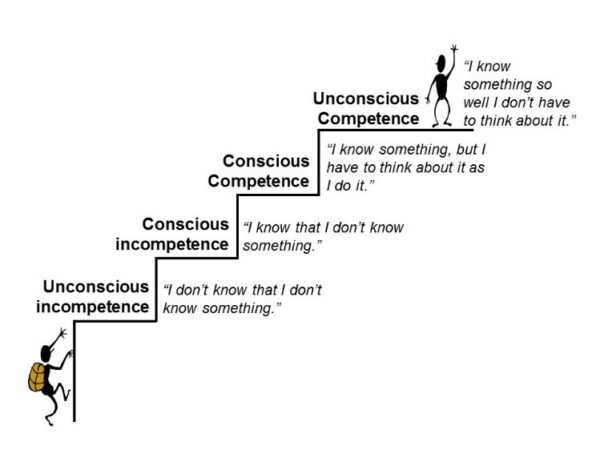
As a team of experts who specialise in helping organisations understand, measure and continually improve their cultures, we often work with consciously incompetent leaders. This is shown below. At the point that Terry was shown by the shoe vendor how to tie his shoelaces, but couldn’t do it himself, he was consciously incompetent. When Terry thought the shoes were broken and he wanted to return them (much like leaders who are frustrated with their employees) he was unconsciously incompetent as shown below. 

The Four Stages of Learning (based on Howell, 1982) 

Four Stages of Learning - Successful Leader

The challenge with leadership is understanding where we are on the ladder of success. With 57,136 books (Amazon, 2023) currently available explaining what successful leadership looks like, this is no easy task . Even trying to find the Top 10 leadership books is difficult as the links below show, despite there being some consistency, many are very different.  

So have a think about successful leadership:

  • What does successful leadership look like to you? 
  • How does it look to your team? 
  • What effect does it have on your organisation?  
  • What can you do to become more successful for you? 
  • How will your team notice?
  • How can you do to become more successful for your organisation?  

Success is the accomplishment of a goal, purpose or aim.  
 
Leadership is the action of leading a group, team or organisation.  

If you would like to discuss this more then please reach out to Steph Durbin – ICF PCC or Sarah Clarke CDir Fellow ABP, if you would like to know how to tie your shoes – watch the video as it really does work! 

Other reading you may enjoy or want to add to your Xmas list: 


Frequently Asked Questions

Can you provide specific examples or case studies illustrating how leaders can adapt their leadership styles when faced with changing situations?

Specific examples or case studies demonstrating adaptive leadership would enhance understanding of how leaders navigate changing situations. For instance, showcasing how a leader shifted their approach during a crisis or transition could illustrate practical strategies for adaptation.

How do you differentiate between conscious incompetence and unconscious incompetence in the context of leadership development?

Further explanation of the distinction between conscious incompetence and unconscious incompetence in leadership development would be helpful. Perhaps delving into real-life scenarios where leaders recognise their limitations but are unsure how to address them versus instances where leaders are unaware of their shortcomings altogether.

Are there any proven methodologies or frameworks for self-assessment that leaders can use to evaluate their effectiveness over time, beyond just seeking feedback from their teams?

Exploring established methodologies or frameworks for self-assessment in leadership could provide readers with actionable steps for evaluating their effectiveness. This could involve discussing tools or techniques that leaders can utilise independently to gauge their performance and identify areas for improvement, beyond solely relying on team feedback.

Adapted from an article originally published on LinkedIn, December 23rd 2023.

Are you ready to

start your joruney?

Take the first step to transform your workplace.

Call us on 07123 456 789
Email us at sarah@cortexworx.com

© Copyright Cortex Worx LTD. All rights reserved. | Website by Clyq