Tag Archive for: leadership

How to Successfully Lead & Reduce Stress

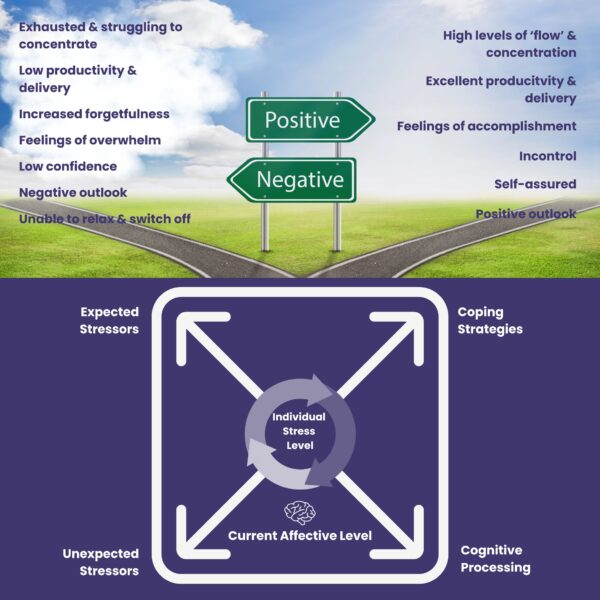
Leaders are vital to reduce stress

Leaders play a vital role in reducing employee stress by fostering open communication, empathy, and support. Setting clear expectations, creating work-life balance initiatives, and recognising efforts – they all help create a positive environment where employees feel valued and heard.


Providing resources for stress management, promoting self-care practices, and addressing organisational stressors contribute to a healthier workplace culture.


Leaders can cultivate an environment where employees can thrive and flourish by leading by example and continuously seeking feedback for improvement.


Organisational Stressors

Stress caused by an organisation, often called organisational stress, encompasses the psychological and physical strain experienced by employees due to various factors within the workplace environment.


This type of stress can arise from excessive workload, unrealistic deadlines, unclear job roles, poor communication, lack of support from supervisors or colleagues, perceived unfair treatment, inadequate resources, or toxic work culture.


Organisational stress can lead to decreased job satisfaction, impaired performance, burnout, and negative health outcomes if not effectively managed.


A Healthy Culture Reduces Stress

Culture in an organisation plays a more significant role than well-being yoga in promoting health and well-being due to its pervasive influence on employees’ daily experiences and behaviours. While yoga sessions can offer physical and mental health benefits, a positive organisational culture provides a supportive framework which extends beyond individual activities.


A healthy culture prioritises employee well-being at its core, fostering an environment where individuals feel valued, supported, and respected.


This includes promoting work-life balance, encouraging open communication, recognising achievements, and providing opportunities for growth and development. In contrast, well-being yoga, while beneficial, addresses only one aspect of employee well-being and may not address broader cultural issues.


Identify Systemic Issues Which Cause Stress

Moreover, a positive organisational culture contributes to stress reduction by addressing systemic issues such as excessive workload, poor management practices, or a lack of work-life balance policies.


By promoting a culture of collaboration, trust, and empathy, employees are more likely to feel psychologically safe and supported in managing their stress levels effectively.


Ultimately, whilst well-being initiatives such as lunchtime yoga can complement efforts to promote health and well-being, a positive organisational culture serves as the foundation for creating sustainable, long-term improvements in employee health, engagement, and overall performance.


Top Ten Things a Manager can do to Support Employees

  1. Set Clear Expectations

    • Provide clarity on job roles, responsibilities, and performance standards to minimise ambiguity and prevent unnecessary stress.
    • Support people to understand their roles.
  2. Foster Open Communication

    • Encourage regular dialogue with employees to understand their concerns, challenges, and ideas for improvement.
    • Be open to feedback.
  3. Promote Work-Life Balance

    • Offer flexible work arrangements, encourage the use of vacation time, and discourage overworking to support employees’ well-being outside of work.
    • Be flexible to the needs of employees.
  4. Recognise and Appreciate Efforts

    • Acknowledge and celebrate employees’ achievements and contributions to foster a positive work environment and boost morale.
    • Be authentic in your praise.
  5. Provide Resources and Support

    • Equip employees with the tools, training, and support they need to perform their jobs effectively and manage stressors.
    • Ensure everyone is set up for success with the resources required.
  6. Encourage Self-Care

    • Promote healthy habits such as taking regular breaks, staying physically active, and practising mindfulness to help employees recharge and stay resilient.
    • Be mindful that people relax in different ways and don’t use a one-size-fits-all approach.
  7. Lead by Example

    • Demonstrate healthy work habits, manage stress constructively, and prioritise self-care to set a positive example for employees to follow.
    • You need to role model behaviours.
  8. Address Organisational Stressors

    • Identify and address systemic issues within the organisation, such as excessive workload or poor communication, to alleviate stress at its root cause.
    • Provide clear measurements of progress and be aware that stressors can also have a positive impact in the short term e.g. productivity.
  9. Empower Employees

    • Delegate tasks and responsibilities appropriately, involve employees in decision-making processes, and provide opportunities for growth and autonomy.
    • Empower employees to be responsible for themselves.
  10. Foster a Supportive Culture

    • Cultivate a culture of trust, collaboration, and empathy where employees feel valued, supported, and respected.
    • This tip often happens as a result of the previous nine actions.


By implementing these recommendations, managers can create a supportive work environment that promotes employee well-being, reduces stress, and enhances overall performance and satisfaction.


The most important is to ensure high psychological safety in your organisation (Free Measure) so that people are able to express themselves authentically.


Now is the time for action. For a complimentary 30-minute consultation, reach out to Think Organisation.


Think Performance. Think Excellence. Think Impact.


Check our Insights page for more valuable thought leadership.


More about Wellbeing

There’s more about Wellbeing in this Think Organisation Post: Navigate Life Stress

Alternatively, copy and paste this link into your browser: https://cortex.clyq.co.uk/how-to-successfully-navigate-stress-in-your-life/

What is Happiness? Can Anyone Really Be Happy At Work?

There are hundreds of books written about happiness: what it is, how to achieve it, why it is so important, and why happiness at work is crucial for performance. HBR (2023) highlight research which shows being happy can increase productivity by 13%, whilst being unhappy costs the global economy $8.8 trillion in terms of lost productivity. So if I asked you now, on a scale of 0-10 how happy are you at work? What would you say?

With 16 points to play for in Scrabble, making happiness has clear advantages. But what really is happiness? And can we be happy at work?

What is happiness?

Remember the last time you felt truly happy, have you ever felt truly happy? Have you ever felt truly content? When you think about it, defining happiness or when, where, if you were happy can be difficult. Many people don’t realise they are happy until they are not.

So here are the definitions:

Happiness: the state of being happy

Happy: feeling or showing pleasure or contentment

Which I will be honest, don’t really help. What is contentment or pleasure for one person, may not be for someone else. Plus is happiness a trait? Like ‘Bob is a happy person’, or it is a state ‘Bob looked happy this morning’, or is it a feeling ‘I felt happy this morning’. How often have you felt happy, because for example you got a good score or did something kind, only to feel less happy when someone else ‘out does’ your happiness. Comparisons can be so important when it comes to happiness.

Derren Brown wrote an amazing book called ‘Happy: why more or less everything is absolutely fine’ in which he outlines the history of happiness, defining happiness as a social and historical construct developed since Plato & Socrates (Brown, 2016). But by the end of the book, Derren has the reader questioning whether it is happiness that people should really seek. Afterall, if it is so difficult to define, or understand, how can we aspire to achieve it? Especially within the confines of work.

Happiness is an emotional state, characterised by positive feelings such joy, contentment, satisfaction and fulfilment, as well as life satisfaction.

How Do You Measure Happiness?

Currently, the World Happiness Report claims to measure happiness, after being established in 2012. Led by leading scientists, researchers and experts the 2024 report shows that USA happiness levels have dropped out of the top 20 for the first time since its inception. In reality, this measure focuses on a number of metrics – including health and wellbeing, wealth and perceptions as well as emotions linked to happiness. Yet this is not a viable option for people at work to utilise. So how can we measure happiness at work? Or should we?

No matter which definition used, happiness is positive when, or if, it is achieved. So having people who are happy at work is a definite bonus, imagine if everyone was unhappy at work? In fact, 19% of people across the globe report being unhappy at work (measured by low job satisfaction) according to Gallup (2022). So maybe it is not so difficult to imagine.

Why Does Perception Matter?

Happiness, or being happy, is linked to our personal perceptions. A perception is a belief or opinion based on how things seem. It can be held by an individual, or a group of people. Perception is the quality of being aware of things through your senses, it is how we understand the world around us. Our brains filter and select information, picking up on information we deem important. So perceptions can vary, because it is our brain which decided what we pay attention to. Which is vital for happiness, because in many ways happiness is what we perceive.

Think about focusing on all the good things you have. Spend time on this. Really think about it. Your brain will naturally feel slightly happier than it was because of this positive focus. So in some ways, you can move up the happiness scale – just be reading this article!

Controlling Happiness At Work

In reality, the only thing we can control is our thoughts and our actions. So often, especially at work, we focus on things we cannot control. What others think, how others behave, how rude people are, how much people listen to us, the list is endless. Whilst we may be able to influence some of these aspects, especially as a leader, focusing on what we can’t control is a one way ticket to unhappiness. So how do we increase our happiness at work?

1. Focus On What You Can Control in Your Role

Find aspects of your job which you can influence, focus your time and effort on these, as opposed to elements you can’t control. Deciding how you deliver tasks, how you develop your role is an opportunity to improve your happiness at work. No business, or leader, will be worried if you over deliver your role or job. Think about what the metrics of success are for your job, then work out, how you can increase these, do them faster or to a higher quality, or in a way which save resources. Focusing on what you can control will help improve your own happiness, as well as your effectiveness and efficiency. This will make your boss happy too.

2. Find Opportunities For Growth

This builds on point 1. Look at how you can improve, become more skilled, get better at delivering your role and learn new things. It might be trying different ways to deliver the same thing, or working out how to be more efficient. Find areas which interest you and can help improve your performance. With the advent of the internet learning has become more accessible than ever before. Look at how others have developed or progressed in similar jobs, keep stretching your mind and developing skills to improve your satisfaction and happiness levels. Humans were built to grow, this delivers contentment and creates positive emotions.

3. Look After Yourself

Being happy comes from being present, in whatever form that looks like for you. Having a good night’s sleep, eating healthy and focusing on your own wellbeing is crucial to this. It can be difficult to be happy and have positive emotions when you are in pain, tired or exhausted. But it is possible, many people overcome untold challenges and because they look after themselves manage to be content, satisfied or happy. Undertaking any physical exercise has been proven to raise ‘happiness’ hormone levels, but don’t be hard on yourself. Be kind to yourself. Do what you can.

4. Build Positive Relationships

Having meaningful conversations, connecting with your colleagues and working with others can all have a positive impact on how we feel at work. The degree to which individuals need this connection varies widely, so listen to others as well. The focus is building positive relationships at work. Connecting with people. Have people who support you, whilst you support others, helps promote a culture of positivity. Just smiling at another person has shown to lift how people feel, having a positive impact.

5. Work With Your Values

For many this is really difficult, as often we have jobs just to survive. But generally, it can be possible to work with your values. For example, different organisations have different cultures and produce different products. The key to working with your values, is that you focus on living your values every day at work. Offering to do projects, or help others, in the workplace which align to our values can really increase our perception, or feeling, of how happy and content we are at work. The small things, quickly add up to bigger things so go back to number 1 and focus on what you can control. How can you increase your role to become more fulfilling, especially if you are trained and experienced in your role, talking to your manager is always the first step.

And finally….

So, when we ask the question of whether anyone can be happy at work, think about what this really means, to you and to others. Having positive emotions, positive experience and focusing on what you can control is the start of achieving happiness, which will always ebb and flow throughout our life and experiences.

Culture Alignment is Key to Make Work Really Work

This article explores how outdated leadership styles, poor communication, a lack of employee investment, and low productivity, all contribute to work not functioning well for individuals, teams, and organisations.


As Culture Consultants we have seen what happens when work is working. Businesses are significantly more profitable. Employees are more engaged and have higher levels of well-being, and absenteeism is lower compared to other organisations.


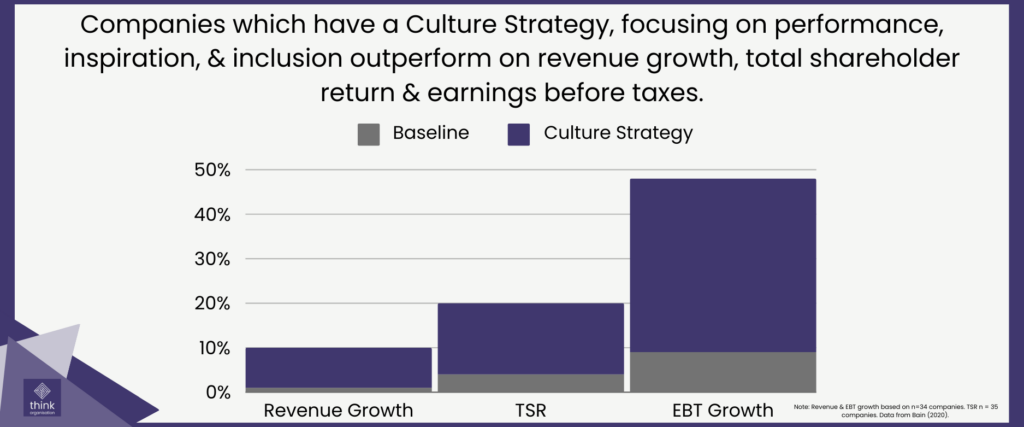
Graph showing companies which have a culture strategy focusing on performance, inspiration and inclusion deliver higher growth, higher shareholder returns and out perform their counterparts,


Yet in 90% of businesses today, work is not working. And this is impacting individuals, teams, organisations and society as a whole.


Productivity in the UK has reached an all-time low, decreasing year on year to levels below the lowest productivity levels pre-pandemic (ONS, 2024). So what is it that means work is not working?


Leadership Styles need updating

Firstly, leadership styles and skills need to be updated to reflect the current needs of employees and organisations. Leaders of old were tasked with ‘policing’ performance, ensuring people were present, and in some industries operating like machines in the production process.


Today, repetitive, mundane, dangerous or dirty tasks can be robotised, freeing up humans for more meaningful work. Yet leaders are lagging behind in terms of gaining the skills required to effectively lead teams in today’s environment.


Sprinkle in some artificial intelligence and the complexity increases – even faster, in a more uncontrollable manner.


The result is 80% of workers currently report being stressed due to poor communication. Yet, 34% of workers wouldn’t tell their boss they are stressed for fear of repercussions. So it’s no surprise half of workers report being disengaged (Praslova, 2024).


Despite this, UK employers investment in training is 26% less in real terms than it was twenty years ago in 2005. Globally, the UK continues to lag behind in employee investment with our EU counterparts investing double the UK value.


This means the UK would need to invest an additional £6.5 billion per annum to be on par (Learning & Work Institute, 2024).


So whilst work is not working, the investment and hope for improvements in the future currently remains bleak, especially in the UK.


How can we expect employees to improve their productivity when employers are failing to invest in improvements?


Organisations need to invest in training, coaching and upskilling

Secondly, organisations need to invest in training, coaching and upskilling their current workforce. This includes ensuring that the skills which are due to exit the employee market are replaced where required.


With 1.4 million more people due to retire over the next 17 years than will enter the employment market is it imperative that organisations learn how to work smarter and not harder.


Embrace Technology at Work

Thirdly, there is an opportunity to embrace technology for businesses. But to do this business leaders need to rethink their organisational design.


Technology provides ample opportunities, but often ways of working, processes and job design need to be reconfigured to harness the power, speed and capabilities of technology.


Effective job design can increase productivity, improve engagement levels, reduce absenteeism and deliver higher-quality work when done effectively.


Job design is an area where Business Psychologists have the upper hand, understanding the psychology and the processes required to deliver organisational success.


Listen to your employees

Fourthly, listen to employees in your organisation. They have the answers on how teams can work smarter and not harder. There are numerous techniques to empower the creativity of teams and facilitate innovation.


Creating a psychologically safe space where divergent thinking can be applied to future problems and opportunities can deliver untold benefits.


For more information on psychological safety assessments, surveys and advice, please email sam@cortex.clyq.co.uk.


Divergent thinking can be used to improve work.


Ensure your business has a robust culture strategy

Finally, ensure your business has a robust culture strategy which is aligned across the organisation. Often a toxic culture can arise from situations due to a lack of focus, much like weeds growing in an untendered garden. In times of uncertainty, fear can creep in and lead to unhelpful behaviours which start to fuel uncertainty, fear and self-preserving behaviours which can be detrimental to business success.


For support ensuring that work really works in your organisation please reach out for a free 30-minute consultation.


More about Change & Transformation

There’s more about Change & Transformation in this Think Organisation Post: How to Maximise Your HR Budget to Deliver Goals


Alternatively, copy and paste this link into your browser: https://cortex.clyq.co.uk/how-to-maximise-your-hr-budget-deliver-goals/

Workplace Stress: Understanding the Hidden Dangers

In the 1980s asbestos had been killing people in the workplace for years. The research was there, but it took years before governments would do anything about it. The same is true for the fine dust air pollutants which killed people working in the coal industry. Both of these issues are physical dangers, and thanks to health and safety legislation, our workplaces are now much safer. In theory. Today, stress appears to be the biggest killer of people in workplaces. Yet how can we protect ourselves?

The environment we work in is vital to maintain our well-being and health. In 2021, research showed that working long hours was associated with coronary heart disease (CHD), as was job strain. People who recovered from their first myocardial infarction who worked longer hours when returning were more likely to suffer a second infarction, compared to those that didn’t. And whilst correlation does not mean causation, it is important to understand this data. In reality, other factors such as smoking, higher alcohol consumption, and physical inactivity are also more prevalent in people who work long hours (Trudel et al., 2021).

Eustress and Distress

In fact, it is much more complicated as some stress is actually good for you. Yes, you heard that right. But it depends on the ‘type’ of stress. Eustress occurs when you are excited, maybe it is the first date or you are doing something you love? Whereas distress, which is what people are often referring to when they mention stress is the other end of the scale. Stress empowers people to get things done, without any stress we may never get anything delivered.

Another article tracked thousands of white-collar workers over 18 years. Job strain (with high psychological demands) combined with low-decision latitude showed a twofold increased risk of atrial fibrillation. So what can employees do if they think their job makes them sick?

1. Look after yourself

Getting enough sleep is fundamental to looking after yourself, although in times of distress this can usually be the first thing which declines. Worrying, focusing on the problems and trying to ‘get everything done’ can all reduce the amount of high-quality sleep that people have. Try to keep a routine, with a set time you go to sleep. A good night’s sleep can be key to ensuring you overcome times of high stress.

2. Take breaks

When we are busy, under pressure, or suffering in times of stress it can seem impossible to take breaks. Often we keep going, pushing through, missing lunch and breaks which is proven to be detrimental. Even taking a micro-break, which is a few minutes to get some fresh air, will help clear your mind and provide some breathing space, allowing you to be more productive.

3. Build a Support Network

Humans need humans. We are social beings so it is vital to build a support network in times of high stress. Talking things through with trusted people, or having trusted advisors you can ask for support from can help reduce the isolation people can feel when under pressure. In times of high stress, it can be difficult to focus, having someone to talk to is invaluable.

4. Be More Selfish

So often people are keen to please others, or behave in ways detrimental to their own well-being for the risk of offending others. In times of distress, being selfish and putting your needs first is vital. Saying no and being clear about your boundaries can be vital to ensure you manage through times of distress. You cannot do everything, no matter how hard you try. Talk to others, ask for help and maybe work with someone who can advocate for you?

5. Prioritise to reduce stress

Distress can arise when we have too many priorities and it can be difficult to see the ‘wood for the trees’. Listing everything you have to do is always a good start. I advise using post-it notes as then you can move around your list. Ask yourself is this really urgent? Is this really important? What will happen if I don’t do this? Being able to work fewer hours is the outcome, and often being able to say no can come back to being able to prioritise.

We understand how hard this can be, and if you are reading this and your internal voice is saying – ‘I wish‘ or ‘IF I could do that I wouldn’t be feeling this way‘ or ‘easier said than done‘. Then, it may be worth reaching out for professional support. Many workplaces have EAPs (Employee Assistance Programmes) which can provide support, and there are online solutions which can also help.

Cardiovascular disease is the leading cause of death worldwide, more help can be found here.

Unlike the 1980s, when people were forced to work in asbestos-riddled environments, today we can have more control over whether we take on the distress which can make us sick. People respond to different stresses, for one person the stress of being a blue light first responder may be eustress, for someone else it could be distress. Understanding yourself is the start of ensuring your own health and wellbeing.

NHS help can be found here or reach out to us to improve the culture in your organisation. We recently helped reduce workplace stress by 45% based on employee feedback due to our work supporting job design and aligning teams across the organisation.

Think Rock: Aligning Culture with Strategy

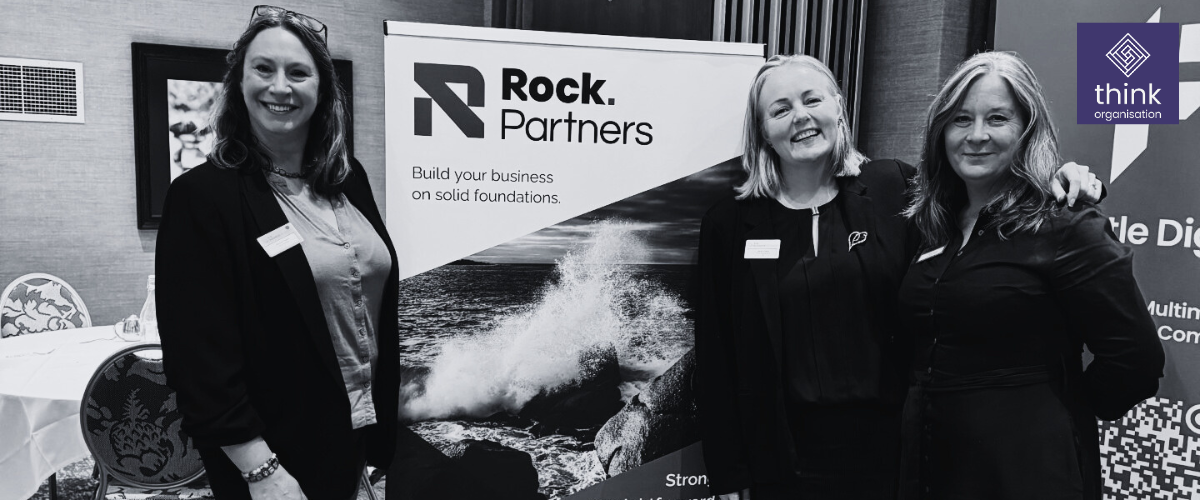
Collaboration is how Think Organisation works, in fact, it is one of our Founders top strengths. So Sarah Clarke and Steph Durbin, loved meeting with Rachel Vigers from Rock Partners to share their own thoughts on where, and if, culture and strategy meet.

The article discusses how having core foundations are vital, but you also need to manage your culture, to ensure your company culture makes music.

Rock, a business consultancy, collaborates with Think Organisation, as both are specialists in their own area. Rock’s core foundations form the basis for a strong and sustainable business, whereas culture is crucial for bringing these foundations to life.

In this complex, and regularly competing arena, it is often difficult for leaders to know what to prioritise. This is where this article can help you.

If culture is what it is like to be here, then it is vital the foundations are strong to ensure a healthy culture is created.

The metaphor of a choir provides the perfect insight to how foundations and culture are both vital, in their own very different ways. After all, how doesn’t want a business working in harmony?

Read the Rock Partners Interview Here

#bemorerock

Teaching Leaders How To Think: Ten Tips

Leadership today is more complex than ever, and as the world continues to evolve, leaders must face challenges that often have no historical precedent. Humans need to learn how to think.


Leaders especially.


Forbes (2022) outlined that the most important lessons often occur through experience. Current scientific research suggests that 70% of learning happens through experience, 20% through interactions or discussions with others, and 10% through being ‘told’ or formally ‘taught’ what to do (McCall et al., 1980).


Yet how does this work where the speed of change is ever increasing and no one has yet experienced leading businesses of today?


In such an unpredictable landscape, the ability to think critically, make informed decisions, and adapt quickly has never been more crucial. Whether navigating emerging technologies like AI, facing crises or guiding teams through uncertainty, effective decision-making is a cornerstone of successful leadership.


Yet what is a successful leader?


Despite the existence of millions of books on the subject of leadership, there is no definitive way to classify a successful leader. Have you ever seen a ‘Perfect Leader’ profile, complete with the skills, expertise, and experience that guarantee success?


Many excellent leaders have faltered when changing roles or taking on new challenges, while other, less successful leaders have learned from their mistakes and become better as a result.


Below is Think Organisation’s top ten tips for helping leaders think clearly and make better decisions:


1. Develop Self-Awareness

Leaders must first be aware of their own thought processes to make sound decisions. This means identifying biases, assumptions, and emotional responses that could cloud judgement.


Self-reflection can help leaders recognise when they are making decisions based on impulse or habit rather than careful consideration. Take time to assess your motivations and understand what drives your decision-making.


Psychometrics (accredited by the British Psychology Society) are the best tools for this, and you can also get feedback from others, speak to trusted colleagues and analyse your decision-making processes.


2. Embrace Diverse Perspectives

No leader has all the answers, especially when dealing with unprecedented challenges.


Surround yourself with diverse voices, and actively seek out opinions that differ from your own. This minimises the risk of group-think and also provides a broader understanding of the problem at hand.


Diversity in thought can lead to more creative, innovative solutions that a single perspective might miss.


Building a diverse team is fundamental to success, however, this doesn’t guarantee diversity of thought.


High levels of psychological safety are paramount to ensure everyone feels listened to and can share their thoughts and ideas.


3. Leverage Data (and Harness Intuition!)

In today’s data-driven world, it’s tempting to rely solely on analytics to make decisions. However, effective leaders know that intuition, built from years of experience, also plays an essential role.


Whilst data provides insights and trends, your gut feeling may give you the nudge you need to act in ambiguous situations where data may not be conclusive. Balancing both ensures a more holistic approach to decision-making.


It is vital that leaders work out what information is being led by data, and what is being led by feelings and emotions. Intuition arises because our brain processes vast quantities of information automatically and unconsciously, so whilst it can be wrong, it can be useful to ‘tune in’ and listen to it.


4. Think Patience Before Action

In fast-paced environments, leaders often feel pressure to make decisions quickly. However, haste can lead to errors.


Whenever possible, take a moment to pause and reflect before acting. This pause can give you time to evaluate the situation more carefully, consider alternatives, and make a more deliberate decision.


Sometimes, slowing down is the key to better judgement.


Time To Think, written by Nancy Kline, provides amazing insight into how to do this. Whilst the process may not work for every organisation or leader, harnessing it and adapting it to suit can be invaluable. Leaders who have undertaken coaching which included reading this book, have seen vast improvements in their ability to think.


5. Focus on Outcomes, Not Outputs

In the face of immediate challenges, it’s easy to focus on quick fixes. However, effective leaders always keep long-term goals in mind.


When making decisions, consider not only the short-term benefits but also the potential long-term consequences. This future-oriented mindset ensures that decisions contribute to sustainable success rather than just addressing immediate issues.


Organisations often focus on hitting targets, and whilst these may help organisations achieve their goals often they become detrimental, leading to in-fighting between teams and a lack of resource collaboration.


6. Foster A Culture of Experimentation

In times of uncertainty, the right decision is often unclear. Organisations often put more pressure on making the ‘right’ decision when times are tough. Leaders can mitigate this by fostering a culture of experimentation.


Encourage your team to test small-scale solutions and learn from the results. This agile approach allows for real-time adjustments and minimises risk while ensuring continuous learning. Failure in this context is not a setback but an opportunity to refine strategies.


Many highly successful tech companies have managed to the harness this culture of experimentation.


The Agile mindset, or agile approach, is very different to the more traditional project management techniques.


7. Think about Emotions

Emotions play a significant role in decision-making, often in ways we are unaware of. A leader’s ability to manage their emotional reactions can greatly impact the quality of their decisions.


When faced with high-pressure situations, take steps to regulate emotions through techniques such as breathing exercises or cognitive behavioural coaching. Emotional intelligence helps leaders remain calm, focused, and objective.


Understanding the different types of intelligence humans have is fundamental to improving emotional management. Emotions are there to protect us, but it is important to see when they could be doing harm as well.


Emotions infect others, so a leader who is angry and stressed will create more angry and stressed employees.


8. Recognise Cognitive Bias & Manage It

Human beings are naturally prone to cognitive biases – mental shortcuts that can distort thinking. They kept us alive for years but can be less helpful in today’s world. For example, confirmation bias can lead leaders to seek out information that supports their existing beliefs, while availability bias can cause an over-reliance on recent events. Being aware of the numerous biases is the first step in counteracting them.


Encourage critical thinking and question your assumptions to ensure your decisions are grounded in reality. Ask yourself, and your team, could we have been prone to any of these cognitive bias?


9. Learn, Learn, Learn

The most successful leaders are those who recognise that learning never stops. Whether through formal education, peer discussions, or hands-on experience, leaders must constantly seek out new knowledge to stay ahead of emerging challenges.


The “70-20-10” learning model – 70% through experience, 20% through interactions with others, and 10% through formal learning – highlights the importance of learning through doing, which is especially relevant in unprecedented times.


In many ways this tip links the other 9 together, as mistakes will be made, and no one is perfect. However, the ability to continuously learn, continuously improve and work together is fundamental to the success of harnessing the power of thinking.


10. Trust Your Team

Leaders cannot do everything themselves. In complex and rapidly changing environments, leaders need to empower their teams to make decisions at various levels.


By fostering trust and providing employees with the necessary skills and autonomy, leaders enable more effective decision-making across the organisation. This not only builds a more resilient team but also allows leaders to focus on strategic issues without getting bogged down in operational details.


Trust is created when people are able to deliver what they say they will, asking for help as they go. Being dependable, and ensuring you are communicating honestly with the people around you helps build trust.


Read Ken Blanchard Trust Works to know more.


So What?

Today’s leaders are navigating a rapidly changing world where decisions must be made without historical precedent.


Employees have more freedom than ever before, but archaic leadership styles can be detrimental to this new way of working.


By staying self-aware, embracing diverse perspectives, balancing intuition with data, and fostering a culture of experimentation, leaders can make better decisions in uncertain times.


Being able to think clearly, understand different opinions, beliefs, ideas and how these impact effective decision making is fundamental to organisational success.


Above all, it is essential to remain emotionally grounded, continuously seek learning, and trust your team. In doing so, leaders can navigate the complexities of today and be prepared for the unknowns of tomorrow.


More about Leadership

There’s more about Leadership in this Think Organisation Post: Authenticity For Leaders

Alternatively, copy and paste this link into your browser: https://cortex.clyq.co.uk/why-all-leaders-need-to-be-authentic/

Struggling at work? Here’s How To Understand Your Frustration

Are you fed up not being able to achieve what you want in your job? Do you get annoyed with the other people? Frustration occurs when we feel annoyed that we can’t change of achieve something. So what can we do when this happens at work?


Recent research shows that almost half of us want to leave our current role (LinkedIn Workforce Confidence Report, 2024) and whilst frustration may not always be the reason, if we weren’t frustrated the chances are we would be happy to stay at our current employer.


At Think Organisation we are a great advocate of exit interviews, as it is vital to ensure people leaving your business remain strong advocates of your brand. So often, talented people move on and because of the negative experience of being off-boarded they would never consider returning to an organisation in the future – even if the right role, right rewards, right time, right location and right opportunity presented itself.


Ironically, after the so called ‘Great Resignation’ in 2021, where 47 million people changed their employers one survey suggested 80% of people regretted their decision to resign (Fast Company, 2023). Other studies delved into the reasons for the regrets, but whether it was the salary, the co-workers, or the work-life balance – it all boiled down to frustration.


So before jumping for the resignation letter lets considered how you can understand why you might be frustrated by your current job. And most importantly, ensure that if you do decide to leave, then you have done your homework and won’t live to regret your decision later. After all, the grass isn’t always greener on the other side.


The first challenge is to understand, whether it is your manager, your team, your organisation or everything which frustrates you. Whilst this may be something you can quickly say, it is important to really think about whether this is the root cause of the frustration.


For example, you may think it is the salary which frustrates you, but is it something deeper than this? And if they fixed the salary would something else frustrate you?


So grab a brew, a pen and paper or an electronic notepad and find somewhere you can concentrate and write down your answers to the following statements:


  1. If I could change three things today to make my job better what would they be . . .
  2. Close your eyes and describe your ideal workplace or job, really think about it and now write this down
  3. How does your current job measure up against this ‘perfect’ job you have just described?
  4. What are the three best things about my job today?


Whilst there are no right or wrong answers, it is important to think about things over the longer term and in context. So depending on the answers you wrote above, think back over the last six months, or year, and work out how much of the time this has been the case – or is it that you are going through a short-term bad patch?


Humans generally have a negativity bias, which means we tend to focus on the negative aspects more readily than the positive.


This bias is asymmetrical, which means for every one positive thing which we may glaze over, we are likely to spot or focus on three negative things. At times, especially when focusing on relationships, we can actually spot five negative elements for every one positive as our brain places more psychological weight against the negative events in our mind. So keeping this in mind, go back through your answers and think about what the positives are?


If you have done this and are still unsure why you may be frustrated about your job, we recommend you delve a bit deeper. It can often be useful to do this with a friend, or set aside an hour of time when you won’t be disturbed to start this process.


Step 1: Self-Reflection

Think about your current feelings towards your job. Are you feeling stressed, anxious, angry, or overwhelmed? The chances are if you are feeling happy, relaxed and content you might not still be reading this blog, so this is deliberately negative!


Track your daily experience at work for a week or two. Note when you feel frustrated, what was happening at the time, how did you react? Was it a person, an event, a situation or the time of the day?


By using a journal, you can identify patterns or specific triggers which occur and lead to your frustrations.


Step 2: Analyse your work environment

Think about where you work, when you work and how you do your work. We often work remotely, in offices, or in our cars, so it can be difficult to understand where we are most productive. Do you enjoy being in the office? Do you enjoy working from home? Where are you the most productive?


Consider your workload, think about your tasks – do you have too much or too little to do? Does what you are doing give you energy – or is it tedious? How is your workload compared to that of your peers? Do you enjoy working with others or prefer working alone?


Think about your relationships at work. How do you interact with your colleagues, managers or clients? Do you enjoy this interaction? Is there conflict, communication issues or feelings of isolation which could be contributing to your frustration?


Think about the culture where you work. This is the way things get done. Does the company culture align with your values and work style? Is it supportive or is it toxic? Do you feel safe and supported at work? Or do you feel threatened and at risk? Culture can so often be the cause of frustrations, especially when it is misaligned to a person’s goals.


Step 3: Examine your job role

Think about your current job. Is it clear what you need to do? Is it clear what you need to achieve? Have you been in your job for a long time? Are you bored in your current role? Does it excite you when you think about your job? Or does it fill you with dread? The following questions may help and can be discussed with your immediate supervisor or manager.


  • Are your job responsibilities and expectations clear?
  • Do you know how to succeed in your job?
  • Are you satisfied with your career progression to date?
  • Do you feel supported in your role?
  • Do you find your work meaningful and engaging?


A lack of motivation or a disconnect between your job and your personal values can often cause frustration. Feeling stuck or seeing no clear path to advancement can also lead to dissatisfaction.


Step 4: What about other factors?

Do you have a good work-life balance? Are you satisfied in other areas of your life? Do you have time to relax and take enjoyable personal time? Or are you struggling because of another stress, e.g. relationships or other factors such as life stressors?


Often people focus on their job as a source of frustration because it is easier than focusing on the ‘other stuff’. There could be financial concerns, family issues, uncertainty about where you are living or health problems which are driving feelings of frustration in your job.


Often personal challenges can exacerbate work frustrations, especially if we are not sleeping, so things that used to be ok now become increasingly frustrating.


Step 5: Talk to someone you trust

It is often good to gather feedback from others who you trust. This could be a trusted colleague or a mentor. Perhaps someone in the family or a friend can help you understand more about your frustrations. What have they noticed that you may not have noticed?


Often people will share their opinion of a situation which can be useful to gain insights and perspectives that you hadn’t previously considered, which may also help you understand more about your frustrations.


A candid conversation with your manager can also be helpful, assuming they are a supportive manager. Managers can help clarify expectations, address concerns and provide support. Plus sharing your thoughts, feelings and frustrations with them can ensure they help you overcome the challenges you are currently facing.


Step 6: Think about your longer-term goals

What was the reason you took this job? What hopes and dreams did you have when you took this job? Is this job a “means-to-an-end” job, or is it the job of your dreams? Does your current job help you get towards your long-term goals and aspirations? Or is your job compromising your personal values?


It can help to think about your aspirations, and what you want to achieve. Is this job helping you? Has it delivered what it said on the tin? Spend some time writing down your longer-term goals, even if they are dreams and aspirations, it is important to know where you want to go in the longer term.


Step 7: Take Action Against Frustration

Often frustrations can arise when we feel out of control. This can include when you want to make changes, however it is not in your power to do so. Or when you believe making changes is not in your control.


Review the list of things you have written above and start to think about where they fit on the model below? Can I really change them or could I influence a change in them? Is there something else I could do? For items in the circle of concern (which is what you can’t control) – park your thoughts about them as it is eating up time and energy, and instead focus on some of the elements you can control.


For example, frustration can arise over something that happened in the past. In reality you can’t change the past, you can only influence the future.


There are other areas which you may be able to influence, e.g. which work projects you get to work on going forward.


There are other elements which may be in your control e.g. how you respond to certain situations. For more information on this model, or to get insight from the professionals, please email sam@cortex.clyq.co.uk.


Now you have spent some time reflecting, writing and understanding more, we recommend you take some concrete steps to address any sources of frustration. These might involve keeping a journal, or seeking support from a trusted colleague. But think about three actions you are going to take in the next few weeks and write these down, commit time to them and set a reminder in your calendar to review your progress.


By taking the time to reflect, gather information, and explore solutions, you can gain a clearer understanding of what’s causing your frustration and take steps to improve your work experience.


More about Workplace Psychology

There’s more about Workplace Psychology in this Think Organisation Post: How to Drive Business Success by Understanding Others

Alternatively, copy and paste this link into your browser: https://cortex.clyq.co.uk/understanding-others-how-to-drive-business-success/

A Slice Of Culture: Why Cake Is So Important

As a Culture Consultant, defining our role can often be challenging.


For some clients, we delve into the intricate details of the evidence-based practices that underpin our work, ensuring behavioural changes across organisations. For others, we focus on the broader issues they need our help to address.


Similar to cake-making, culture is complex, with countless nuances to consider in creating the ideal environment for your business.


Just as an expert cake-maker possesses years of experience, training, and a natural talent for baking and decorating, an effective Culture Consultant requires similar expertise.


A Culture Consultant helps organisations align their values, behaviours, and practices to create a cohesive and productive work environment that benefits individuals, organisations, and society as a whole. So what can cakes teach us all about organisational culture?


The First Taste: The Initial Impression

Think about your favourite cake. Now, imagine the first time you tried it — did it match your expectations? Just like with cake, our initial impressions of an organisation’s culture can be deceiving. The aroma, the look, the promise of what’s inside — it all shapes our expectations. But sometimes, reality might differ, just like when you anticipate a rich chocolate cake but are surprised by a slice of fruit cake.


Similarly, a company’s culture might seem sweet on the surface but can be something entirely different once you’re inside.


The Recipe: Building Culture with Purpose

Every cake is made for a purpose — a birthday cake, a wedding cake, or even a cake to relax and eat with friends. Similarly, an organisational culture is crafted with a specific purpose in mind. The ingredients — the values, norms, and behaviours — need to align with the organisation’s goals.


A child’s birthday cake wouldn’t include alcohol, just as a culture meant to foster innovation shouldn’t be bogged down by rigid rules. Understanding the purpose behind your culture is key to ensuring it serves its intended function, just like a cake.


Presentation vs. Reality: The Surface and the Substance

A beautifully decorated cake might look perfect on the outside, but what if it’s just a plastic model inside? In organisations, culture is often presented in a polished, appealing way to attract new employees. But once inside, if the culture doesn’t match the expectations, it can lead to disappointment. A culture, like a cake, must have substance beneath the surface — a sweet façade with a bitter core will eventually leave a bad taste.


The Ingredients: Quality & Consistency

The quality of a cake depends on its ingredients. Fresh, locally sourced components make for a delicious cake, while cheap, low-quality ingredients result in something far less satisfying. Similarly, the elements that make up an organisational culture — trust, communication, and integrity — must all be of high quality. If these are compromised, the culture, much like a poorly made cake, will crumble under pressure.


Layers of Complexity: Balancing Different Elements of Culture

A complex, multi-layered cake requires careful balance — too much of one ingredient can overpower the others. The same goes for culture. A thriving organisational culture balances various elements like innovation, collaboration, and inclusivity. Just as a cake with the right balance of flavours becomes a masterpiece, a culture that authentically harmonises its core values will lead to a successful organisation.


Expectations vs. Reality: Managing Perceptions

Sometimes, a cake looks amazing, but when you bite into it, it’s dry or lacks flavour. This gap between expectation and reality can lead to disappointment, whether in a cake or an organisational culture. Managing expectations is crucial — overpromising and underdelivering in culture, as in baking, sets people up for dissatisfaction. Ensuring that what you promise aligns with reality helps to build trust and satisfaction.


Hidden Surprises: Dealing with the Unexpected

Have you ever cut into a cake expecting one thing and found something else entirely inside? Perhaps a hidden layer of fruit or an unexpected flavour? Organisations can be similar — what’s beneath the surface of culture might surprise you, sometimes in positive ways, other times not so much. Being open to these surprises, and learning to navigate them, is key to adapting to and thriving in any cultural environment. Just like an expert cake taster who can quickly unpick the issues of a poorly-tasting cake, an expert culture consultant can help leaders deal with the unexpected.


Serving Size: Scaling the Culture

Just as a cake must be sized appropriately for the occasion — enough to go around but not so much that it’s overwhelming — a culture must be scaled to fit the organisation. A small team might thrive with a close-knit, informal culture, while a large corporation might need more structured processes. Ensuring the culture fits the size and needs of the organisation is critical, just as it is in serving the right amount of cake.


Special Ingredients: The Unique Elements

Every cake has that special ingredient that sets it apart, whether its a hint of spice, a unique frosting, or a special filling. In culture, these special ingredients are the unique traditions, rituals, and practices that define an organisation. These elements can’t be easily replicated by others — they are what make the culture distinct and memorable, much like a cake with a secret family recipe.


The Final Slice: Reflecting on Culture

At the end of the day, just as you savour the last bite of cake, it’s important to reflect on the culture of your organisation. Is it something you would recommend to others? Does it leave you feeling satisfied, or is there something missing? Understanding the culture and its impact is crucial for making any necessary adjustments — whether it’s adding a new ingredient to the mix or refining the recipe to better meet the needs of everyone involved.

To learn more about how our team of Culture Consultants can help your organisation, please book a free 30-minute consultation with us or email – sam@cortex.clyq.co.uk.

To enjoy delicious cake we recommend Slatterys.

More about Culture

There’s more about Culture in this Think Organisation Post: Five Steps to Fix A Toxic Culture


Alternatively, copy and paste this link into your browser: https://cortex.clyq.co.uk/five-steps-to-fix-a-toxic-culture/

Five Steps to Fix A Toxic Culture

A negative workplace culture is an environment dominated by practices, policies and management styles that perpetuate unhealthy habits and conflicts.


In a negative culture, employees experience dissatisfaction, and low morale and are much less productive. Extremely negative cultures are often referred to as toxic.


However, it is important to understand the difference between negative and toxic cultures. A toxic culture is an extremely serious, potentially brand-damaging, company-ending culture which is detrimentally impacting employees and society.


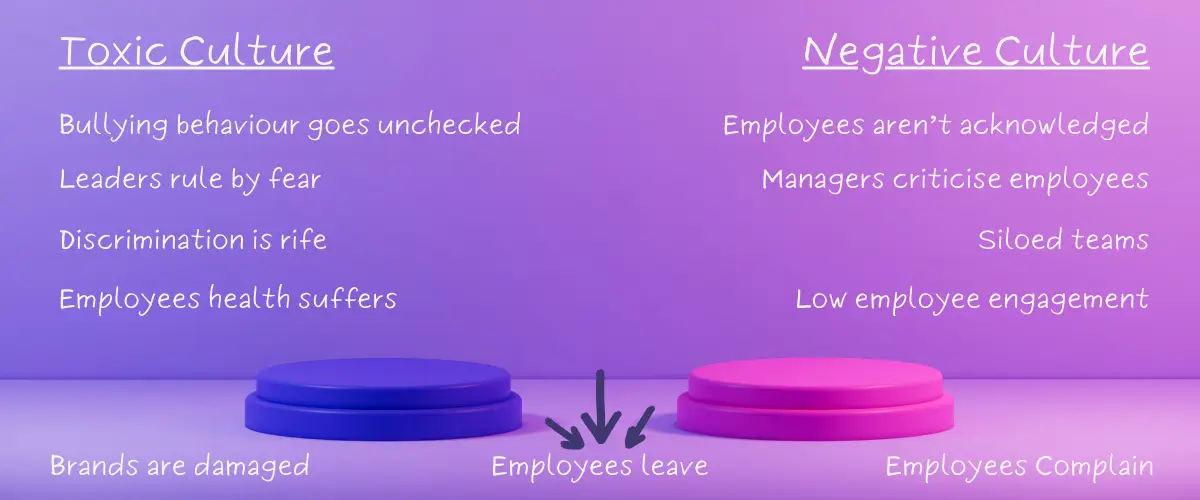
From our own experience, working as culture consultants for over twenty years this is how we would define the difference between negative and toxic cultures.


Two buttons showing toxic and negative cultures word lists.


Whilst negative or toxic cultures often overlap, when a company is truly toxic the approach to improve the culture is very different to how we would recommend a negative culture is improved. This is because a toxic culture needs a full reset.


There are dangerous, discriminatory behaviours occurring which have often been left unchecked for years. It is therefore paramount that the toxicity is neutralised safely, with the correct support and guidance provided to ensure all employees come out of the experience as safely as possible.


In standard cultures, with a survey of over 1,000 employees, 29% of employees reported taking time off due to the impact of behaviours such as discrimination, sexual misconduct or harassment. In a toxic culture, this percentage can be 80-90%, which is why the approach needs to be led by a professional.


Below are our recommended steps to fix a toxic organisational culture.


Identify the signs which indicate a toxic culture


Toxic cultures have signs that may indicate the serious problems infecting the current culture.


For example, individuals who compete with each other as opposed to working as a team, or missed goals with high levels of blame. If there is a lack of recognition for high performers, or disrespect goes unchallenged and it is more important to deliver the numbers, no matter what the costs, then this could indicate high levels of toxicity.


Many toxic cultures have high employee turnover, but not always, as some toxic cultures incur limited employee turnover due to the negative impacts the culture has on individuals. Employees feel trapped, unhappy and lack confidence to move on. Their health may have been impacted, and they work such long hours to meet the increasingly negative demands of the culture they don’t have time to look for new roles.


Leaders of toxic cultures can often manipulate people into feeling so valued, at critical times, that people struggle to leave despite the toxic environment.


Toxic cultures are the worst level. They do not just emerge over night. And, in our opinion, there is often not ‘one person’ to blame. It is a way of working, which has been allowed to fester, grow in negativity but on some level may be achieving whatever arbitrary performance metrics the company is chasing.


Toxic cultures have been ignored for some time, even years, which is what has allowed the toxicity to grow, fester and continue to take over the culture increasing the scale of negativity as people fail to improve the culture in a positive way.


Understand the depth & scale of the toxicity


There is a huge difference between negative culture and a toxic culture. In some organisations there can be pockets of poor culture, or areas where there is positive culture and overall whilst the culture may not be helping deliver success it may not be so negative it is toxic.


A toxic culture perpetuates unhealthy behaviours and conflict between employees. A toxic manager can create negativity and toxicity in a certain area of a business, and can be easily remedied – if dealt with promptly. Again the HR data will indicate this, if there is psychological safety for people to provide open and honest feedback.


If the toxicity is across the business, with unhealthy and negative behaviours consistently going unchallenged, or even encouraged then you have a toxic culture.


Often organisations cultures come to light when there is a crisis. Perhaps, an employment tribunal or a negative press story about the state of the business.


Recently there have been multiple high-profile stories about negative cultures e.g. the Post Office.


The lack of trust, the way people were treated and the lack of listening from the leadership teams created such a toxic culture that many people lost their jobs, livelihoods and even lives to the toxicity of the culture. If the organisation had invested in Culture Consultants earlier, this could have been identified years ahead of the scandals which now continually plague them.


Ultimately, an early intervention could have saved the Post Office significant sums of money and safeguarded it against its current spiral of decline.


Create the Vision & Values of the Future


Many organisations with toxic cultures may not have defined values or behaviours. Others may have elaborate, clearly defined values and behaviours – but maybe they do not live by them. Often they adorn walls, are promoted externally but employees fail to live by them. They can become a source of amusement, and at times disrespect.


Many toxic cultures have a clear ‘this is what we say to follow what we should say’ and an undercurrent of reality in terms of ‘this is how we really do things’.


The leaders must inspire the new vision and values of the future. Everyone needs to be involved in creating them, owning them and most importantly ensuring everyone abides by them, supporting each other to achieve them and continuously improve. At times, toxic cultures can still be prolific but the leaders can be unaware of the situation. This is usually the case when a company’s performance has declined, leading to ineffective toxic leaders being replaced, but then employees continue to behave unethically. Often undercutting leaders, talking in hushed tones behind backs and ensuring that unhelpful behaviours continue to manifest across the organisation. And all of this despite leaders’ attempts to improve the culture.


Imagine a lake of salt water. It will remain at a level of saltiness until a certain combination of fresh water, seawater and/or rain is added to tip the PH balance. This is the same for culture, and when it is achieved it needs to be maintained and managed but culture grows over time so it cannot be changed by a few leaders at the top.


Unfortunately, many leaders become disillusioned, burnt out or ill when trying to transform a toxic culture because of the challenge which is before them. This is why it is vital to get the experts in when a culture is toxic. The other element is to ensure all leaders, managers and employees buy-in to the value of culture.


Ensure ALL Leadership buy-in to the Value of Culture


Scepticism, lack of trust, and short-sighted quick wins for individuals and not the collective good are all signs that leaders don’t truly buy into the importance of culture.


There will be no change to a toxic culture without leadership truly understanding its value. Many culture changes often start with leaders being removed, which instills fear. When people are scared this enflames negative behaviours further – especially in a toxic culture which has rewarded unhealthy behaviours historically.


Leaders who have been disrespectful, non-inclusive, unethical, cutthroat or abusive must be held to account whilst a culture of transparency, openness and fairness is created.


There does need to be opportunities and hope for all leaders.


Communication is Key


Communication of the culture strategy is key, as words will breed behaviours but difficult conversations will be plentiful. Role modelling becomes vital. New standards and expectations need to be communicated, with everyone set up for success. Support, positive reinforcement, and opportunities to learn are crucial.


Many employees, especially if they joined the toxic culture early in their careers may not know there are other ways of working and behaving. Hence, it is important to present people with the opportunities to improve.


Create a Culture of Psychological Safety


Toxic culture transformations often fail because of the fear which can be instilled during the transformation. Employees fear for their jobs, may be ashamed of how they have behaved or may prefer the culture how it was. This culture is what feels familiar to them. It is ‘how we do things here’.


Psychological safety is when people feel safe taking interpersonal risks, speaking up or voicing ideas or concerns. It is a feeling so can’t be mandated. Often some people feel psychologically safe, whereas others may not. In a toxic culture the majority of employees do not feel psychologically safe. They daren’t speak up, voice concerns or ideas and there is a culture where people may be ridiculed for speaking up. Often this leaders to people preferring to be silent, as this is easier and safer.


Think about when you have mustered the courage to speak up in a meeting. How did people react? How did people respond? Was there positive support? Did you get ridiculed? Did people say what they really thought? Or were you dismissed? Did people listen to you? Or were you scared? If people have a positive experience when they voice their opinions or speak up they are more likely to do it again. However, if people are ignored, dismissed or made to feel uncomfortable, then they are unlikely to speak up again. There is also no psychological safety.


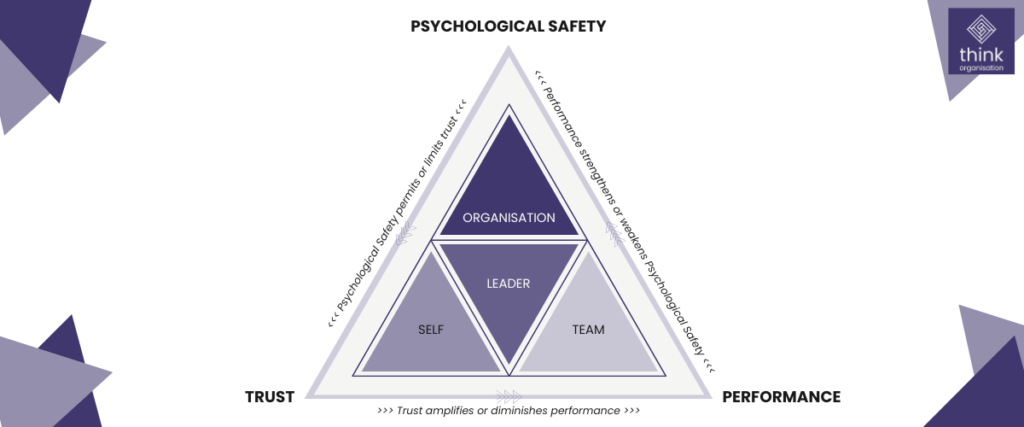
As shown below, creating psychological safety is critical to fueling trust and performance. If you would like a free individual measure of psychological safety please click here.


Whilst this article has focused on toxic cultures, successful organisations have positive cultures which drive organisational success. If you have noticed any of the items discussed in this article we recommend you contact our team of Culture Consultants at Think Organisation for a free 30-minute consultation conversation to discuss how to get your organisational culture assessed.


More about Culture

There’s more about Culture in this Think Organisation Post: Is Toxic Culture Affecting Your Wellbeing


Alternatively, copy and paste this link into your browser: https://cortex.clyq.co.uk/is-your-toxic-culture-affecting-your-well-being

99 Ways a Business Psychologist Can Improve Your Workplace

Organisational Psychology, Industrial-Organisational Psychology, Business Psychology, Occupational Psychology – there are many titles for a Business Psychologist which describe the expertise and application of psychological principles to the problems, challenges and business environments in which humans work.


Whilst a relatively new area of psychological science, the growth in this discipline has been exponential in recent years. It uses the science of human behaviour to improve organisations, which benefits people, the organisations themselves, and society as a whole.


Organisational, Business or Industrial Psychology focuses on the HUMAN part of organisations.


Below are 99 specific problems Business Psychologists can tackle in your business.


1. Employee Selection and Recruitment

    • Problem: Hiring the right candidates for the job.
    • Solutions: Develop and validate selection assessments, design job interviews, and create effective recruitment strategies.

2. Training and Development

    • Problem: Ensuring employees have the necessary skills and knowledge.

    • Solutions: Design and implement training programmes, conduct needs assessments, and evaluate training effectiveness.

3. Performance Management

    • Problem: Evaluating and enhancing employee performance.

    • Solutions: Develop performance appraisal systems, design feedback processes, and establish performance metrics.

4. Employee Motivation and Satisfaction

    • Problem: Low employee morale and motivation.

    • Solutions: Design motivational programmes, conduct employee surveys, and implement strategies to improve job satisfaction and engagement.

5. Leadership Development

    • Problem: Ineffective leadership impacting organisational performance.

    • Solutions: Develop leadership training programmes, provide coaching, and identify high-potential employees for leadership roles.

6. Organisational Development and Change Management

    • Problem: Managing organisational change and development.

    • Solutions: Facilitate organisational restructuring, design change management strategies, and conduct organisational assessments.

7. Workplace Diversity and Inclusion

    • Problem: Lack of diversity and inclusion within the workplace.

    • Solutions: Develop diversity programmes, conduct bias training, and implement inclusive policies and practices.

8. Job Analysis and Design

    • Problem: Inefficiencies in job roles and processes.

    • Solutions: Conduct job analyses, redesign jobs for efficiency, and create clear job descriptions.

9. Work-Life Balance

    • Problem: Employees struggling to balance work and personal life.

    • Solutions: Develop work-life balance programmes, implement flexible work schedules, and provide resources for stress management.

10. Conflict Resolution

    • Problem: Interpersonal conflicts among employees.

    • Solutions: Mediate disputes, provide conflict resolution training, and develop policies to manage and prevent conflicts.

11. Employee Well-being and Health

    • Problem: Poor employee health and well-being.

    • Solutions: Implement wellness programmes, conduct ergonomic assessments, and promote mental health initiatives.

12. Organisational Culture

    • Problem: Negative or toxic workplace culture.

    • Solutions: Assess organisational culture, design interventions to improve culture, and promote positive organisational values and behaviours.

13. Compensation and Benefits

    • Problem: Ineffective compensation and benefits systems.

    • Solutions: Design fair and competitive compensation packages, evaluate benefits programmes, and ensure alignment with organisational goals.

14. Organisational Climate

    • Problem: Misalignment between organisational climate and goals.

    • Solutions: Assess and modify the organisational climate to better support strategic objectives and improve employee morale.

15. Employee Turnover and Retention

    • Problem: High turnover rates and difficulty retaining talent.

    • Solutions: Analyse turnover data, identify causes of turnover, and develop retention strategies such as career development programmes and improved onboarding processes.

16. Succession Planning

    • Problem: Lack of preparedness for leadership transitions.

    • Solutions: Develop succession plans, identify and train potential leaders, and ensure smooth transition and integration in key positions.

17. Team Dynamics and Team Building

    • Problem: Ineffective team functioning.

    • Solutions: Conduct team assessments, facilitate team-building activities, and provide training on effective teamwork and collaboration.

18. Workplace Safety

    • Problem: Workplace hazards and unsafe behaviours.

    • Solutions: Develop safety programmes, conduct risk assessments, and promote a culture of safety.

19. Ethical Behaviour and Corporate Social Responsibility (CSR)

    • Problem: Unethical behaviour and lack of social responsibility.

    • Solutions: Develop ethics training programmes, create CSR initiatives, and establish codes of conduct.

20. Innovation and Creativity

    • Problem: Stagnation and lack of innovative thinking.

    • Solutions: Foster an environment that encourages creativity, develop innovation programmes, and support employees in generating and implementing new ideas.

21. Job Satisfaction and Engagement Surveys

    • Problem: Lack of understanding of employee sentiments.

    • Solutions: Design and conduct surveys to measure job satisfaction and engagement, analyse the results, and implement action plans based on findings.

22. Decision-Making Processes

    • Problem: Inefficient or ineffective decision-making.

    • Solutions: Analyse decision-making processes, train employees in decision-making skills, and implement structured decision-making frameworks.

23. Workplace Technology Integration

    • Problem: Challenges with adopting new technologies.

    • Solutions: Facilitate the integration of new technologies, provide training on technological tools, and assess the impact of technology on productivity and employee well-being.

24. Organisational Communication

    • Problem: Poor communication within the organisation.

    • Solutions: Develop communication strategies, train employees in effective communication skills, and implement tools to improve internal communication.

25. Stress Management

    • Problem: High levels of workplace stress.

    • Solutions: Implement stress management programmes, provide resources for mental health support, and design jobs to reduce stressors.

26. Work Environment and Ergonomics

    • Problem: Unhealthy or inefficient physical work environments.

    • Solutions: Conduct ergonomic assessments, redesign workspaces for better health and productivity, and promote a positive physical work environment.

27. Employee Empowerment

    • Problem: Lack of employee autonomy and empowerment.

    • Solutions: Develop programmes that promote employee autonomy, provide opportunities for professional growth, and encourage participation in decision-making.

28. Remote Work Challenges

    • Problem: Difficulties associated with remote work.

    • Solutions: Develop remote work policies, provide support for remote employees, and implement tools and practices to ensure effective remote collaboration.

29. Mergers and Acquisitions (M&A)

    • Problem: Challenges during mergers and acquisitions.

    • Solutions: Facilitate smooth transitions during M&A, address cultural integration issues, and support employees through the change.

30. Employee Recognition

    • Problem: Inadequate recognition and reward systems.

    • Solutions: Develop and implement employee recognition programmes, ensure fair and meaningful rewards, and promote a culture of appreciation.

31. Global Workforce Management

    • Problem: Challenges associated with managing a global workforce.

    • Solutions: Develop strategies for cross-cultural communication, create policies for global operations, and provide training on cultural competence.

32. Organisational Identity and Branding

    • Problem: Weak or unclear organisational identity and brand.

    • Solutions: Develop a strong organisational identity, align internal branding with company values, and ensure consistent external branding.

33. Employee Advocacy and Relations

    • Problem: Poor relationships between employees and management.

    • Solutions: Facilitate open communication channels, mediate disputes, and develop programmes that build trust between employees and management.

34. Psychological Contract

    • Problem: Breach of the psychological contract between employees and employer.

    • Solutions: Ensure that mutual expectations are clear, address any breaches effectively, and maintain open lines of communication.

35. Organisational Justice

    • Problem: Perceptions of unfair treatment.

    • Solutions: Implement fair policies and procedures, provide training on unbiased decision-making, and ensure transparency in organisational processes.

36. Talent Management and Career Development

    • Problem: Ineffective talent management and career progression.

    • Solutions: Develop talent management frameworks, provide career development resources, and create clear pathways for advancement.

37. Emotional Intelligence

    • Problem: Low levels of emotional intelligence among employees.

    • Solutions: Offer training programmes on emotional intelligence, promote self-awareness, and develop interpersonal skills.

38. Organisational Socialisation

    • Problem: Difficulties in acclimating new employees to the organisational culture.

    • Solutions: Develop effective onboarding programmes, provide mentorship opportunities, and facilitate social integration activities.

39. Workplace Harassment and Bullying

    • Problem: Incidents of harassment and bullying.

    • Solutions: Implement strict anti-harassment policies, provide training on recognising and preventing bullying, and establish reporting mechanisms.

40. Workforce Analytics

    • Problem: Lack of data-driven decision-making.

    • Solutions: Utilise workforce analytics to inform decisions, develop metrics to measure key performance indicators, and analyse trends to improve HR practices.

41. Innovation and Change Facilitation

    • Problem: Resistance to innovation and change.

    • Solutions: Promote a culture of continuous improvement, engage employees in the change process, and provide support during transitions.

42. Employee Advocacy and Voice

    • Problem: Employees feeling unheard and undervalued.

    • Solutions: Create platforms for employee feedback, ensure their voices are considered in decision-making, and act on feedback received.

43. Job Crafting

    • Problem: Jobs that do not fully utilise employee strengths.

    • Solutions: Encourage employees to shape their job roles to better fit their skills and interests, and support job crafting initiatives.

44. Labour Relations

    • Problem: Strained labour relations and collective bargaining issues.

    • Solutions: Mediate between labour unions and management, facilitate negotiations, and develop fair labour practices.

45. Occupational Health Psychology

    • Problem: Mental and physical health issues related to work.

    • Solutions: Address workplace stressors, promote health and wellness initiatives, and support work-life balance.

46. Workplace Spirituality

    • Problem: Lack of meaning and purpose at work.

    • Solutions: Promote a sense of purpose and meaning in work, support spiritual practices, and create a values-driven culture.

47. Work Redesign

    • Problem: Jobs that are outdated or inefficient.

    • Solutions: Redesign jobs to improve efficiency, increase job satisfaction, and better align with organisational goals.

48. Employee Benefits and Perks

    • Problem: Unattractive or inadequate employee benefits.

    • Solutions: Review and improve benefits packages, ensure they meet employee needs, and stay competitive within the industry.

49. Organisational Citizenship Behaviour (OCB)

    • Problem: Low levels of discretionary effort among employees.

    • Solutions: Encourage OCB through recognition programmes, promote a supportive work environment, and foster a culture of helping.

50. Corporate Culture Assessment

    • Problem: Misalignment between corporate culture and strategic goals.

    • Solutions: Conduct culture assessments, identify areas for improvement, and implement strategies to align culture with organisational objectives.

51. Employee Recognition and Reward Systems

    • Problem: Inadequate recognition and reward systems.

    • Solutions: Develop fair and motivating reward systems, implement recognition programmes, and ensure alignment with employee performance and organisational goals.

52. Employee Assistance Programmes (EAPs)

    • Problem: Employees facing personal issues affecting work performance.

    • Solutions: Develop and promote EAPs, provide counselling services, and offer resources for dealing with personal and professional issues.

53. Employee Empowerment and Engagement

    • Problem: Low levels of employee empowerment and engagement.

    • Solutions: Create programmes that foster empowerment, involve employees in decision-making, and increase engagement through meaningful work.

54. Job Insecurity

    • Problem: Anxiety and stress related to job insecurity.

    • Solutions: Develop strategies to communicate job stability, support employees through transitions, and provide resources for career development.

55. Workforce Diversity Management

    • Problem: Challenges in managing a diverse workforce.

    • Solutions: Implement diversity training programmes, develop policies that promote inclusion, and support diverse teams in working effectively together.

56. Knowledge Management

    • Problem: Loss of organisational knowledge and ineffective knowledge sharing.

    • Solutions: Develop knowledge management systems, promote knowledge-sharing practices, and retain critical organisational knowledge.

57. Psychological Safety

    • Problem: Lack of psychological safety in the workplace.

    • Solutions: Foster an environment where employees feel safe to express themselves, make mistakes, and provide feedback without fear of retribution.

58. Cybersecurity Awareness

    • Problem: Low levels of cyber-security awareness among employees.

    • Solutions: Implement cybersecurity training programmes, develop policies to protect organisational data, and promote a culture of security awareness.

59. Workplace Adaptability and Agility

    • Problem: Organisational rigidity and resistance to change.

    • Solutions: Promote a culture of adaptability, develop agile working practices, and support continuous learning and improvement.

60. Workplace Policy Development

    • Problem: Outdated or ineffective workplace policies.

    • Solutions: Develop, review, and update organisational policies to reflect current best practices and legal requirements.

61. Occupational Health and Safety Compliance

    • Problem: Non-compliance with health and safety regulations.

    • Solutions: Ensure compliance with occupational health and safety laws, conduct regular safety audits, and provide training on safe work practices.

62. Virtual Team Management

    • Problem: Challenges in managing virtual teams.

    • Solutions: Develop best practices for virtual collaboration, implement tools to support remote work, and provide training for virtual team leaders.

63. Gamification in the Workplace

    • Problem: Lack of engagement in routine tasks.

    • Solutions: Introduce gamification elements to make tasks more engaging, use game-based learning for training, and incentivise performance through game-like reward systems.

64. Organisational Alignment

    • Problem: Misalignment between organisational strategy and daily operations.

    • Solutions: Ensure that all levels of the organisation are aligned with strategic goals, communicate the vision and mission clearly, and create a cohesive plan that links strategy to execution.

65. Internal Communications Strategy

    • Problem: Ineffective internal communications.

    • Solutions: Develop comprehensive internal communication strategies, utilise multiple channels to disseminate information, and ensure transparency and clarity.

66. Workplace Ethics and Integrity

    • Problem: Ethical dilemmas and lack of integrity.

    • Solutions: Develop and enforce a code of ethics, provide ethics training, and create mechanisms for reporting and addressing unethical behaviour.

67. Customer Service Excellence

    • Problem: Poor customer service affecting business outcomes.

    • Solutions: Develop customer service training programmes, establish clear customer service standards, and measure and improve customer satisfaction.

68. Onboarding New Hires

    • Problem: Ineffective onboarding processes.

    • Solutions: Develop structured onboarding programmes, provide comprehensive orientation sessions, and ensure new hires are well-integrated into the organisation.

69. Employee Resilience

    • Problem: Low resilience and high burnout rates.

    • Solutions: Develop programmes to build resilience, provide resources for stress management, and create a supportive work environment.

70. Corporate Governance and Ethics

    • Problem: Weak governance structures and ethical lapses.

    • Solutions: Strengthen governance frameworks, promote ethical leadership, and ensure accountability at all organisational levels.

71. Workplace Automation and AI Integration

    • Problem: Challenges with integrating automation and AI into workflows.

    • Solutions: Develop strategies for effective integration, address employee concerns about job displacement, and provide training on new technologies.

72. Organisational Learning and Development

    • Problem: Ineffective learning and development initiatives.

    • Solutions: Design comprehensive learning and development programmes, foster a culture of continuous learning, and measure the impact of training on performance.

73. Employee Advocacy Programmes

    • Problem: Employees feeling undervalued or unheard.

    • Solutions: Implement employee advocacy programmes, create platforms for employee feedback, and ensure that employee voices influence decision-making.

74. Strategic Human Resource Management (SHRM)

    • Problem: Misalignment between HR practices and strategic goals.

    • Solutions: Align HR practices with organisational strategy, develop SHRM frameworks, and ensure that HR initiatives support business objectives.

75. Crisis Management and Business Continuity

    • Problem: Lack of preparedness for crises.

    • Solutions: Develop crisis management plans, conduct training on emergency procedures, and establish business continuity protocols.

76. Organisational Reputation Management

    • Problem: Negative public perception affecting business.

    • Solutions: Develop strategies to manage and improve organisational reputation, handle public relations crises effectively, and promote positive organisational narratives.

77. Behavioural Economics in the Workplace

    • Problem: Inefficient decision-making and resource allocation.

    • Solutions: Apply principles of behavioural economics to improve decision-making, design incentives that align with desired behaviours, and optimise resource use.

78. Community and Stakeholder Engagement

    • Problem: Poor relationships with external stakeholders and communities.

    • Solutions: Develop engagement strategies, foster positive relationships with communities, and ensure that organisational activities consider stakeholder interests.

79. Workplace Innovation Labs

    • Problem: Lack of space and resources for innovation.

    • Solutions: Establish innovation labs, provide resources and support for experimental projects, and encourage creative problem-solving.

80. Workplace Democracy

    • Problem: Lack of employee involvement in decision-making.

    • Solutions: Implement workplace democracy practices, ensure participatory decision-making processes, and empower employees to take part in organisational governance.

81. Job Burnout Prevention

    • Problem: High levels of job burnout among employees.

    • Solutions: Identify burnout risk factors, develop prevention programmes, and promote work-life balance and mental health.

82. Workplace Civility and Respect

    • Problem: Incivility and lack of respect in the workplace.

    • Solutions: Promote a culture of civility and respect, provide training on respectful behaviour, and address issues of incivility promptly.

83. Ethical Use of Workplace Data

    • Problem: Misuse or unethical use of employee data.

    • Solutions: Develop ethical guidelines for data use, ensure transparency in data practices, and protect employee privacy.

  •  

84. Complex Problem Solving

    • Problem: Difficulty in addressing complex, multi-faceted problems.

    • Solutions: Use interdisciplinary approaches to problem-solving, develop creative and analytical thinking skills, and apply systems thinking.

85. Micro-inequities and Inclusion

    • Problem: Subtle, often unnoticed forms of discrimination.

    • Solutions: Raise awareness of micro-inequities, provide training to identify and address them, and promote an inclusive culture.

86. Emotional and Psychological Resilience

    • Problem: Low levels of emotional resilience among employees.

    • Solutions: Develop resilience training programmes, provide support systems for coping with stress, and create a supportive work environment.

87. Organisational Neuroscience

    • Problem: Limited understanding of how brain processes affect work behaviour.

    • Solutions: Apply findings from neuroscience to improve learning, decision-making, and performance, and design work environments that align with brain-friendly principles.

88. Employee Sabbaticals and Extended Leave Programmes

    • Problem: Employee burnout and lack of rejuvenation opportunities.

    • Solutions: Offer sabbaticals and extended leave programmes, encourage employees to take time off for personal growth, and ensure policies support long-term well-being.

89. Trust and Transparency in Leadership

    • Problem: Lack of trust in leadership.

    • Solutions: Foster transparent communication, demonstrate integrity and consistency in leadership actions, and involve employees in decision-making processes.

90. Managing Multi-generational Workforces

    • Problem: Generational conflicts and differing work preferences.

    • Solutions: Develop strategies to bridge generational gaps, offer flexible work options, and create programmes that cater to diverse generational needs.

91. Behavioural Insights and Nudges

    • Problem: Ineffective behavioural interventions.

    • Solutions: Apply behavioural insights to design effective nudges, promote positive behaviours, and optimise decision-making processes.

92. Employee Surveys and Feedback Mechanisms

    • Problem: Inadequate understanding of employee concerns.

    • Solutions: Develop and administer employee surveys, analyse feedback to inform decisions, and implement changes based on survey results.

93. Sustainable Work Practices

    • Problem: Unhealthy and unsustainable work practices.

    • Solutions: Promote sustainable work practices, implement green initiatives, and encourage work-life balance and environmental responsibility.

94. Workplace Social Networks

    • Problem: Weak social connections within the workplace.

    • Solutions: Foster social networks, create opportunities for social interaction, and promote a sense of community.

95. Continuous Improvement and Kaizen

    • Problem: Stagnation and lack of continuous improvement.

    • Solutions: Implement continuous improvement programmes, encourage employee suggestions for improvement, and foster a culture of ongoing development.

96. Human Factors and Ergonomics

    • Problem: Work environments that do not support human performance.

    • Solutions: Apply principles of human factors and ergonomics to design workspaces, improve tools and processes, and enhance overall efficiency and comfort.

97. Trust-building Interventions

    • Problem: Lack of trust among team members.

    • Solutions: Develop trust-building activities, encourage open communication, and create a culture of reliability and support.

98. Crisis Leadership

    • Problem: Ineffective leadership during crises.

    • Solutions: Train leaders in crisis management, develop clear crisis response plans, and ensure effective communication during emergencies.

99. Workforce Predictive Analytics

    • Problem: Inability to predict workforce trends and behaviours.

    • Solutions: Utilise predictive analytics to forecast workforce needs, analyse trends, and develop proactive HR strategies.


Business psychologists are crucial in addressing these and many other workplace issues, ultimately enhancing organisational effectiveness and employee well-being to benefit employees and businesses.


At Think Organisation we can provide assessments of any of the above good practices, along with recommendations and implementation plans if required.


To learn more please reach out to sam@cortex.clyq.co.uk.

More about Workplace Psychology

There’s more about Workplace Psychology in this Think Organisation Post: Motivation: Understanding What Drives People at Work


Alternatively, copy and paste this link into your browser: https://cortex.clyq.co.uk/motivation-understanding-what-drives-people-at-work/

Why The Most Successful CEOs Focus on Culture

A company’s culture unconsciously influences the decisions employees make. Those decisions that employees make impact the results and success of a business, both directly and indirectly. The culture then impacts how people respond in the moment, especially when decisions are complex and there is no set process. This in turn impacts the results and success of businesses, at a level the majority of leadership teams struggle to grasp.

Since 2021, there has been a 44% point increase in the importance of organisational culture according to a survey of over 500 global CEOs (Heidrick, 2023). Yet, the majority of businesses do not have a cultural strategy. Many people attribute the quote ‘culture eats strategy for breakfast’ to Peter Drucker. However, this quote was originally cited by various other influential people and organisations, way before it was attributed to Drucker. This is the impact culture has on people. It influences what we see, what we believe, and the historic myths we attribute to reasons, explanations and ‘the way we do things’.

Have a think about an organisation you have worked for. How would you describe that culture in three words? Is that the same three words others would use? Would other teams say the same? Or would different locations use different strings of words?

Despite CEO’s recognising the importance of culture, recent reports show that many do not know how to harness this concept. It is like it’s too big, too complex or too difficult to tackle. So they continue to say it is important, but fail to make any changes to develop their own culture. With CEOs facing unprecedented pressures on retaining talent, driving transformation and new ways of working, this is precisely when they should be turning to their culture strategy. Over 70% of transformation projects fail (BCG, 2020), and with 53% of CEO’s current reporting to be leading transformation projects (PWC, 2024) understanding culture has never been more vital.

Common cultural myths we see in boardrooms:

Myth 1 – Culture is soft

Sales, operations and finance are all concrete concepts. They can be measured. Everyone is familiar with them and they are easy to set targets on. The challenge with culture is that it involves thoughts, feelings and perceptions. It is difficult to measure, but that said it is not impossible to measure. There are methods to track efficiency in sales, operations and finance whereas in reality it is the culture which impacts all of these. Culture impacts how people behave, make decisions and respond to processes and procedures.

Myth 2 – Culture can’t be managed

Many leaders say ‘culture just happens’. Others say ‘yes it’s important, but you can’t manage it’. In reality, everyday leaders are managing culture but often unconsciously. Their behaviours, the way they respond to employees, what they say behind closed doors – all of this impacts culture. This is why culture can be managed. Yes it can’t be transformed overnight, but it can be cultivated and grown and improved over time. And to do that it needs to be managed, by everyone.

Myth 3 – Human Resources are responsible

Many people say Human Resources and People Managers are responsible for organisational culture. However, whilst there are many metrics that HR can access which indicate the current culture, they are not wholly responsible. CIPD (2023) research shows 99% of FTSE 350 boards have a Financial Director on the board, compared to only 2% who have a People Director or HR Officer. Whilst the skills and experience around the table may be diverse, the research shows the levels of HR expertise at the board is much lower (only 25%) compared to 100% having financial or accountancy expertise. IT, tech and data expertise is prevalent on 57% or boards whilst marketing expertise is on 49% of boards. Therefore, when culture is led from the how the leaders behave it is difficult to link it to HR as their responsibility when this profession is significantly underrepresented at the board table.

Myth 4 – Productivity is about what we do not the culture.

Organisations manage processes, procedures and hope people work in a way of boosting productivity. However, as Simon Sinek outlines it is often ‘how’ we do things which creates the real value for customers. Culture, which impacts productivity, is key to this. Culture guides the unconscious decisions people make whilst working for a company. It guides how helpful, loyal and inclusive organisations are.

Myth 5 – Culture can’t be measured

In the famous book, Measure What Matters by John Doerr (2017), John focuses on how if you don’t measure something then it doesn’t matter, or at least it won’t improve. And this is very true is many ways. So many organisations come up with ideas, but do often fail at the execution. And this is what we are seeing so frequently with culture. Successful leaders say culture matters, but they struggle to measure it. However, just because it is difficult does not mean it is impossible and with over a decade of data taken from measuring cultures it is becoming increasingly easy to measure, observe, analyse and understand organisational cultures at a variety of levels.

Myth 6 – there is no ROI for culture

HR have many of the metrics which can give insight into the impact of culture.

  • Employee turnover
  • Employee productivity
  • Employee satisfaction
  • Net Promoter scores
  • Talent Succession success
  • ROI for training & development
  • Sickness & Absence Rates
  • Regrettable vs Non-regrettable leavers

The list goes on and on. Many of these metrics are costs to the business which push down profit, impact performance and impede employee engagement levels. It is the culture, as in the way things are done, which drives these numbers. Yet, just focusing on the numbers is only one small element of the information, it’s bringing them all together, especially over time, that gives huge insight into the current culture, the direction of culture travel and where changes may need to be made.

However, whilst much of this data is gathered by the HR team, it is important to remember that the HR team is not solely responsible for culture. Often HR teams are under-resourced, have no seat at the board table and are the people who leaders and managers turn to when things go wrong.

Conclusion

In reality everyone is responsible for culture. The leaders to define and role model it. The managers to role model and sustain it. All employees to be part of the solutions.

To know more about how to bring your culture to life for all your employees, reach out to us.

Losing Teaches Us How To Be Stronger Leaders

Can losing teach us how to stronger leaders?


A game of football has a clear objective, to win, by getting the ball in the net, more than your opponents.


Yet losing seems to spin millions of people into a negative decline. There are clear rules to follow, with performance closely monitored and in most cases feedback is instantaneous.


Everyone’s roles are clearly defined, with set pieces practiced and prepared ahead of being required. Yet the passion to win is intense, and the fear of losing is immense.


Imagine if you could do this in the workplace? Or imagine if after a game of football you needed to wait three months for your feedback in a performance review?


After the disappointment of Sunday, it has been scary, interesting, infuriating and bizarrely addictive watching everyone’s reactions. Some people ignored the loss, preferring to talk about something else. Others people scrutinise the game in great detail, picking holes in things which could have been better. A few people rush to talk about the future and that in two years football will definitely be coming home.


However, the majority of people seem to turn to blame.

“Blame is placing the responsibility for a fault, or wrong, against something or someone for something negative which has happened.”

Collins, 2024

However, as Gareth Southgate said ‘we have to hold our hands up, Spain were better‘. And that is the reality of the situation. On the day, in that final, they were better. They achieved the objective and got more balls in the net than us. That said, England didn’t get anyone sent off, they didn’t lose their temper, and they played well for some of the game, when they happened to have possession.


But how can psychology help us understand more? And most importantly what can we learn from this experience?


Reframe the Situation

The first one is, England didn’t lose. England came second. Out of 24 teams who took part we were better than 22 of them. The same as we did in 2020. That is no failure. We qualified, we then got into the last 16 and then we secured a place in the final. And if you think about when we were playing at our best was it just skill or was there something else? 


Strengthscope™ is a psychometric which helps people identify their strengths and highlights how peak performance requires more than just the right competencies. The Strengthscope™ model below demonstrates the zone of peak performance and what is required to get there.


Reflecting on the football journey it is clear that players have the skills and the knowledge, they certainly demonstrate this for their clubs. The goals are clear. Yet what about the strengths or energisers?


Strengthscope™ research identified 24 strengths which fall into four sections: Emotional, Relational, Execution & Thinking. 


By focusing on our strengths, which are the qualities which enable us to perform at our best, is proven to enable people (and therefore their teams) to achieve higher levels of resilience, confidence, engagement and success.


Understand Your Strengths

If everyone can use their underlying qualities which energise them, this lifts everyone.


Understanding your strengths ensures that everyone can bring their best self to work. The Strengthscope™ wheel below shows how these 24 strengths can be built into a profile.


Generally, people have seven significant strengths. Each of these strengths produces productive behaviours which allow people to deliver their best results. Afterall, just because someone is able to do something it may not mean they want to do something.


Think about the different roles in a football team, there may be different strengths which would make you successful.


As a whole team there are some strengths which would be critical for success, all of which we have seen during England’s Euro 2024 campaign:


    • Optimism

    • Resilience

    • Self-Confidence

    • Collaboration

    • Results Focus

    • Flexible

    • Common Sense


What would this look like for your team in your organisation?


Facts vs. Feelings

Humans have cognitive processes which can distort their perceptions. Cognitive dissonance happens when people have inconsistency with their actions and their beliefs.


During football, which is extremely emotive for many, this urge can be stronger. Therefore, it is important to stick to the facts, but also identify feelings as they occur. On Sunday night, many commentators and spectators left the stadium due to the feeling losing evoked. However, the only way to improve your ability to overcome this feeling is to experience it. Repeatedly. 


Turning off the game, walking away and not celebrating Spain’s well deserved and amazing achievement is all about avoidance. As is blame.


It is also important to understand feelings, and some of our strengths can help us with this. In the sentence above we wrote ‘not celebrating Spain’s well deserved and amazing achievement‘. This is a matter of opinion, rather than fact. And people will have different feelings when they read this – depending on their own personal allegiances.


Give THINK Feedback

THINK feedback is about asking – Is it True? Is it Helpful? Is it Inspiring? Is it Necessary? Is it Kind? The one thing the England Manager has appeared to do is ensure all feedback meets these criteria. In fact, in football the “is it true” element has led to extreme technological advancements to ensure wherever possible decisions are made based on fact. Did it cross the line or not? Was it off-side or not? We discussed the THINK feedback model in a previous article.

The other side to this is to review, evaluate and question the information you read or watch. Headlines currently dominating the news are ‘Gareth Southgate QUITS’, and ‘England Manager to step down after England’s defeat’ (Metro, 2024). Yet the facts are Gareth Southgates contract was due to end in December 2024, and always had been. 

Looking at the facts, in the fifty years before Gareth Southgate took charge England had won seven knock out games across 25 tournaments. Under his tenure England won nine knock out matches across four tournaments. England have only ever made it to three tournament finals, one before Gareth Southgate and then two during his tenure. When you crunch the numbers that is over an 800% improvement in performance under his stewardship (ITV, 2024) in just eight years. Nothing, no manager had ever done before.

Why Don’t We Focus on Strengths More?

Unfortunately, humans have a tendency to focus on the negative. This negativity bias is a cognitive tendency which was designed to protect us. Just as not all emotions are equal, not all thoughts are equal. When presented with a mountain of positive feedback, or information, as humans we are hardwired to select and focus on the negative aspects first. Research suggests the ratio is 5:1 in favour of negativity. That means our brains need at least five positive pieces of information to counteract one negative piece (Psychology Spot, 2019). Though some research suggests this can be higher.

This is why understanding people’s strengths is vital. This helps us focus on positivity. The elements which really energise us, and thus empowers us to do out best work. So if you would like to know more about how Strengthscope™ could benefit your business please message us as we have a team of highly experienced Master Strengthscope™ Practitioners..

More about Leadership

There’s more about Leadership in this Think Organisation Post: Are You a Frustrated Leader Because of Team Dynamics?

Alternatively, copy and paste this link into your browser: https://cortex.clyq.co.uk/are-you-a-frustrated-leader-because-of-team-dynamics/

How To Select The Right Culture Consultant For Your Business.

Many organisations hire, or borrow talent when required, especially during periods of transition or transformation. Often talent required on a more permanent basis may not suit times of change. Or projects need specific talent to help get them set up but then very different skills to maintain them. So what options do businesses have? A Culture Consultant is someone who professionally provides expert guidance or expertise to businesses.


Worryingly, many managers do not find the time or have the expertise, to effectively select Culture Consultants to deliver projects. This often results in businesses making decisions by ‘putting their finger in the air‘ to decide who feels right. But what are the risks of this?


Firstly, financial risks.

Many businesses pay Culture Consultants for services that do not yield results. Multiple research sources show that at least 70% of large projects fail (McKinsey, 2019). Whilst this failure may be complete, or partial, this is costing businesses money. Both in terms of unrealised ROI (return on investment), and wasted resources which have indirect implications.


Despite large investments in effective project management less than 36% of organisational projects are delivered within budget (PM Survey, 2019). So even businesses with large project teams are not immune to this risk, the larger the project the greater the risk.


Secondly, operational disruption.

Can be caused through misguided strategies. Many Culture Consultants offer a ‘one size fits all’ solution. Historically, this worked at least to some extent. However, business is different today.


Faster, more complex, hybrid, new technology and change is the new normal. This leads to operational disruption when culture consultants join businesses with misguided strategies. Businesses, and many Culture Consultants, need to think differently.


Communication which is reactive or poorly managed can incite confusion, further fuelling an increase in change resistance. Employees who are not bought in make initiatives significantly harder (if not impossible!) to implement. Humans like change in many ways, especially when they perceive they are in control which is when understanding the science of human behaviour can be so invaluable.


Emotional turmoil risks further reducing productivity, guarantees resources are used ineffectively and can also result in a lower health and wellbeing of employees.


Thirdly, talent drain.

Occurs when employee engagement starts to decline. Culture Consultants who fail to engage with employees across a business, or don’t see the value in this activity, can quickly alienate your talented employees.


Unfortunately, high-performing employees tend to be more likely to join competitors or move onto pastures new. Disillusioned employees can become toxic, absorbing managers’ time and effort, as they focus on the negative elements of the change or transformation. In reality, this is a normal human reaction. It is also a predictable reaction, as it is how humans have survived successfully for years.


Unfortunately, in the business setting this innate unconscious psychological process can be detrimental to both the business, the teams and the individuals involved.


Fourthly, reputation or brand damage.

Negative stories, disgruntled employees, unhappy customers are just some of the results which an unsuccessful transformation can deliver.


Often organisations go public with their changes, promoting and marketing their plans, which when they fail or don’t deliver the promised north star, stakeholders become disgruntled.


Think about when you have been promised something, which failed to materialise.


How did you feel? What did you think?


This is something which many Culture Consultants often fail to prioritise. Either through time or resource constraints or through a gap in their skills and expertise.


Often organisations get tarnished by investing significant sums of money in projects and consultants, which fail to deliver, further infuriating shareholders.


On the other side, if the transformation was critical (e.g. when BHS tried to reinvent itself) then the brand can continue a decline as consultants fail to deliver the transformation or promises promoted.


So what is the solution to recruiting the right culture consultant?

The first is to measure the current culture of your organisation. Is it hierarchical? Is it democratic? Is it inclusive? Is it open or closed? What three words would you use to describe your organisational culture? Are these descriptions consistent across teams, employees and levels of management? This is important as it allows a consultant to understand the real elements of the business they are working with. Organisations are very different in terms of what they say they do, versus how they do things in reality.


Unwritten rules, shortcuts and more effective ways of working are what keep organisations functioning. These are never written down. Whilst structures, employee engagement scores and focus groups give some insight it is observing, analysing and understanding the true culture which sets up transformation projects for success.


The second is to engage in an effective procurement search for the right consultant. Many businesses are attracted to consultants who are like them, or who they know. People they have worked with before. The majority of SMEs fail to get a broad range of consultants to tender for the work. Or when they do they focus on price, as opposed to outcomes and ROI as selection criteria.


Collaboratively designing the transformation, engaging with stakeholders and listening to what is really required are fundamental to success. In reality, as McKinsey’s extensive research shows many transformations start to fail from day one (McKinsey, 2021).

The third is to ensure your consultant has the skills and expertise to deliver. The following questions can help with this:


Questions to help you recruit the right Culture Consultant

  • What are your educational and professional qualifications?
  • Can you provide details of how your qualifications or certifications relate to cultural transformation?
  • Can you please talk us through similar projects you have delivered?
    • On a scale of 0-10, how successful would the clients have said the project was?
    • What would you have done differently on these projects?
  • Do you have any client references or clients we can speak to?
  • How do you customise your approach to fit the specific needs of an organisation?
  • What tools and techniques do you use for cultural assessment?
  • How do you ensure sustainable change is delivered and continues after the project concludes?
  • How do you handle resistance to change within an organisation?
  • Can you describe your approach, and experience, to facilitating workshops or training?
  • How will you ensure buy-in for cultural change initiatives with employees?
  • What are the key milestones and deliverables for this project?
  • What do you think the biggest risk is for this project? How will you help us overcome this?
  • How do you measure the success of your cultural change initiatives? What metrics and KPIs do you use? What if we don’t have them today?
  • Can you please explain your fee structure and talk us through the cost breakdown?
  • Are there any additional costs we should anticipate beyond your quoted fees?
  • What are your proposed timelines for this project, and what could potentially derail this?
  • How many clients are you currently working with, and how will you meet our needs and manage your time?
  • What business continuity do you have in place in case you cannot complete our project?
  • How will you ensure compliance with regulatory, industry standards and legislation?
  • Can you please give us some examples of how you have demonstrated your ethical credentials in previous projects?
  • How do you adapt your strategies to suit situations which may arise?
  • What potential risks do you foresee with this project? How would you mitigate them?
  • How will you engage with our stakeholders and ensure buy-in?
  • How will you blend the diverse needs and requirements of our stakeholders?
  • What digital tools will you use, or do you recommend we use?
  • How will you leverage data and information as part of this project?
  • What do you think we have missed or need to consider before we start this project?
  • What do you believe sets you apart from other consultants in your field?
  • What additional value will you bring to our organisation that we may not have considered?


With decades of experience working across over 30 industries, the team at Think Organisation have extensive expertise in transforming cultures. We also provide independent advice and support to businesses to help ensure they make effective decisions.


To learn more please book a free consultation with us or email sam@cortex.clyq.co.uk.


Think Performance. Think Excellence. Think Impact.


Check our Insights page for more valuable information.

More about Culture

There’s more about Culture in this Think Organisation Post: How to Protect Culture During Cost Reduction

Alternatively, copy and paste this link into your browser: https://cortex.clyq.co.uk/how-to-protect-culture-during-cost-reduction/

Why Football Is A Great Metaphor of Organisational Culture.

Everyone is currently talking about football. Like marmite, it is either positive or negative. Some of us get pulled into the football frenzy across the country, and others avoid it like the plague. Here at Think Organisation we can’t help but notice the connections between football teams and organisational cultures. So how can we use football to demonstrate the importance of culture across organisations?

For example, whether you are talking about a football team or an organisation the following questions will be answered in this article.

How does having a clear purpose affect the performance and cohesion of a team or organisation?

In what ways can understanding roles and responsibilities help a team navigate pressure and overcome challenges?

How can measuring and understanding the unique culture of a team or organisation contribute to its overall success?

Four years ago, Sarah Clarke was invited onto BBC Breakfast to discuss Gareth Southgate’s fresh approach to coaching the England football team. A few years on ask anyone what they think and there will be emotional, passive or apathetic responses. This is what happens behind any leader’s back. Their teams, colleagues and peers discuss their performance. And in reality, there is little a leader such as Gareth Southgate can do about it.

So, what can we learn from football?

A football team is like an organisation. A diverse collective of skilled players who are visible to the customer. Supported by a breadth of expertise and support functions not visible to the customers. Every team member has a clear role, from physio to player. The collective purpose is to win a match. So how can we use this analogy when it comes to organisations?

Have a Clear Purpose

Every team needs to know what their purpose is. In football, it is to win. In organisations, it can be less clear.

  • What does winning look like to your business?
  • Does every team across your organisation know their role to win (deliver your purpose)?
  • How do the teams engage with each other to ensure smooth transitions?
  • What happens when the organisation is put under pressure?
  • How does your culture support your business to win (purpose)?

Think about the different teams you are watching. Each team has a different strategy. There is a different approach to the game. Some are aggressive. Some passive. Some have one hero player, others have a more flexible approach. Defence is very different from attack, but all players need to work together, just like in an organisation, to win.

Understand Roles & Responsibilities

Individuals, and teams, need to know what their roles are in delivering a win (success). In football, when players don’t have or deliver their roles the opposition has chances to overtake them. To exploit their weaknesses. All the roles need to work together, anticipating the moves of other players to ensure they deliver a win. The moment one role isn’t delivered successfully, or a mistake occurs, it is how the other roles step in to support, compensate or overcome the problems which says a lot about whether a win will be achieved. Just like games which ended up with a team significantly losing, this is when one issue snowballed into further issues exacerbating the problems and contributing to the loss.

  • What is everyone’s role and how does everyone work together?
  • How do roles cover, support and help each other in times of pressure?
  • Do people understand other people’s roles clearly?
  • Does the leader provide oversight across the roles?
  • Can each role have the autonomy required to deliver whilst being aligned?

Be Strategic & Flexible

No matter what happens in a game of football there are always surprises. Yes, ‘set pieces’ can be practised, managed and rehearsed. However, in reality, there are some events which cannot be anticipated, such as a red card or an injury. Each of these can be anticipated at a strategic level, yet responses need to be flexible depending on the specifics of the situation. Like football, organisations can discuss ‘what ifs’, and they can plan for eventualities, but ultimately every moment will be unique in its own way.

  • What is our strategy to win?
  • What could derail us on the way?
  • How will we respond to different situations?
  • Who has the skills, expertise and experience to step up depending on the challenge?
  • How do individuals make their own decisions aligned to the strategy?

Measure Your Culture

Like a football team. On paper, they are all the same. Eleven players. Always one goalie. A Coach. Physio support team. But the culture of the team can be hugely different. No culture is ever the same. The feelings, the behaviours, the emotions, the passion, the energy and the inter-team dynamics are all unique to every team. This is the ‘way we do things’, the culture of the team. Understanding this culture is vital to the success of the team as ensuring the behaviours, approaches and ‘how’ things are done delivers the ‘why’ ensures success.

  • What three words would we use to describe our culture?
  • How do we ensure our culture is supportive of success?
  • What does improving our culture look like?
  • What do our customers and stakeholders think of our culture?
  • Does our culture ensure talent retention and attraction?

Talent Is Important, But Not Everything

Many teams focus on gathering a high volume of extremely talented players, but often these are not the most successful teams. Eleven top talented players do not make a team. In fact, as we have seen many times before teams with ‘all the talent’ often fail to gel, work together and can provide endless disappointment to fans. Many organisational cultures can be the same. High talent teams, fighting for air time and missing the purpose of the group as they all try to be the hero of the match.

  • Do we have diverse talent which complement each other?
  • Does our talent try to ‘outshine’ others creating a culture of competition?
  • Would team members put the purpose of the team above their own accolades?
  • Do we understand what motivates our talent?
  • Do we have inspirational leaders who lead accountability?

So What Now?

Having a clear purpose significantly impacts the performance and cohesion of an organisation. Providing a unified direction, helps members to be motivated to work towards a common goal. When everyone understands the overarching purpose, individual and collective efforts are better aligned. This reduces inefficiency and leads to enhanced collaboration and innovation. Having this clarity helps to minimise confusion and conflict. Decisions and actions are guided by a shared objective. Individuals are guided in their decision-making, yet not micro-managed. In turn, this fosters a sense of belonging and commitment among team members, boosting morale and driving higher levels of performance and productivity.

Understanding roles and responsibilities is crucial for a team to navigate pressure and overcome challenges effectively. When each team member is clear about their specific duties and the expectations placed upon them, it reduces ambiguity. Importantly when issues arise, team members can swiftly identify who is best positioned to resolve them.

An effective organisational design enables team members to support one another, covering gaps without creating unnecessary risk or negative strain. This mutual support system enhances the team’s resilience and ability to adapt to changing circumstances, ultimately ensuring that challenges are met with well-coordinated responses.

Measuring and understanding the unique culture of a team or organisation is vital for its overall success as it provides insights into the behaviours, attitudes, and dynamics that drive performance.

A deep comprehension of the organisational culture allows leaders to identify strengths to build upon and areas needing improvement. By fostering a culture that aligns with the organisation’s goals and values, leaders can cultivate an environment that promotes engagement, innovation, and satisfaction among team members.

Moreover, a positive and well-understood culture attracts and retains talent, enhances team cohesion, and ensures that all members are motivated and committed to the organisation’s success.

This alignment between culture and strategic objectives is crucial for long-term sustainability and achievement.

Think Performance. Think Excellence. Think Impact.

Check our Insights page for more valuable information.

Can Leaders REALLY Motivate Their Employees?

The role of the leader is to communicate culture. Some believe the role of a leader is to motivate others. 


In reality, the role of a leader is to unite a team, communicate culture, and model core values so that the team fosters harmonious and inclusive work environments where teams are inspired to produce exceptional results.


The complexities of leadership mean individuals are complex, ever-changing, so what suits one employee may not suit another.


In reality, no human will do anything that they don’t ultimately want to do.


Motivation is a psychological force, defined as ‘the reason, or reasons, why people act or behave in certain ways’.


Yes, you might not ‘want‘ to work late. You might actually prefer to be at home with your family. But you need a job. You want your boss to appreciate you, and be proud and grateful to you. Hence you stay late. You get the work done to achieve this. Because wants and motivation are complex, and delayed gratification, short and long-term gains, all lead to these complexities.


Humans often don’t consciously know what they want.


At times, humans don’t consciously know what we want. Other times we do but need to adapt for longer-term benefits. This is when we do things or act in a certain way, which we may not want to do initially for longer-term rewards.


Think about the gym. If you go to the gym, especially at the beginning it can be difficult, hard work, even painful. Many people don’t enjoy going to the gym. But they want, even need, to be fit and healthy. So they go to the gym to meet their higher-order wants – the results.


Generally, no human will ever do anything they don’t want to.


Humans can be forced to do things, physically and mentally. However,  generally, humans do not tend to do things they don’t want to do. Even under duress, humans make decisions about how best to negotiate a situation.


The challenge is, when businesses expect leaders to be directly responsible for motivation this focus can be demotivating to some, even detrimental to others.


A recent leader used to celebrate their employee’s success, shouting about their achievements and in turn, this demotivated some employees who held back their potential to avoid the attention.


Potential can be defined as the innate capacity within an individual to develop or improve. But this is aligned with what motivates us. Humans need to be motivated. You can’t force someone to change, develop or improve, without them wanting to do it themselves.


But what can leaders do to motivate their employees?


The first is to understand that humans cannot directly motivate each other. They need to create an environment in which an individual motivates themselves. Then in time, they form habits which promote a culture of success. To do this leaders need to:


Listen To Understand Others

Understanding what matters to the individuals in your team, their goals, interests and values allows you to tailor your encouragement. Opening doors for individuals to progress into areas aligned with their interests and what they find meaningful.


Understand Your Own Strengths

Knowing your strengths, skills, expertise and where you gain energy is paramount in empowering others. Being able to utilise your strengths, develop yourself and understand your motivations ensures authentic leadership that naturally inspires and motivates others.


Lead with Psychological Safety

Ensuring everyone feels included, and that they are able to voice their ideas and thoughts in a safe environment is crucial to ensure people remain motivated.


So often employees become demotivated when they don’t feel listened to. When employees don’t feel as though people listen to their ideas, they stop making suggestions, reducing or redirecting their actions based on their motivations.


No human is motivated by being made to feel incompetent, unappreciated, unheard or obsolete.


T.H.I.N.K. About Communication

Leaders need to provide constructive feedback. Share the facts. Share areas for improvement. Be open to feedback themselves. Ensuring all communication is true, helpful, inspiring, necessary and kind is crucial for any employee – especially leaders. Read more here.


Manage Mindsets

At times everyone can become ‘fixed’ in their thoughts, focus and mindset. How a person thinks, their attitudes and opinions can be focused, inflexible and fixed – especially with individuals who are unable or unwilling to change them. A great leader can support individuals to see challenges as opportunities for growth.


Supportive Direction

Everyone needs direction. Clear areas to focus on, whilst being empowered to own their progress is vital. Motivation can fluctuate so a great leader can dial up and dial down direction and support as required to encourage individuals’ motivation.


Set Teams Up For Success

Providing resources and opportunities and setting teams up for success is key to ensuring individuals are motivated. So often, managers can hinder their teams by not setting them up for success. Sometimes thinking that by setting out challenges they are helping their team ‘demonstrate’ their competence. In reality, a manager needs to set up their teams for success.


Lead By Example

Humans emulate others. Despite what we say to others, people copy the behaviours of others. Leaders need to demonstrate the behaviours, attitudes and focus that they wish to inspire in others. Being authentic, and ensuring their actions fuel motivation in others.


Motivation fluctuates. At times of high stress, human motivation levels can be reduced. But equally, when there is no stress or pressure this can also cause motivation to reduce.


For many, there are optimum levels of stressors to ensure people remain motivated but do not become burnt out. This also relates to a person’s strengths. Individuals are more likely to become burnt out when not utilising their strengths.


Remember, while you can provide support and encouragement, motivation ultimately comes from within the individual. A leader’s role is to inspire and facilitate their intrinsic motivation.


Think Performance. Think Excellence. Think Impact.

Check our Insights page for more valuable information.

More about Motivation

There’s more about Motivation in this Think Organisation Post: How a Growth Mindset Fosters Employee Achievement


Alternatively, copy and paste this link into your browser: https://cortex.clyq.co.uk/how-a-growth-mindset-fosters-employee-achievement/

Motivation: Understanding What Drives People at Work

The reason a person acts or decides to behave in a certain way is usually down to motivation. Motivation itself is not visible. It is an internal process. Motivation is the driving force behind human actions that initiates, guides and maintains goal-oriented behaviours.


With over 18 million references to motivation on Google it is easy to become lost in the complexities of motivation. So what do you need to know about motivation at work?


The future is intrinsic motivation.

Work is an activity which someone undertakes to gain a benefit or achieve a purpose. Years ago, the majority of work consisted of tasks which needed to be undertaken (often physical e.g. ploughing).


Workers would be skilled in their task (e.g. a farrier) and this would become their profession. Workers would often get promoted to the role of manager or supervisor. Their task would be to ensure that all workers completed their tasks on time, on budget and to the required quality.


Think about a task you have completed at work recently. Did you feel a sense of accomplishment when you’d finished? Did you lose track of time as you were completing it? Or did you rush to complete it focusing on when you would be paid? Were you bored or uninterested when you completed the task? Depending on your responses will depend on whether you were intrinsically or extrinsically motivated.


Motivation is complex and many tasks fit into both extrinsic and intrinsic – if you would like to discuss motivation book a free 30-minute consultation here.


This image shows the two sides to motivation - extrinsic and intrinsic.


Everyone has basic needs.

Abraham Maslow designed the Hierarchy of Needs to explain motivation in the 1940’s and it is still helpful today – especially when at work.


Think Organisation often works with clients to utilise individual, team and organisational hierarchy of need models to revolutionise employee engagement and productivity as part of our culture transformation projects.


Have a look at the model below and ask yourself what are your needs at each of the different levels?


So often organisations focus on the higher needs, such as providing development opportunities, especially when the basic needs of a salary commensurate with the role are not being delivered. The other challenge is this model is unique for every employee, and employees will only share their true thoughts, feelings and motivations if they feel psychologically safe in their team.


Psychological Safety is key.

When an employee feels, and thinks, they are psychologically safe then they will share their true thoughts, ideas, feelings, concerns and suggestions. Psychological safety is multi-faceted and arises as a result of the experiences, reactions and behaviours of others. It is not something you can tell people to be. To understand your perception of psychological safety in your organisation our free measure.


Think about when someone at work, like your Manager, has asked you to explain what you think, or what you need. Have you felt safe being open and honest? Or have you said what you thought you should say? What fitted in with the expectations of what you should say? Humans need to feel like they belong so will often say things to help this, avoiding confrontation and conflict.


Authentic environment.

The environment is the conditions and surroundings in which a person lives or operates. It has a huge impact on how humans behave. Have you ever tried to tell someone to be motivated? The surroundings we find ourselves in impact our motivation.


At times, our environment is a product of our motivations, effort and talents. Linked to the first few levels of the hierarchy of needs, humans have physical requirements such as warmth, shelter and somewhere to work effectively. At work, the environment needs to be authentic, stable and safe.


When this is not the case people’s motivations focus on creating a safe, stable environment they can influence or control. This often leads to negative behaviours as a result of the environment being inauthentic.


Ken Blanchard (2013) designed a model where trust is created when people demonstrate competence (are able), act with integrity (are believable), care about others (are connected) and behave reliably (are dependable). In many ways, this applies to environments as well.


Clear purpose.

Many organisations focus on their purpose, investing significant sums in purpose identification, strategies and marketing communication plans to communicate it effectively. This builds on the need for an environment to be authentic.


Without this focusing on purpose can be detrimental to businesses. History is plagued with scandals where people’s actions and behaviours have been misaligned to the publicly professed purpose of an organisation. People will know if there is any degree of misalignment and the depth and breadth of this can significantly impact the motivation of all employees.


To understand more about what drives you, and others, at work then please subscribe to our LinkedIn page.


Conclusions

How does intrinsic motivation play a critical role in enhancing employee engagement and productivity at work, compared to extrinsic motivation?


Intrinsic motivation is pivotal in enhancing employee engagement and productivity because it stems from within the individual, driven by personal interest, enjoyment, and a sense of accomplishment in the work itself. Unlike extrinsic motivation, which relies on external rewards such as money, promotions, or recognition, intrinsic motivation fosters a deeper commitment to the task.


Employees who are intrinsically motivated are more likely to experience job satisfaction, exhibit creativity, and persist in the face of challenges. This internal drive encourages a more meaningful connection to their work, leading to sustained effort and higher-quality performance.


In contrast, extrinsic motivators can sometimes undermine intrinsic interest, especially if overemphasised, potentially leading to reduced motivation once the external rewards are removed (e.g. bonuses).


What strategies can organisations implement to ensure psychological safety among employees, fostering an environment where they feel comfortable sharing their true thoughts and ideas?


Organisations can ensure psychological safety by implementing several key strategies that promote openness and trust. First, leaders should role model inclusive behaviour, actively listening to and valuing all employees’ input without judgement. Establishing clear communication channels and regular feedback loops allows employees to voice concerns and suggestions safely.


Experiential programmes on active listening and empathy can equip managers with the skills needed to foster a supportive atmosphere.


Additionally, recognising and rewarding vulnerability and honest communication can reinforce a culture where employees feel safe to express their true thoughts. Creating diverse and inclusive teams also contributes to psychological safety, encouraging different perspectives.


Addressing any instances of behaviour which are detrimental to psychological safety need to be dealt with swiftly and transparently. This helps maintain a respectful and trusting workplace environment.


How can organisations align their stated purpose and values with their employees’ experiences and the overall work environment to avoid misalignment and maintain high levels of motivation and trust?


Organisations can align their stated purpose and values with employees’ experiences by ensuring that their actions consistently reflect their professed ideals. This alignment starts with transparent and authentic leadership that exemplifies the company’s values in everyday decisions and interactions.


Regularly communicating the organisation’s purpose and demonstrating how it translates into concrete policies and practices helps reinforce this alignment.


Involving employees in the development and refinement of the organisation’s mission can also foster a sense of ownership and connection and ensure authenticity.


Once basic needs are met, opportunities for professional growth, recognising achievements that align with the individual’s values, and creating a supportive and inclusive work environment are crucial. By maintaining this alignment, organisations can build trust and help employees be motivated.


Over time, as employees see that their work contributes to a greater, consistent purpose, this enhances overall engagement and loyalty fourfold.


Think Performance. Think Excellence. Think Impact.


Check our Insights page for more valuable information.

More about Motivation

There’s more about Motivation in this Think Organisation Post: How Can Leaders Improve Motivation in their Workplace Culture

Alternatively, copy and paste this link into your browser: https://cortex.clyq.co.uk/how-can-leaders-improve-motivation-in-their-workplace-culture/

Human Behaviour and Artificial Intelligence: Why Their Connection Really Matters

Artificial Intelligence (AI) is everywhere.


First invented in 1950s, it is only recently that Artificial intelligence has become so prolific across society as a whole. Ten years ago AI was still a dream for the majority of us. (Deutsch, 2012).


What is Artificial Intelligence?

Let’s look at some dictionary definitions.


Intelligence is the ability to acquire and apply knowledge and skills. It is the ability to reason or make judgements. The word artificial refers to something which is produced by humans, meaning it does not occur naturally. It is machines which are capable of artificial intelligence. Machines are an apparatus which use mechanical power, and consist of several parts, which function together to perform a task.


Artificial intelligence is a machine which has the ability to learn, understand and make judgements or have opinions based on reason. The machine is capable of building something new, as opposed to just reprocessing information which has been entered.


Artificially intelligent machines were first invented in the 1950s (Harvard, 2017). These machines were significantly slower (and larger!) as well as being less powerful compared to today’s computers. At the time, AI pioneers like Alan Turing and Marvin Minsky laid the groundwork for the AI we enjoy today. At the time, AI machines could perform relatively simple tasks such as logical reasoning, solving mathematical problems, and playing simple games like tic-tac-toe.


At this point, the main focus was on developing algorithms and exploring the theoretical foundations of artificial intelligence rather than more practical applications.


For example, it wasn’t until forty years later, in 1997 that AI really cracked playing chess. IBM’s Deep Blue machine made headlines by defeating world champion Garry Kasparov in a six-game chess match. This marked a significant milestone in AI’s ability.


What has Artificial Intelligence got to do with Psychology?

Understanding human intelligence has alluded humans for years. Psych (meaning soul) ology (meaning study of) is a multi-faceted discipline covering many areas of science. Today, humans (including Psychologists) still debate what intelligence is and how to measure it.


Psychologists have proposed various definitions and theories of intelligence over the years, reflecting different perspectives on what intelligence encompasses. Some psychologists view intelligence as a single, general cognitive ability (GCA), while others argue for a broader, more multifaceted understanding.


Theories of Intelligence

Leading experts have proposed various theories of intelligence, each offering distinct perspectives on the nature and measurement of cognitive abilities:


      • Psychometric approach

      • Multiple intelligences theory

      • Triarchic theory of intelligence

      • Theory of multiple factors


    These theories all represent different perspectives on intelligence, highlighting the complexity of the concept and the diverse ways in which it can be conceptualised and measured.


    The human brain is an intricate organ

    It serves as the control centre for the body’s functions and behaviours. It consists of billions of nerve cells called neurons, which communicate with each other through electrical and chemical signals. The brain is divided into different regions, each responsible for specific functions such as movement, sensation, language, memory, and emotions.


    Sensory processing centre

    Information processing in the brain occurs through complex neural networks. When we perceive sensory information from the environment, such as seeing, hearing, or feeling, neurons in the sensory areas of the brain process this information and transmit it to other regions for further interpretation and action.


    Memory formation involves the encoding, storage, and retrieval of information. Different types of memory, including short-term memory and long-term memory, are supported by various brain structures and neural pathways. Emotions are regulated by regions such as the amygdala and prefrontal cortex, which play crucial roles in processing and responding to emotional stimuli.


    Consciousness, awareness, and higher cognitive functions like decision-making, problem-solving, and creativity involve interactions between different brain regions, particularly the cerebral cortex—the outer layer of the brain responsible for higher-level processing.


    Overall, the human brain functions through the coordinated activity of neurons and neural circuits, enabling us to perceive, think, feel, and act in response to our environment and internal states.


    We must consider this when discussing artificial intelligence, can a machine do all of this? And how can it do all of this?


    Why does this matter?

    The human brain has over 86 billion neurons, which we couldn’t see until the 1970s when magnetic resonance imaging (MRI) was first developed. So how do we know what AI is doing? How can we see inside the minds of the machines?


    Today AI has learned to do a wide range of tasks across various domains, including:


      1. Playing Games: AI can play complex games like chess, Go, and video games at a level surpassing human experts.
      2. Natural Language Processing (NLP): AI can understand, generate, and translate human languages, enabling applications like chatbots, language translation services, and sentiment analysis.
      3. Image Recognition: AI can accurately identify objects, people, and scenes in images, powering applications like facial recognition, image search, and autonomous vehicles.
      4. Medical Diagnosis: AI algorithms can analyse medical data to assist in diagnosing diseases, detecting abnormalities in medical images, and predicting patient outcomes.
      5. Autonomous Vehicles: AI enables self-driving cars to perceive their environment, make decisions, and navigate safely on roads.
      6. Recommendation Systems: AI algorithms can analyse user preferences and behaviour to recommend products, movies, music, and other personalised content.
      7. Financial Trading: AI is used in algorithmic trading to analyse market data, identify patterns, and execute trades at high speeds.
      8. Drug Discovery: AI accelerates the process of drug discovery by predicting molecular interactions, designing new compounds, and identifying potential drug candidates.
      9. Robotics: AI enables robots to perform tasks such as assembly, navigation, and object manipulation in diverse environments.
      10. Personal Assistants: AI-powered virtual assistants like Siri, Alexa, and Google Assistant can understand spoken commands, answer questions, and perform tasks like setting reminders and sending messages.


      These are just a few examples and are not exhaustive due to the speed at which AI is developing.


      Why should I care?

      For the majority of the population, it probably wasn’t until the end of 2022, when ChatGPT was launched, that we began to think and consider AI. This morning, a morning greeting from ChatGPT is shown below asking what it can help with.

      You should care, because these questions are based on my search history. And the speed of change is ground-breaking.


      It took the telephone just over 75 years to reach 100 million users. The mobile phone took 16 years, with the world wide web halving this, reaching 100 million users in 7 years. ChatGPT took 2 months. Surpassing previous record breakers, TikTok which took 9 months and Uber which took 70 months. The speed at which AI is advancing is faster than anything humans have ever seen before.


      So what next?

      All humans need to understand AI.


      Psychologists bring invaluable expertise to the field of AI, contributing insights crucial for the development of responsible and user-centric technologies. With their deep understanding of human behaviour, cognition, and emotions, psychologists play a pivotal role in shaping AI systems to align with human preferences, needs, and ethical considerations.


      The ability to ensure big data used in AI is robust, reliable and valid is fundamental to the integrity of the algorithms. Psychologists have long focused on the need for machine innovation, whilst ensuring they are ethically sound, especially in terms of addressing concerns related to privacy, bias, fairness, and transparency.


      As AI becomes increasingly integrated into daily life, psychologists contribute valuable insights into human-machine interaction, much like ergonomics and health and safety in the past.


      Understanding the human factor in AI and machine integration is fundamental to the success of organisations, and society as a whole, just as it was in transforming how humans interacted with airplanes (Harris, 2014).


      If you would like to discuss how the Think Organisation can ensure your organisation and its people can harness the power of AI please contact us.


      Think Performance. Think Excellence. Think Impact.

      Check our Insights page for more valuable information.

      More about Artificial Intelligence

      There’s more about Artificial Intelligence in this Think Organisation Post: Leadership In An Artificially Intelligent World

      Alternatively, copy and paste this link into your browser: https://cortex.clyq.co.uk/leadership-in-an-artificially-intelligent-world/

      What Every Leader Needs to Know About Culture Consultants

      Organisational culture is the way things are done in an organisation. Organisational Psychologists are taught how to assess and shape organisational cultures. There is extensive scientific research outlining ways to define, measure or manage culture. Today, it is generally agreed that organisational culture is the deep rooted set of values, beliefs, attitudes and behaviours that define the ‘was we do things’ at this organisation.

      Within an organisation there are explicit, and implicit, codes on how employees should interact with each other, clients and stakeholders. How an organisation makes decisions is driven by its culture. Any interventions implemented need to be embedded within the organisation to create sustainable change. Researchers, often separate organisational climate from organisational culture. Climate being the current, or short-term, mood of the organisation. Climate can fluctuate widely – often due to external influences and can be positive or negative.

      The Rise of Cultural Consultants

      Twenty years ago people used to laugh at our Co-Founder, Sarah Clarke, when she said she could measure and change organisational culture. Sarah started as an Assistant Manager in a well known outdoor retail store which has been poor-performing with high staff turnover. It was here that Sarah successfully changed her first organisational culture. She learnt how to apply the practical elements of her Psychology degree to assess the current explicit and implicit assumptions which were driving the current culture.

      By working with the team, and the managers, it was a matter of months before the store was high-performing. Under her stewardship staff were engaged, the customers spent more money, and employee sickness decreased significantly. The first employee survey highlighted how everyone felt much better off, with higher general well-being due to the changes made based on the science of human behaviour.

      A few years earlier, Steph Durbin was delivering transformations in food retail stores which she led as a manager. The ability to set high standards, whilst ‘walking the walk’, and getting involved in role modelling expectations ensured that Steph successfully transformed cultures across her whole suite of stores. At the time Steph followed her instinct, and didn’t call herself a Culture Consultant. She was a manager, and the culture she created highlighted the importance of an aligned way of working. In fact, culture wasn’t something you needed to always be there to manage – it existed on its own.

      Fast forward twenty years, over 30 industries, plus a collection of internationally recognised qualifications in Occupational Psychology and Executive Coaching. Steph and Sarah find themselves networking with a whole new breed of ‘Culture Consultants’. Whether it is the HR expert who has renamed their title to culture expert, or the health and well-being expert who calls themselves ‘Culture Consultants’ to help market their wellbeing offer.

      This got the team at Think Organisation thinking . . .

      What is an Organisational Culture Consultant?

      A consultant is someone who provides expert advice professionally. They provide expert advice, guidance, and solutions to individuals or organisations in a particular field or industry. Consultants typically have specialised knowledge, skills, and experience in areas such as management, finance, technology, marketing, human resources, or other specific domains. Usually, consultants are hired temporarily, to help solve problems, improve processes, implement changes, or provide strategic direction. Consultants often work independently or as part of consulting firms, and they frequently serve a variety of clients across different sectors.

      An Organisational Culture Consultant is a specialist who helps organisations assess, understand, develop, and manage their workplace culture. They work closely with leaders, managers, and employees to identify the current culture, define the desired culture, and implement strategies to align the organisation’s values, beliefs, behaviours, and practices.

      These consultants typically conduct assessments, surveys, interviews, and observations to gain insights into the existing culture. Based on their findings, Organisational Culture Consultants collaborate with stakeholders. They develop interventions, initiatives, and programmes aimed at shaping and improving the culture to support the organisation’s goals, mission, and vision ensuring it is sustained even when they finish their work.

      Organisational Culture Consultants often provide training, coaching, and support to leaders and teams. They work with individuals, teams and organisations to foster cultures of inclusivity, collaboration, innovation, and high performance. They play a crucial role in helping organisations adapt to change, enhance employee engagement, and create a positive work environment.

      What should organisations look for in a Culture Consultant?

      Organisations need to look for experience in changing cultures, backed up by measurements and numbers including impact on productivity, performance and profit.

      Below is a checklist of questions to help organisations ensure they recruit a qualified and experienced Organisational Culture Consultant, who has a proven track record of delivering measurable ROI.

      1. Can you please describe your experience of assessing and shaping organisational culture?
      2. How do you typically approach understanding an organisation’s current culture?
      3. What strategies and cultural models do you prefer to use for your assessments?
      4. Can you provide examples of successful culture transformation projects you’ve led?
      5. How do you ensure cultural interventions are sustainable and embedded within an organisation?
      6. What methods do you employ to engage leaders, managers, and employees in the culture change process?
      7. How do you measure the effectiveness of cultural initiatives and interventions?
      8. Can you share your approach to addressing cultural challenges within diverse or multinational organisations?
      9. How do you stay updated on industry trends and best practices related to organisational culture?
      10. What do you believe sets you apart as a Culture Consultant and makes you well-suited to work with our organisation?

      What are high quality answers?

      Prospective consultants should be able to articulate their experience in assessing and shaping organisational culture. This involves being able to explain their methodology, the types of organisations they’ve worked with, and the outcomes they’ve achieved. They should be able to provide insights into their approach, such as conducting assessments, surveys, interviews, and observations to gain a comprehensive understanding of the current culture. They should be able to outline some of the theory behind implementing strategies to effect positive change.

      Organisations need assurance that any cultural interventions implemented by the consultant will be sustainable and deeply embedded within the organisation. Consultants should demonstrate their ability to create lasting change by fostering buy-in at all levels of the organisation, developing internal change champions, and integrating cultural initiatives into existing processes and systems. They should be able to share examples of how they’ve ensured sustainability in previous projects and how they plan to do so in the future.

      Organisations must see tangible evidence of a consultant’s ability to lead successful culture transformation projects. Consultants should be prepared to provide specific examples of past projects where they’ve effectively assessed, reshaped, and improved organisational culture. A Culture Consultant should highlight their key achievements, such as increased employee engagement, improved performance metrics, and positive impacts on overall organisational health. These examples serve as concrete proof of the consultant’s expertise and effectiveness in driving cultural change.

      In addition, consultants should be able to provide references for organisations who they have worked with before.

      If you would like to hear our responses to the questions above please contact us.

      Think Performance. Think Excellence. Think Impact.

      Check our Insights page for more valuable information.

      Adversity – Why Individuals, Teams and Organisations Need Coaching

      Overcoming adversity and being resilient are all words which are frequently used in our workplaces today. Many leaders contact Think Organisation asking for training or coaching to help themselves, or their teams, learn how to be more resilient. So, it got us thinking….


      What do organisations really need to know about adversity and resilience to help them be more successful?

      Adversity is a state or instance of serious or continued difficulty or misfortune. It is something which is based on perception. Perception is the way in which an individual will see, hear or become aware of something through their own senses.


      Perception is how an individual understands, regards or interprets a situation, behaviour, object or anything they may meet in this world.


      Everyone has different perceptions so what is adversity for one person, may be mundane for another. Time, experience and life impacts our perception.


      For one person, overcoming adversity maybe something like being able to get up from the sofa and walk to the shop. For someone else, overcoming adversity may be being able to jump out of a moving plane at 30,000 feet. Another person may find walking into a room of people they don’t know overcoming adversity.


      A different person may find having a shower for the first time in four years the most extreme form of adversity they have ever overcome. Whereas, another person may overcome adversity by being brave enough to continue posting on social media, despite negative backlash. It may be that another person finds picking themselves up after they have lost someone they love overcoming adversity.


      All of these statements are examples of extreme adversity which someone has shared about how they have overcome adversity.


      How do we overcome adversity?

      Being able to bounce back, and overcome adversity is called resilience. Resilience is multi-faceted and is never constant.


      Googling ‘resilience‘ leads to swathes of training courses claiming to ‘teach you how to focus on the better parts of your life to adapt to tough events‘.


      The challenge is that this theoretical training can often intensify issues, especially if not done by a professional (e.g. Psychologist, Counsellor).


      Imagine reading a book on how to ride a bike, then being expected to ride a bike straight away. This is part of the challenge. Resilience is not just something you can read about to increase it. In fact, often we see people taking a dip in resilience levels once support is introduced.


      Resilience needs to be cultivated, managed and grown because it is a multi-faceted complex concept reliant on many internal and external factors.


      It is generally agreed that everyone has a finite capacity for resilience.


      A person’s competence, confidence, connections, character, contributions, coping strategies and locus of control can all influence their ability to overcome adversity.


      Numerous research studies have shown the ability to overcome adversity leads to better health, mental wellbeing and life satisfaction (Psychology Today, 2020). It is important to note we are talking about adversity, not extreme events which can result in trauma.


      Overcoming adversity has the following benefits


      • Problem-Solving Skills are developed as adversity presents an opportunity to think creatively and overcome challenges which wouldn’t normally be presented.
      • Confidence is increased when adversity is conquered, as people gain a sense of accomplishment and belief in their abilities to overcome future obstacles.
      • Emotional intelligence is developed, especially in children, as they learn to recognise their own emotions and empathise with others.
      • Personal Growth arises as individuals step out of their comfort zones, allowing them to learn valuable life lessons and foster a greater sense of self-awareness.
      • Builds stronger relationships as people seek support from friends, family and colleagues, often collaborating to overcome problems and sharing struggles which creates a supportive network.
      • Inspiration grows when adversity is successfully overcome as knowing something had been overcome fuels determination to pursue future endeavours
      • Compassion increases as people who have experienced adversity firsthand can cultivate compassion and empathy toward others facing similar challenges, many people from diverse perspective are united through adversity.


      Individuals and Adversity

      During a time of adversity it is important to be in the moment, being kind to yourself and trusting your instincts to tell you what you need.


      Often people go through stages of shock, emotion, rationalisation, and struggle to gain their thoughts. However, as the adversity subsides, or when you are ready start to think about:


      • What does adversity look like for you?
      • What adversity have you overcome?
      • What did you learn as a result of this?
      • How can you ensure you put these learnings into practice?


      Adversity in Teams

      At a team level it is important to talk to others, especially as businesses can go through adversity and everyone will have a different perspective.


      What one team member may find exciting, another may find worrying or someone else might find terrifying.


      Understanding your team members through psychometrics can help speed up this process, and develop deeper understanding between members enhancing the team’s ability to deal with adversity.


      Questions to discuss as a team:


      • What does adversity look like for your team?
      • How does your organisation respond to adversity?
      • Is there anything your team can learn from past challenges?
      • How can learnings be shared across teams?


      Organisational Adversity

      How does our organisation define and perceive adversity, and how does this perception influence our approach to overcoming challenges?


      What specific strategies or resources has our organisation utilised in the past to navigate through adversity, and how effective were they?


      In what ways can our organisation foster resilience across teams, empowering employees to leverage our collective strengths to better prepare for and respond to future adversities?


      Leaders Need to be able to Coach

      In today’s dynamic business landscape, the ability to navigate adversity is essential for organisational success.


      Understanding and effectively addressing challenges can mean the difference between thriving and merely surviving. Here’s some valuable advice for organisations seeking to enhance their resilience and overcome adversity:


      1. Perception Matters: Recognise that adversity is subjective and can vary greatly among individuals. What one person perceives as a significant challenge may not hold the same weight for another. Embrace diverse perspectives within your organisation and consider how different perceptions of adversity may influence your approach to problem-solving and resilience-building.

      2. Proactive Planning: Prepare for adversity before it strikes. Develop robust crisis management protocols, establish clear communication channels, and identify key stakeholders who can provide support during challenging times. Proactive planning allows organisations to anticipate potential challenges and respond effectively when adversity arises.

      3. Learn from Experience: Reflect on past experiences with adversity and leverage them as learning opportunities. Evaluate the effectiveness of strategies and resources employed in previous challenges, and identify areas for improvement. By learning from experience, organisations can refine their approach to resilience-building and enhance their ability to overcome future obstacles.

      4. Foster a Resilient Culture: Cultivate a culture of resilience within your organisation. Encourage open communication, trust, and collaboration among team members. Invest in training and development initiatives that equip employees with the skills and resources needed to cope with adversity. By fostering a resilient culture, organisations can empower their teams to navigate challenges with confidence and adaptability.

      5. Leverage Collective Strengths: Recognise that resilience is not just an individual attribute but also a collective strength. Leverage the diverse talents and perspectives within your organisation to develop innovative solutions to complex challenges. Encourage cross-functional collaboration and knowledge-sharing to harness the collective strengths of your team.


      Summary

      Navigating adversity is a fundamental aspect of organisational success. By embracing diverse perspectives, proactively planning for challenges, learning from experience, fostering a resilient culture, and leveraging collective strengths, organisations can enhance their resilience and overcome adversity with confidence.


      If you would like support coaching your team through adversity please reach out and book a free 30-minute consultation with Think Organisation.


      Think Performance. Think Excellence. Think Impact.


      *All statements about overcoming adversity are based on personal experiences or experience shared by others e.g Jack Nolan.

      Check our Insights page for more valuable information.

      More about Coaching

      There’s more about Coaching in this Think Organisation Post: How to Ensure You Have a Credible Coach


      Alternatively, copy and paste this link into your browser: https://cortex.clyq.co.uk/how-to-ensure-you-have-a-credible-coach/


      How to Successfully Navigate Stress in Your Life

      Stress is an external pressure that can positively or negatively impact individuals, teams, organisations or societies. This time four years ago there was an unprecedented level of societal stress – the pandemic. In 2024, the UK was ranked as the second most miserable country to live in (Business Insider, 2024) due to stressors such as high cost of living and political turmoil. Societal stress impacts people’s health and well-being and is classified as an external stressor.


      A stressor is something which causes a state of strain or tension.


      External stressors such as a situation, person or task can vary significantly depending on the individual. A stressor for one person may not be for another person e.g. presenting in front of an audience. Stressors are personal and organisations must understand the personal nature of stressors.


      Stressors can also be internal. Memories, past experiences or thoughts about situations can cause stress. Like the image above, internal stressors such as a negative outlook can contribute to individuals succumbing to stressors. Individuals only have limited personal resources to overcome stressors. Time, quantity and whether the stressor is expected or unexpected all impact an individual’s ability to overcome or deal with stressors.


      Stress is the pressure exerted on an object or person.


      The diagram below shows how vulnerable people can be to the stressors impacting them and causing stress. Stressors can be significant (e.g. bereavement) or more mundane (e.g. getting to meetings on time when busy). As shown below the volume of stressors can also impact individuals.

      Individuals need to own their stressors and there are many tools which can help with this. Below are some key activities which can be used to help reduce the impact of stress, or increase personal resources to overcome or deal with stressors.


      Reduce the Impact of Stressors – 10 Recommendations

      1. Identify Stressors
        • being able to recognise positive and negative sources of stress in your life, including work, relationships, financial concerns, and other factors is crucial as every individual is more or less susceptible to different stressors.
      2. Develop Coping Strategies
        • because individuals have unique mechanisms to manage stress which work for them. This might include relaxation techniques such as deep breathing exercises, meditation, yoga, or progressive muscle relaxation, for others it might include a long run or gym workout. The coping strategies must be positive, and not negative (e.g. drinking to relax).
      3. Prioritise Tasks
        • ensuring you can organise your tasks, and complete them in manageable steps is essential to ensure you get a sense of accomplishment, and that your task list is not overwhelming. Lots of online tools can help if you pick one which suits your work style.
      4. Use your strengths
        • as this is vital to ensure you gain energy from the activities you are undertaking, they also help ensure you enjoy what you are doing, as opposed to having to use additional energy to overcome barriers
      5. Be Healthy for you
        • ensure you engage in regular, enjoyable physical exercise and eat a balanced diet. Sleep is fundamental to this equation as ensuring enough sleep enhances your internal ability to cope with stressors.
      6. Seek Social Support
        • because humans need connections, we are social animals. Connect with friends, family, or support groups if these help as it is important to have an opportunity to talk about your feelings and concerns with trusted individuals, who can provide emotional support and help you gain perspective.
      7. Time Management with Stress Limits
        • because spending excessive time with stressors will impact anyone. This might involve setting boundaries, delegating tasks, or making lifestyle changes.
      8. Engage in Relaxing Activities
        • which suit you. Don’t penalise yourself if mindfulness is not for you, many people prefer reading, listening to music, gardening, walking or pursuing other mindful hobbies. Engaging in enjoyable activities can provide a welcome distraction from stressors and allow your mind time to recharge.
      9. Get yourself a coach
        • because having someone who can help you increase your self-awareness, acknowledge current challenges, work through tactics to help resolve stressors and be a confidential confidante can be invaluable. Ensure your coach is ICF-accredited and qualified.
      10. Seek Professional Help if Needed
        • because it is always important to know there are lots of support options out there. If stress becomes overwhelming or persists despite self-help efforts, don’t hesitate to seek support from a mental health professional. This could be a Psychologist, Counsellor, Doctor or other qualified and accredited expert as therapy and medication may be beneficial in managing chronic stress.


      Why everyone should measure their level of stress over time.

      Humans were designed to overcome stress. Stress can be defined as a state of mental or emotional strain or tension resulting from adverse or demanding circumstances. It is the body’s natural response to challenges or threats, whether they are real or perceived. Stress triggers a cascade of physiological reactions, including the release of hormones like cortisol and adrenaline, which prepare the body to either fight the stressor or flee from it (the “fight or flight” response).


      While acute stress can be beneficial in certain situations, chronic stress, which occurs over an extended period, can have detrimental effects on physical and mental health, leading to conditions like anxiety, depression, cardiovascular problems, and weakened immune function.


      Reduce stress to improve your health.

      Measuring individual stress levels is crucial for several reasons. It enables the identification of specific stressors, aiding in their targeted management and prevention of chronic stress. Monitoring stress contributes to overall health awareness, facilitating personalised stress management strategies.


      Additionally, it enhances self-awareness and mindfulness, leading to improved performance and productivity. Regular assessment also assists in evaluating the effectiveness of interventions and enables early intervention and support when needed, promoting overall well-being and resilience.


      Often when we are feeling overwhelmed or stressed we get pushed down the more negative road as it becomes difficult to collect our thoughts due to the way our body responds. This is why it is crucial to understand your current levels of stress, and seek professional help when required.


      Refuse to stress


      In the UK, organisations have a role to support the psychological well-being of their employees, both morally and legally (HSE, 2024). If you would like to know more about how to measure current levels of stress across your organisation, within teams or on individual levels please reach out to Think Organisation.


      Think Performance. Think Excellence. Think Impact.

      Check our Insights page for more valuable information.

      More about Wellbeing

      There’s more about Wellbeing in this Think Organisation Post: A Powerful Tool For Mental Wellbeing & Better Health

      Alternatively, copy and paste this link into your browser: https://cortex.clyq.co.uk/crafting-a-powerful-tool-for-mental-wellbeing-and-better-health/
      Are you ready to

      start your joruney?

      Take the first step to transform your workplace.

      Call us on 07123 456 789
      Email us at sarah@cortexworx.com

      © Copyright Cortex Worx LTD. All rights reserved. | Website by Clyq